
Table of Contents
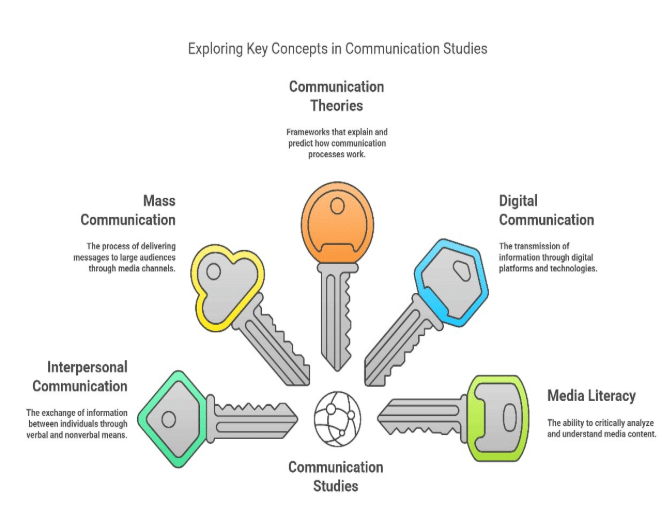
This is a Career Group Discussion to orient students to the importance of being a good listener and communicator in the workplace.
Search Intent: Informational
Group Discussion (GD) is one of the crucial elements of the recruitment process particularly in Campus Placement. It enables employers to evaluate candidates’ communication, listening, thinking, collaborating and pressure response skills. While it is true that many students believe that it is speaking continuously that is most important in a GD, listening, empathy and structure are all important.
Let’s now explore what exactly is a Group Discussion?
A Group Discussion is a group of candidates who have a discussion of a particular topic under a time constraint. The subject can be any one of the current events, education, technology, business, social issues or abstract ideas.
The recruiters make the following observations in a Campus placement GD:
– Communication skills
– Confidence and clarity
– An understanding of the topic
– Logical thinking
– Teamwork
– Leadership qualities
– Active listening
Is able to deal with conflict in an effective way.
Displaying respect for others’ ideas.
So the idea is don’t talk more than you have to. It is to make relevant suggestions to facilitate the group to get to a productive discussion.
Active Listening in GD:
One of the least-explained skills in a Group Discussion is ACTIVE Listening. Being fully present and listening to what people are saying and taking it in and responding with thought, not thinking about what you’ll say next while they speak.
You can use this to follow up on another person’s statement if it makes a strong point, e.g. “I am here with you that is a point of view and I would like to add…”
This will show others that you are willing to work together, are cooperative and listening. Candidates who are able to listen will be an asset to the recruiter as well as an effective professional.
Simple GD is centered around a formula: Listen–Think–Speak–Connect.
Use this equation to help memorize when studying for GDs:
Listen → Think → Speak → Connect → Conclude
Firstly listen carefully and understand the discussion. Then, consider the message you would like to convey and state it. Be clear and provide an illustration, fact or explanation. Link your idea to that of other participants. Finally, help the group to make a fair decision, if appropriate.
The formula will assist candidates in not talking about any random topic or restating a point that has been mentioned.
Empathetic Communication Matters
Using words to express ideas, being sensitive to others ideas, empathic. While it’s fine to have disagreements in a GD, it’s how you deal with them that can make all the difference!
Rather than stating, “You’re entirely incorrect,” state, “I see your point, but I see it from a different perspective.
This type of conversation displays a well-developed and emotional intelligence. It enables you to embrace your uniqueness without any conflict.
Handling Aggressive Participants
Sometimes it may happen that one or more than one participant dominates in the discussion or interrupts the other participant(s). Be non-aggressive, calm and professional.
The word(s) may be used:
Thank you for your comment.” Do you have other thoughts to add on the topic?
This way you can be part of the discussion without the chance of getting into an argument. Keep in mind that the recruiters are watching you during the recruitment process how you interact with others in a team.
The GD is a part of the Campus Placement Process.
Usually, the GD is a preliminary screening in campus placement which is followed by Personal Interview. With a good performance candidates can move up to the next level.
The students must read the newspapers regularly so that they can follow and learn some of the important current affairs, practise speaking some of the usual topics of GD and have a mock discussion on the same for preparation to face the exam. But preparation should not be limited to the accumulation of information only. To be ready to listen, summarise, ask and answer questions.
The knowledgeable candidate will be able to explain an idea in an uncomplicated and logical way, avoiding unnecessary jargon.
GD to Interview Round.
Skills that are demonstrated in a GD will also come in handy in the interview round. Examples of questions you might be asked are about your academic history, written and verbal communication skills, experiences, strengths and weaknesses, and career aspirations.
Once a candidate has succeeded in a GD, he/she should keep the same degree of confidence and add more specific and focused expressions in the interview. They should be honest, looking in each other’s eyes when answering the questions, listening to each question and don’t give answers out of a book.
Final Thoughts
The idea of the Group Discussion is NOT to try to out-speak the others! This is where you can show that you know, you’re confident, team player, you’re a listener, you’re a leader, and you’re an empathetic person.
The best candidates are able to turn ideas into interconnections when it is appropriate to talk, listen and talk. Students can be more confident in performing well during GD and interview round through the application of formula (Listen–Think–Speak–Connect–Conclude) and practicing it.
However, the louder a person is in the room, the better an communicator isn’t always. It’s the person who is listening, talking and contributing with respect.
References
[1] 10 Interesting Group Discussion Topics for Students https://share.google/nmshoKqtdHgGkXG7x
[2]Source: Naukri.com https://share.google/JK3z3rPsnUPAbbFQB
Report screen shoot
1.proofreading report [Grammarly/Quillbot]
2.Pligiarism report [Duplichecker]
3. AI Detection [ZeroGPT]