
Table of Contents
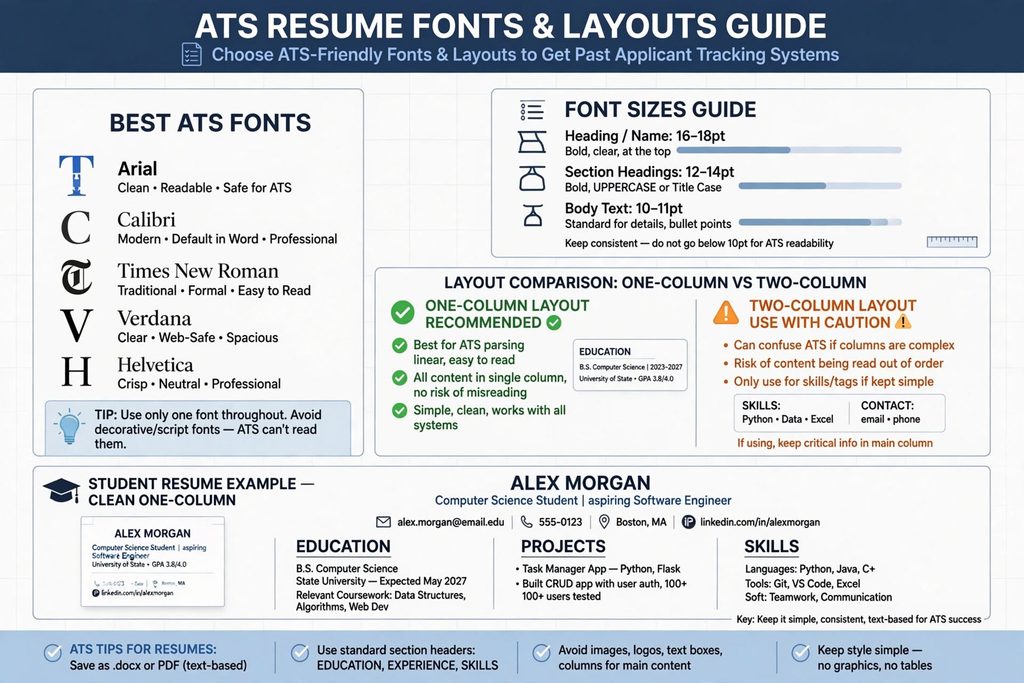
A resume should contain more than just information about one’s education and work history. It should present individuals as strong candidates for a specific position, highlighting the skills and qualifications that make them a good fit for the vacancy. Unfortunately, job seekers with relevant skills and experience can struggle to find employment if their most desirable qualities are not presented correctly or prominently enough. This issue is especially acute for freshers, as they typically have less work experience to list.
An applicant tracking system (ATS) can be used by recruiters to collect and sort candidate information. Depending on the specific software and settings used, an ATS can recognize specific pieces of information (skills), extract individual data points from the resumes, or simply help recruiters sort applicants. Creating an easy-to-read and ATS-optimized resume can help applicants to ensure their information is separated from the competition and presented in a manner that will help them get hired.
The first step in tailoring a resume is to ensure that it has been customized for the specific vacancy. This does not mean one has to rewrite the same resume for every job opening, but the most relevant skills, projects, education, and experience should be prioritized for the positions one is applying for.
What Does Resume Tailoring for ATS Mean?
Resume Tailoring for ATS is a process of presenting information in a more relevant manner without lying or exaggerating. Same facts can be used, but emphasis placed on skills matching recruiter requirements.
For instance, an MBA candidate with finance specialization would be better suited for business analyst than marketing. Their tailored resume for Resume Tailoring for ATS for business analyst vacancy will prioritize spreadsheet skills, while marketing resume would highlight consumer behavior qualifications.
Tips for Resume Tailoring for ATS Optimization
An ATS system can be used by recruiters to sort and rank applicants’ information. Some systems are designed to extract the most relevant information from the resume based on specific criteria or keywords, while others are meant to help recruiters sort candidates. The exact process varies between employers, as using an ATS depends on the software they use and the specific approach they take to hiring.
As such, there is no guaranteed way to optimize one’s resume for an ATS scan, but tailoring can help to ensure that the candidate’s information is relevant and easy to access.
1. It Ensures That Relevant Skills Are Easy to Find
Using the phrasing that the recruiter requested or that the ATS system can recognize is always a good idea, so long as one does not lie or exaggerate.
2. It Ensures that Relevant Experiences and Strengths Are Highlighted
It should be significantly easier to describe the projects and skills one possesses that are relevant to the position, as opposed to those that were accidentally included. Moreover, relevant experiences will allow one to better showcase their competencies and skills for the prospective employer.
3. It Makes a Resume Easier to Read Overall
Using simple phrases and bullet points can be essential for a recruiter who will need to skim through the information on a daily basis. Moreover, simple formatting ensures that the ATS software can read and categorize the resume correctly.
4. It Shows That One Understands What the Recruiters Are Looking For
A properly tailored resume demonstrates that one has taken the time and effort to ensure that their application highlights the skills that are relevant to the position and employer.
It is important to remember that ATS optimization is only one part of the equation – experience, qualifications, testing, interviews, and other considerations can be much more important for the employer.
Seven Powerful Steps for Resume Tailoring for ATS
Step 1: Review Job Description for Resume Tailoring for ATS
Before making any edits to the resume, one should take a closer look at the job description. It is important to highlight the relevant skills and qualifications the recruiter is looking for.
For instance, a marketing analyst with considerable experience in Excel would benefit from emphasizing their spreadsheet skills if the job description explicitly mentions the need for candidates to have them. A resume checklist can be used to prioritize the skills, projects, and experiences relevant to the vacancy. One should create a shortlist of the requirements mentioned by the recruiter that one possesses and organize them by priority.
Step 2: Use Keywords Accurately for Resume Tailoring for ATS
Keywords are terms that denote specific areas, responsibilities, proficiencies, and other factors relevant to a particular position. They are often mentioned explicitly in the job description, where they can indicate the specific software the position requires, among other things.
As such, one should use keywords relevant to the vacancy in their resume so that the recruiter can quickly identify whether they are a good fit for the position. Of course, one should be entirely honest when including or excluding keywords, as one runs the risk of being rejected if one attempts to deceive the recruiter or the ATS software.
One’s summary, skills, experience, projects, and other sections should include relevant keywords so that the recruiter can quickly find the information they are looking for.
For instance, if one has worked on a database project in the past, it might be a good idea to add the phrase “database management” to one’s resume if the job opening requires one to have similar skills. On the other hand, if one only reviewed a particular spreadsheet for a class, it might be a good idea to refrain from claiming one has database management experience.
One should avoid keyword stuffing, as it can make the resume look unprofessional. Moreover, an ATS system might identify it as an attempt to manipulate the system, which can hurt the chances of getting hired.
Step 3: Update Professional Summary for Resume Tailoring for ATS
The summary section of the resume should briefly describe one’s professional background and highlight the most important skills and experiences. One should avoid generic statements about one’s career aspirations and focus on briefly outlining the skills and experiences one has that make them a good fit for the recruiter.
For instance, instead of describing oneself as a “recent MBA graduate seeking to gain experience in the field,” one could write “MBA graduate with experience in marketing research and Excel-based analysis seeking to contribute to the improvement of customer outreach.”
Of course, one should only write about their actual skills and experiences, so it is best to avoid embellishing or attempting to describe one’s abilities in greater detail than they actually are.
Step 4: Prioritize Relevant Skills in Resume Tailoring for ATS
Every position requires different skills and experiences, so one should always focus on the ones that the employer is looking for. The most relevant information can come from one’s professional experience, education, projects, certifications, extracurricular activities, and volunteering efforts, among other places.
As a fresher, one might want to emphasize the classes, internships, or projects that are most relevant to the position.
For instance, a candidate for an entry-level data analyst position would benefit from describing the database maintenance projects they have undertaken in the past, whereas an aspiring content writer would highlight their experience in writing promotional material and research capabilities.
When describing one’s responsibilities, one should focus on the impact they made, rather than simply listing what they did. One can use phrases such as “I compared the operations of similar companies to highlight the differences in their positioning strategies,” instead of writing something generic, such as “I worked on a market research project.”
One should always be entirely honest when describing their skills and experiences, so embellishment should be avoided in favor of straightforwardness. After all, a well-worded description of a class project can still make a good impression on a recruiter.
Step 5: Use Simple Format for Resume Tailoring for ATS
The primary purpose of a resume is to communicate one’s skills and work experience to a recruiter, so it is best to use a simple format that allows one to do that without relying on flashy graphics or designs.
After all, an ATS system might not be able to read unusual symbols and graphics, so it is best to avoid them to maximize the chances of the resume being read by a recruiter. One should ensure that their contact information is easy to find and that the document does not contain any typos. One should also use a professional font, standard formatting (summary, skills, experience), and proper grammar throughout the document.
One should always follow the submission guidelines provided by the recruiter, as they may have specific requirements for the applicants. The requirements can vary drastically between different ATS systems, so it is best to ensure that the resume is compatible with the system the recruiter has chosen. One should avoid unusual formatting, graphics, spacing, and other elements that could confuse the ATS system or a recruiter reviewing the resume.
Step 6: Showcase Achievements for Resume Tailoring for ATS
Simply listing one’s responsibilities is not enough to demonstrate one’s skills and expertise. One should try to use a few bullet points for every task they have undertaken to describe their contributions and achievements.
The latter, in particular, is important for highlighting one’s skills, as one can describe what they did to achieve a particular result. For instance, one can write “I reviewed the contents of 200+ records to identify common issues or themes,” instead of writing something generic, such as “I worked on a database project.”
Again, one should not embellish, so it is best to rely on one’s actual contributions when listing their professional achievements. Describing the interesting projects one was involved in can be an effective way to do that, even at the entry level.
Step 7: Proofread Final Version of Resume Tailoring for ATS
When proofreading the resume, one should ensure that all of the information is relevant and properly emphasizes the skills and qualifications the employer is looking for. One should ensure that all keywords have been used correctly and that the most relevant information has been prioritized.
One should also review the punctuation, grammar, and spelling to ensure that the document does not have any typos or grammatical errors. It might be a good idea to type the resume text into a word processor to verify that all special symbols display correctly. Note that this step might not always be relevant, as some ATS systems can have trouble reading certain symbols. One should also follow the formatting guidelines provided by the recruiter.
Common Resume Tailoring Mistakes
A resume that has been tailored to a specific vacancy still has to be presented in a manner that makes it easy for the recruiter to read and understand. One should avoid common resume tailoring mistakes to ensure that the information is prioritized correctly.
Failing to tailor the resume for the specific vacancy, despite the apparent differences in the skills required for each position.
Using keywords incorrectly and/or dishonestly.
Exaggerating one’s skills and/or accomplishments, as well as presenting classwork and assignments as professional experience.
Using unorthodox formatting that can confuse the ATS scanner and/or the recruiter.
Failing to consider the requirements the recruiter has listed in the job description.
Failing to proofread the document properly.
In essence, tailoring a resume is not about including as much information as possible on a single page. Instead, one should focus on making the most relevant information easy to access and understand.
How to Tailor a Resume for Freshers and Campus Placements
Freshers can benefit from resume tailoring, as it can help them present their skills and training in a manner that maximizes their chances of landing an entry-level position. In truth, a significant portion of one’s education and training can be relevant to the job one is trying to obtain, so it is always important to keep this in mind.
As such, one should always review the job description and prioritize the skills and experiences that the employer is looking for. An entry-level business analyst, for instance, would benefit from emphasizing the spreadsheet, research, and report-writing skills in their resume, for a human resources internship, while a human resources internship candidate would benefit from emphasizing their collaborative, communicative, and organizational skills.
Freshers should always keep a master resume with all of their relevant skills, projects, experiences, and qualifications. It is important to update it regularly so that one always knows what they can include in their tailored resume for a specific vacancy. This approach can save time and effort while also ensuring that one does not forget any relevant information. Once again, the job description should be the starting point for one’s tailoring efforts.
Moreover, freshers should only describe their contributions and responsibilities honestly. Using specific verbs can help to achieve this goal and make the resume more compelling. One should only describe the tools and technologies they have actually used and ensure that their professional and academic experiences are separated, if applicable.
Can AI Help You Tailor Your Resume?
AI can be a great tool for resume tailoring, as it can highlight the areas of one’s resume that need improvement. Moreover, it can suggest alternative formulations for one’s bullet points, summarize sections of the resume, and identify specific skills one should add or remove.
That said, one should always take the recommendations with a grain of salt, as an AI tool might suggest adding the skills or keywords one does not actually possess, while also failing to spot any untruthful claims.
A detailed description of a real project can be far more useful to a recruiter than generic statements, so one should always err on the side of honesty and specificity.
One should use an AI resume tailoring tool as a suggestion generator, with the responsibility of evaluating these suggestions resting with the fresher. After all, one is the one who knows what skills and experiences they actually have, so one should be entirely honest when describing their professional background and qualifications.
Conclusion
Tailoring a resume is an important process that helps to ensure that the relevant skills and qualifications are presented in a manner that is easy to read and understand. Following the job description, prioritizing keywords, and emphasizing the most relevant skills and projects are all vital steps in resume tailoring.
For freshers, this process is vital, as it allows one to ensure that one’s education and training are presented in a manner that will help one stand out from the competition. Following the standard instructions and presentation rules, as well as reviewing the resume for spelling, grammar, and punctuation mistakes, can make one’s application stand out. After all, one’s tailoring efforts should always be focused on optimizing the presentation of one’s skills and qualifications, not embellishing or overstating one’s professional background and achievements.
References
1. Indeed. “Tailoring Your Resume to a Job Description (With Example).”
https://www.indeed.com/career-advice/resumes-cover-letters/tailoring-resume
2. Indeed. “How To Write an ATS-Friendly Resume.”
https://www.indeed.com/career-advice/resumes-cover-letters/ats-resume
3. Indeed India. “How To Write An ATS Resume (With Steps, Template And Sample).”
https://in.indeed.com/career-advice/resumes-cover-letters/ats-resume
FAQs
1. What does it mean to tailor your resume for ATS?
Tailoring is presenting same facts in more relevant manner to employer without lying. Emphasis placed on skills matching recruiter requirements. For example, MBA finance specialization resume for business analyst prioritizes spreadsheets, while marketing resume highlights consumer behavior.
2. How to tailor resume for ATS optimization?
Review job description, use keywords accurately and honestly, update professional summary, prioritize most relevant skills and experiences, use simple professional format, showcase achievements with bullet points, and proofread final version.
3. Why is resume tailoring important for freshers?
Freshers have less work experience. Tailoring helps present education and training to maximize chances for entry-level position. Keep master resume with all skills, projects, update regularly, and customize for each vacancy based on job description.
4. What are common resume tailoring mistakes?
Failing to tailor for specific vacancy, using keywords incorrectly or dishonestly, exaggerating skills, presenting classwork as professional experience, using unorthodox formatting that confuses ATS, failing to consider recruiter requirements, and not proofreading.
5. Can AI help tailor resume for ATS?
Yes, AI can highlight areas needing improvement, suggest alternative bullet points, summarize sections, identify skills to add/remove. But use as suggestion generator only – AI might suggest skills you don’t possess. Always be honest and specific.