7 Powerful Ways to Quantify Achievements When You Have Little Work Experience
You have graduated from college and have updated your resume. But now what can you do? Many freshers have the same problem. You have not done a big job, so you don’t have any experience to show off. The answer is simple,you have to show your achievements in numbers. This will show something useful. Numbers can turn a meaningless sentence into something concrete. And this can work even with experiences from classes, societies, and other jobs.
USE NUMBERS
The recruiters read the CV in moments. Using a phrase like “assisted with social media” means nothing to them. Instead, using a phrase like “increased Instagram following by 40% within 3 months” conveys a lot. Numbers can show how great your achievements are. They also help the entry-level resume of freshers to stand out among dozens of similar ones.
LOCATION OF DATA
Make your work-related undertakings clear, whether academic or voluntary, your practical training activities, your freelance role, etc. Each one implies people, deadlines, and results. Do not forget to answer the following questions: What was my contribution? What did I do and when? What was the result? The answers are your clues as to the way to write each bullet point. Note down your answers first. Then select the best answers and write them on your CV. Your bullet points must be brief. They should start with a strong action word like built, organised, managed, or improved. Then indicate the number.
7 WAYS TO INCORPORATE NUMBERS
1. Count individuals. Think of the size of your team, classes, number of people attending events or the number of clients served. For instance, “Managed a team of 6 volunteers” in a college fest makes for a strong statement.
2. Count time. Show numbers of hours, months or days that you saved.
3. Count money. Show budgets allocated, money raised, costs and savings. Small amounts are still beneficial.
4. Count quantities. For instance the number of email messages, posts, orders and tickets. Daily or weekly amounts demonstrate the ability to keep up with your work.
5. Use percentages. Show how your actions improved attendance, sales, etc. In numbers.
6. Use rankings and scores. Your CGPA and graduation rank are relevant here.
7. Use regularities. For example, daily, weekly, monthly, etc. The more often you did something the better.
If you do not have an exact amount, just provide a reasonable estimate. Use words like “approximately” or “more than”.You also need to be ready with evidence for the figures and might need to prove what you claim.
EXAMPLES
Here are some illustrative examples. Pay attention to how the “after” line starts with a verb and ends up with quantifiable results.
Prior: I’ve worked at the college library.
Post: I’ve organised more than 1,000 books in the library every week and cut the shelving time by 15%.
Prior: I was a member of the coding club.
Post: I developed three small apps along with five people and demonstrated them to 150 students.
Prior: I have written for the college magazine.
Post: I wrote 12 articles this year, with one of them being read by 4,000 people on the web.
Conclusion
All you need to do is analyse your accomplishments and use numbers in your resume to quantify achievements.
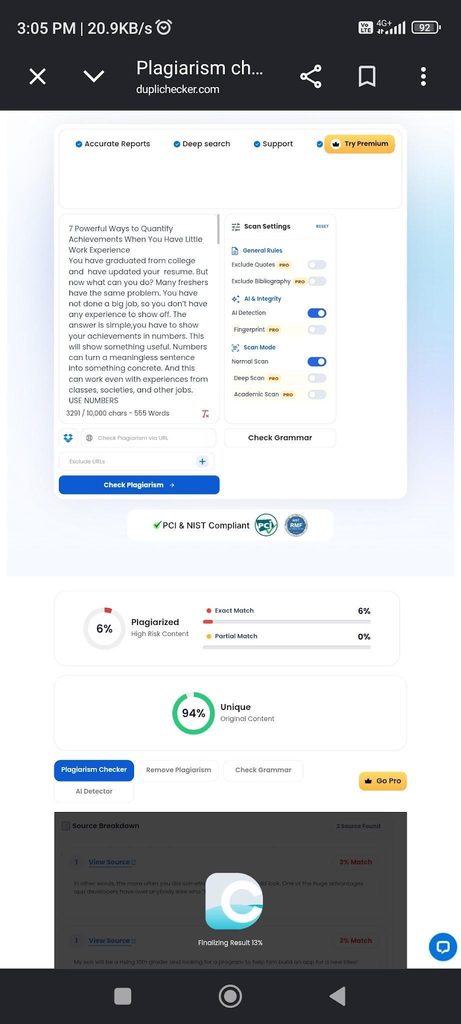
7 Powerful Ways to Quantify Achievements When You Have Little Work Experience
You have graduated from college and have updated your resume. But now what can you do? Many freshers have the same problem. You have not done a big job, so you don’t have any experience to show off. The answer is simple,you have to show your achievements in numbers. This will show something useful. Numbers can turn a meaningless sentence into something concrete. And this can work even with experiences from classes, societies, and other jobs.
USE NUMBERS
The recruiters read the CV in moments. Using a phrase like “assisted with social media” means nothing to them. Instead, using a phrase like “increased Instagram following by 40% within 3 months” conveys a lot. Numbers can show how great your achievements are. They also help the entry-level resume of freshers to stand out among dozens of similar ones.
LOCATION OF DATA
Make your work-related undertakings clear, whether academic or voluntary, your practical training activities, your freelance role, etc. Each one implies people, deadlines, and results. Do not forget to answer the following questions: What was my contribution? What did I do and when? What was the result? The answers are your clues as to the way to write each bullet point. Note down your answers first. Then select the best answers and write them on your CV. Your bullet points must be brief. They should start with a strong action word like built, organised, managed, or improved. Then indicate the number.
7 WAYS TO INCORPORATE NUMBERS
1. Count individuals. Think of the size of your team, classes, number of people attending events or the number of clients served. For instance, “Managed a team of 6 volunteers” in a college fest makes for a strong statement.
2. Count time. Show numbers of hours, months or days that you saved.
3. Count money. Show budgets allocated, money raised, costs and savings. Small amounts are still beneficial.
4. Count quantities. For instance the number of email messages, posts, orders and tickets. Daily or weekly amounts demonstrate the ability to keep up with your work.
5. Use percentages. Show how your actions improved attendance, sales, etc. In numbers.
6. Use rankings and scores. Your CGPA and graduation rank are relevant here.
7. Use regularities. For example, daily, weekly, monthly, etc. The more often you did something the better.
If you do not have an exact amount, just provide a reasonable estimate. Use words like “approximately” or “more than”.You also need to be ready with evidence for the figures and might need to prove what you claim.
EXAMPLES
Here are some illustrative examples. Pay attention to how the “after” line starts with a verb and ends up with quantifiable results.
Prior: I’ve worked at the college library.
Post: I’ve organised more than 1,000 books in the library every week and cut the shelving time by 15%.
Prior: I was a member of the coding club.
Post: I developed three small apps along with five people and demonstrated them to 150 students.
Prior: I have written for the college magazine.
Post: I wrote 12 articles this year, with one of them being read by 4,000 people on the web.
Conclusion
All you need to do is analyse your accomplishments and use numbers in your resume to quantify achievements.