
Table of Contents
INTRODUCTION
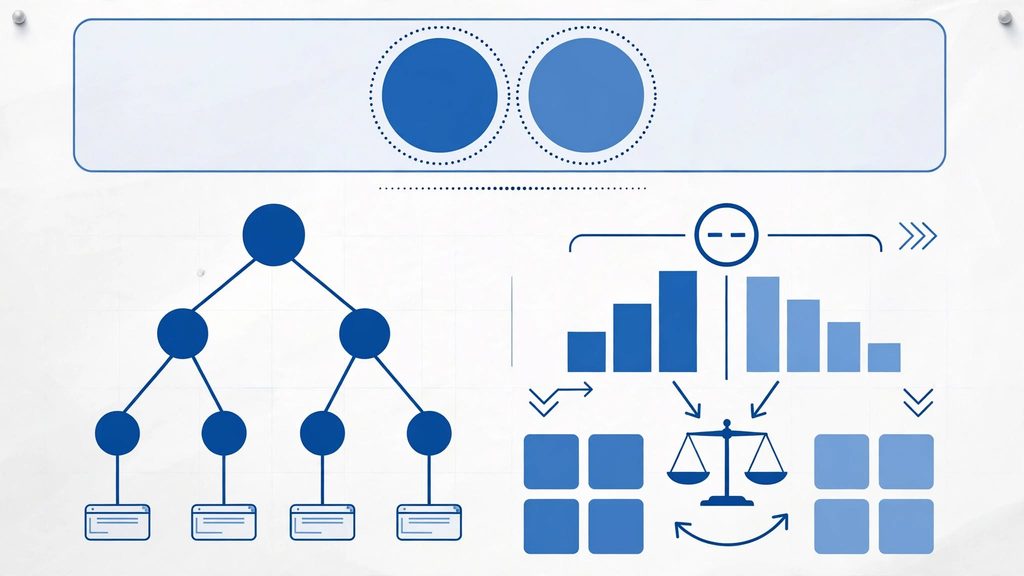
The MECE principle stands for Mutually Exclusive, Collectively Exhaustive, a structuring method created by Barbara Minto at McKinsey & Company in the 1960s. It helps to break down a complex problem or data set into clear categories without overlaps or gaps.
WHAT MECE MEANS?
Mutually Exclusive (ME): No overlap between the categories. Any single item, data, point or issue can only fit into one bucket.
Collectively Exhaustive (CE): No gaps in the total set. It takes together the categories and accounts for one hundred per cent of possibilities. Nothing could be left out.
WHY SHOULD WE USE MECE?
MECE prevents duplicate work by ensuring teams to not waste time analysing the same thing twice. It eliminates Blind spots by guaranteeing all the possible angles of a problem are considered. MECE simplifies math and logic and allows us to break a big metric into smaller pieces that add up clearly to the whole. Lastly, helps improve communication and makes arguments clean, structured and paired.
Why Is MECE Important in Consulting Case Interviews?
- Clarity of Thinking & Communication: It lets us organize our thoughts top-down so we can explain our approach to the interviewers without rambling or confusion.
- Elimination of Blind Spots: Being Collectively Exhaustive ensures us to not accidentally ignore a critical driver of the problem.
- Work Efficiency: Being mutually exclusive stops us and our team from wasting time analysing the same data twice or dealing with redundant buckets.
- Hypothesis-driven problem solving: It allows us to systematically test branches of an issue tree and isolate the root cause.
Practical steps to build a MECE Framework-
- DEFINE THE CORE STATEMENT: Write down the exact question or goal. For example, “why is my start-up losing money?”
- CHOOSE A STRUCTURING METHOD: The standard techniques to split the problem
- Math/Algebraic Equations: Break down a metric into formulae where variables are distinct and sum to the total (e.g; Profit = Revenue – Cost).
- Dichotomy (X and Not-X/Opposites): Split into binary opposites like internal vs. External, Fixed Costs vs. Variable Costs, or Financial vs. Non-Financial.
- Process Flow/Timeline: Break a sequence into chronological stages like pre-purchase, Purchase and Post-Purchase.
- Conceptual/segment Buckets: Group by clear categories like customers demographics, Product Lines, or Geographic Regions.
- BUILD AN ISSUE TREE: Take top-level MECE buckets and Branch them down into sub-levels. Assigning each sub-branch a clear owner or action plan without double-counting effort.
Tips for Using MECE in Consulting Placements-
Mastering MECE during placement process requires moving past basic frameworks and demonstrating true, customizable business intuition.
- Shifts from Frameworks to First Principles
- Isolate the Internet vs. External Drivers
- Track the customers or product journey
- Apply Strategic Filters during the case
- Explain your reasoning aloud during mock interviews.
CONCLUSION
MECE turns vague, massive business challenges into tidy, manageable issue trees separating revenue and cost drivers. It stops consulting teams and case interview candidates from wasting time on redundant analysis or missing core drivers. MECE is a structural tool, not a substitute for insight. A perfectly framework that misses the actual market dynamic or client nuance is still a bad strategy. It works best when paired with direct communication methods like the Pyramid Principle or BLUF.
REFERENCES
[1] MECE Framework/principle- what does it mean? – http://caseineterview.com
[2] MECE Principle – http://www.rocketblocks.me
[3] A Detailed Guide on MECE Principle – http://www.sketchbubbles.com
[4] How consultancy use the MECE Principle – http://www.jobaajlearnings.com
FAQs
1. What is MECE principle in consulting case interviews?
MECE stands for Mutually Exclusive, Collectively Exhaustive, a structuring method created by Barbara Minto at McKinsey & Company in the 1960s. It helps break down a complex problem into clear categories without overlaps or gaps, ensuring 100% coverage of possibilities.
2. What does Mutually Exclusive and Collectively Exhaustive mean?
Mutually Exclusive (ME) means no overlap – any single item, data point or issue can only fit into one bucket. Collectively Exhaustive (CE) means no gaps – together the categories account for 100% of possibilities, nothing is left out.
3. Why should we use MECE in consulting?
MECE prevents duplicate work by ensuring teams don’t analyze the same thing twice, eliminates blind spots by guaranteeing all angles are considered, simplifies math by breaking big metrics into smaller pieces that add up clearly, and improves communication making arguments clean and structured.
4. Why is MECE important in consulting case interviews?
It provides clarity of thinking and communication through top-down organization, elimination of blind spots by being collectively exhaustive, work efficiency by being mutually exclusive, and hypothesis-driven problem solving to systematically test branches of an issue tree and isolate root cause.
5. What are the practical steps to build a MECE framework?
Define the core statement (e.g., “why is my startup losing money?”), choose a structuring method (Math Equations: Profit = Revenue – Cost, Dichotomy: Internal vs External, Process Flow: Pre-purchase to Post-purchase, Conceptual Buckets: Customer demographics), then build an issue tree branching top-level buckets into sub-levels.
6. How to master MECE for consulting placements?
Move past basic frameworks to first principles, isolate internal vs external drivers, track the customer or product journey, apply strategic filters, and explain reasoning aloud during mock interviews. A perfectly structured framework that misses market dynamics is still a bad strategy.
7. How to fix Grammarly’s 14 writing issues?
Your 3 grammar issues are “It helps to break” -> “It helps break”, “It takes together” -> “Together they account”. 3 punctuation issues are missing commas after “Lastly,” and “For example,”. Click “Open Grammarly” – it will fix all 14 issues in one click without changing your 0% AI score.