From Goals to Growth: How to Build a Personal Development Plan for Long-Term Career Success
Published: Oct 5, 2026
Key Points
- A personal development plan provides a clear roadmap for achieving long-term career goals.
- Assessing your current skills helps identify your strengths, weaknesses, and learning needs.
- Setting SMART goals makes career objectives specific, measurable, achievable, relevant, and time-bound.
- Continuous learning through courses, certifications, workshops, internships, and mentorship can strengthen professional skills.
- Creating an action plan turns career goals into manageable tasks with clear deadlines.
- Regularly reviewing your progress helps you track achievements and overcome challenges.
- Updating your personal development plan allows you to adapt to changing career goals and industry demands.
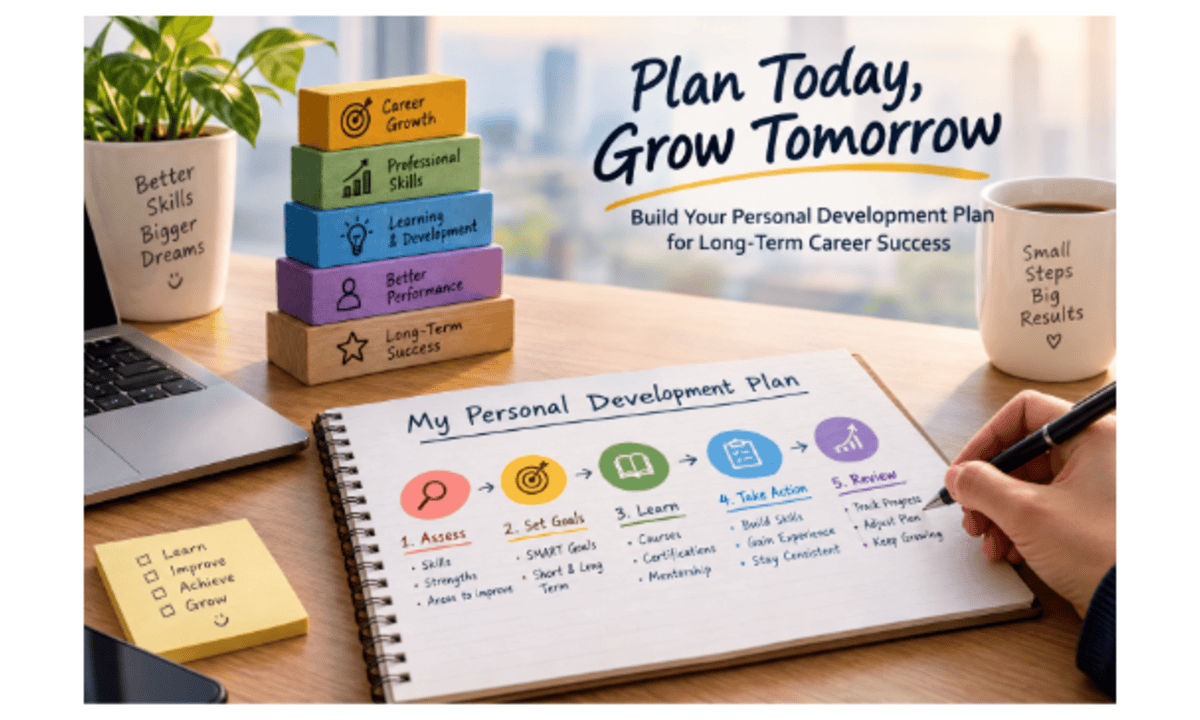
In the context of today’s demanding professional environment, one’s career success is no longer dependent only on academic qualifications and technical competencies. Today, professionals must continually broaden their skill set, seek emerging opportunities, and update their qualifications to meet industry expectations. A personal development plan (PDP) can help achieve these objectives by providing a roadmap to guide one’s continuing professional development (CPD).
As such, self-development planning is becoming a growing trend among middle-level careerists; it is essential to consider developing a personal action plan for everybody.
What Is a Personal Development Plan?
A personal development plan is a written statement that reflects an employee’s career goals, skills, learning needs, and actions necessary for achieving his/her aspirations. It ensures that one’s intentions and desires are realistic and attainable.
The personal development plan helps an employee or a leader to address a wide range of issues from getting a raise to learning new skills, leading a team, and pursuing different careers.
Why Is Personal Development Important for Career Growth?
Personal development and career growth are deeply interconnected. With the advancement of technologies and changes in the workplace, professionals need to stay on top of new knowledge and skills.
A personal development plan can help in:
- Recognising one’s strengths and shortcomings
- setting learning and career goals
- building an action plan for developing necessary skills, enhancing self-confidence and work performance
- measuring the progress and making necessary adjustments to meet the goals
Instead of waiting for an opportunity to come, personal development helps a professional prepare ahead of time.
Steps to Build an Effective Personal Development Plan
1. Evaluate Your Current Skills
Begin by considering your qualifications and experience, both those that you have and those that need to be acquired. It may also be helpful to evaluate your strengths and shortcomings with the help of your managers, colleagues, mentors, or teachers.
A skills assessment is an essential step in determining your areas of knowledge and expertise.
2. Set SMART Career Goals
Effective goals should be specific, measurable, achievable, relevant, and time-bound. For instance, instead of setting a goal of “improve communication”, set a goal of “complete a professional communication course within three months”.
Having clear goals can help to measure the improvement in your career.
3. Identify Learning Opportunities
Ascertain the kind of activities that will further your objectives. Such activities include online classes, professional certificates, workshops, seminars, conferences, internships, and mentorship programmes.
You will always be ahead of the game as long as you continue learning and updating your knowledge in preparation for the best career opportunities available.
4. Create an Action Plan
Break all goals into small, easily achievable tasks, set deadlines for their completion, and outline what resources are needed. For instance, if someone is trying to get into a new career field, then creating a list of required skills and additional training for this job will be a helpful plan.
In addition, an action plan helps to translate ideas into a course of action that can be carried out every day or week.
5. Review and Update Your Plan Regularly
A career is never a straight line, so it is important to stop and reassess where you are from time to time. A good way to do this is to review your development plan regularly (every year or so) to see what you have accomplished and what obstacles you have encountered and to update your plans accordingly.
Conclusion
Developing a personal development plan is an excellent idea to take control of one’s professional life. It allows people to evaluate their skills, set specific goals, obtain the necessary competencies, and measure results.
The process of personal development is an ongoing one, which turns vague ideas and thoughts about career improvement into reality.
REFERENCES
[1] LinkedIn Learning, “Workplace Learning Report,” LinkedIn, 2024. [Online]. Available: https://learning.linkedin.com/resources/workplace-learning-report
[2] World Economic Forum, The Future of Jobs Report 2025. Geneva, Switzerland: World Economic Forum, 2025. [Online]. Available: https://www.weforum.org/publications/the-future-of-jobs-report-2025/
[3] LinkedIn Learning, 2024 Workplace Learning Report: The Rise of Career Champions. LinkedIn, 2024. [Online]. Available: https://learning.linkedin.com/resources/workplace-learning-report
Frequently Asked Questions
1. What is a personal development plan?
A personal development plan is a structured document that outlines your career goals, skills, learning needs, and specific actions for achieving professional growth.
2. Why is a personal development plan important?
A personal development plan helps you set clear goals, identify skill gaps, track progress, and make informed decisions about your career.
3. How do I create a personal development plan?
Start by assessing your current skills, setting SMART goals, identifying learning opportunities, creating an action plan, and reviewing your progress regularly.
4. What should be included in a personal development plan?
A personal development plan should include your current skills, career objectives, areas for improvement, learning activities, deadlines, required resources, and progress-tracking methods.
5. What are SMART career goals?
SMART goals are Specific, Measurable, Achievable, Relevant, and Time-bound objectives that make career development easier to plan and evaluate.
6. How can a personal development plan improve career growth?
It provides a clear direction for improving skills, gaining experience, achieving professional goals, and preparing for new career opportunities.
7. How often should I review my personal development plan?
You can review your plan every few months and make a more detailed review at least once a year to ensure your goals remain relevant.
8. How do I identify skills I need to improve?
Compare your current abilities with the skills required for your desired role. Feedback from managers, colleagues, teachers, mentors, and industry professionals can also help.
9. What learning activities can be included in a personal development plan?
You can include online courses, certifications, workshops, seminars, internships, projects, conferences, books, and mentorship programs.
10. Can students create a personal development plan?
Yes. Students can use a personal development plan to identify career interests, develop relevant skills, gain experience, and prepare for internships and employment.
11. Can freshers benefit from a personal development plan?
Yes. A personal development plan can help freshers identify skill gaps, build job-ready abilities, improve their resumes, and prepare for interviews.
12. How does a personal development plan improve employability?
It encourages continuous learning and helps individuals develop skills that match changing employer and industry requirements.
13. What is the difference between a career plan and a personal development plan?
A career plan focuses mainly on your desired career direction and long-term objectives, while a personal development plan focuses on the skills, learning, and actions needed to achieve those objectives.
14. Should a personal development plan have deadlines?
Yes. Setting deadlines makes goals measurable and creates accountability, making it easier to track whether you are progressing as planned.
15. How can I track progress in my personal development plan?
You can track completed courses, acquired skills, certifications, projects, work achievements, feedback, and progress toward your career goals.
16. What should I do if I cannot achieve a development goal?
Review why the goal was missed, identify the obstacles, adjust the deadline or approach if necessary, and create smaller steps to make the goal more achievable.
17. How can mentors help with personal development?
Mentors can provide career advice, identify areas for improvement, share professional experience, and help you make better development decisions.
18. Can a personal development plan change over time?
Yes. Your goals, interests, skills, and industry requirements can change, so your personal development plan should be updated when necessary.
19. How can personal development improve workplace performance?
Developing relevant technical, communication, leadership, and problem-solving skills can improve confidence, productivity, collaboration, and overall workplace performance.
20. How does continuous learning support long-term career success?
Continuous learning helps professionals keep their knowledge and skills relevant, adapt to workplace changes, and prepare for new responsibilities and career opportunities.
Citations & References
[1] LinkedIn Learning, “Workplace Learning Report,” LinkedIn, 2024. [Online]. Available: https://learning.linkedin.com/resources/workplace-learning-report
[2] World Economic Forum, The Future of Jobs Report 2025. Geneva, Switzerland: World Economic Forum, 2025. [Online]. Available: https://www.weforum.org/publications/the-future-of-jobs-report-2025/
[3] LinkedIn Learning, 2024 Workplace Learning Report: The Rise of Career Champions. LinkedIn, 2024. [Online]. Available: https://learning.linkedin.com/resources/workplace-learning-report
Streamline Your Hiring with Eve Placement
Engage, assess, and recruit top talent through tailored AI hiring challenges that go beyond resumes. Ready to hire better? Contact our research team for a custom consultation.