
Table of Contents
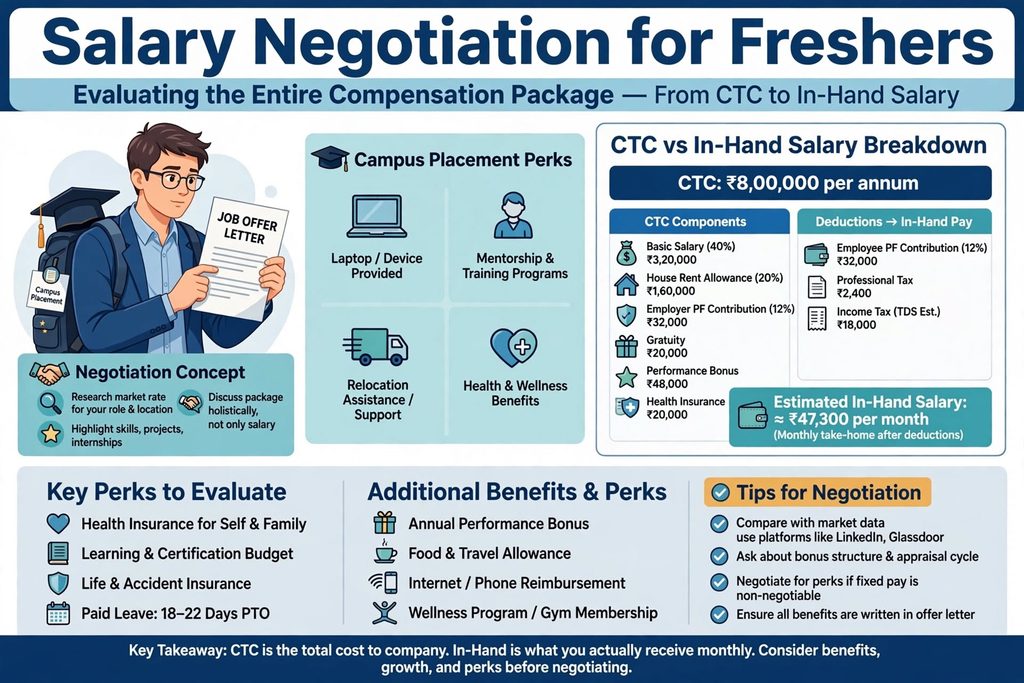
Getting the first job after college is dream for many students. After years of studying, attending interviews and waiting for placement opportunities when we receive a job offer, we are all on the cloud nine.However, accepting the first offer haphazardly may not always be the best decision. Freshers should always understand the demands of the company and what company is offering in terms of job role.
Many people think job is synonymous with salary, however it is not always the case. The complete compensation package can include several benefits apart from the basic salary. Understanding every details apart from salary is very important, in order to negotiate the salary.
Look Beyond Salary in Salary Negotiation for Freshers
When freshers receive an offer during salary negotiation for freshers, there is a tendency to only look at annual compensation. While this figure is important for salary negotiation for freshmen, it may not represent the amount they will actually receive in bank account every month. The package for salary negotiation for freshers includes salary, bonuses, provident fund and many more benefits. Therefore, the foremost task of candidates in salary negotiation for freshers is to first ask about the in-hand salary.
A fresher should surely check in Salary Negotiation for Freshers on whether the bonus is fixed or based on performance. If a significant part of the package depends on performance, the actual salary will vary. Reading the salary structure beforehand in salary negotiation for freshers is very important to prevent confusion.
To evaluate remuneration package properly for Salary Negotiation for Freshers, candidates should also look at non-monetary factors, like whether company provides accommodation, health benefits, laptop and computer for job. As these non-monetary factors in salary negotiation for Freshers make big change in decision whether you want particular job.
These first job benefits can be particularly useful for freshers in salary negotiation for freshers because they cover personal expenses. Transportation support in salary negotiation for freshers can make a difference for someone commuting several hours. Medical insurance in salary negotiation for freshers can provide financial support during unexpected situations.
Freshers should also consider campus placement perks in salary negotiation for freshmen when comparing offers. Companies hiring through campus placements may provide joining bonuses, relocation assistance, accommodation support, and training programs. These perks in salary negotiation for freshers can make the offer more attractive even when the starting salary is not that much.
Another important point in salary negotiation for freshers is career trajectory. Fresher should look into how often the company revises salary policies. A company offering a moderate starting salary but regular revisions and good learning opportunities in salary negotiation for freshmen may prove more valuable long-term.
Negotiate With Confidence and Make the Right Choice
Many freshers feel afraid from discussing with their employer about salary negotiations, they think asking for salary negotiation will make them replaceable .As some other person might take their job.However, if discussing about salary in a honest and judicious manner, it can open the door for greater negotiations.
Offer negotiation does not always mean always about increasing the salary, it also means considering other things and negotiating for them as well.Like work environment, other non remunerative factors, work culture and other future aspirational projects in which an individual might be interested in.
The key is to be practical and realistic.Before negotiating, freshers should know about the regular and usual salary of company and consider their educational background, skills, internships and relevant experience. They should also understand the company’s offer properly. A negotiation is more effective when the candidates also understand the demand of the job and negotiate from a good stand point .
At the same time, freshers should not judge a job only from a salary it offers.Work environment, the culture the job offers, and other non remunerative factors like type of colleagues at the work place, also whether the job is allowing the candidates some time for their futuristic goals.These things becomes sometimes more important than the salary itself.As these things determine the personal growth of the candidates.
The first job is about starting a formal role. It provides a platform to gain practical experience, build formal relations and navigate how an organisation or job operates.Therefore, candidates should think about both remuneration and long-term career goals.
Before accepting an offer, freshers should carefully read the employment terms and be curious about everything. They should analyse the job benefits rather than focusing only on the CTC given in offer letter.
In the end, learning to judge remuneration package helps professionals make decisions based on the reall value of a job. With a clear understanding of salary, other remunerative factors, campus placement perks and reasonable offer negotiation, young professionals can enter their first job with greater confidence and dignity.
REFERENCES:
1. https://3point.in/blog/salary-negotiation-tips/
FAQs
1. What is entire compensation package for freshers beyond salary?
Beyond basic salary, compensation includes bonuses (fixed/performance), provident fund (PF), gratuity, house rent allowance, medical insurance, accommodation, laptop/device, transportation support, joining bonus, relocation assistance, training programs.
2. How to evaluate CTC vs in-hand salary as fresher?
CTC is total cost to company. In-hand is what you actually receive monthly after deductions like Employee PF (12%), Professional Tax, Income Tax (TDS). Always ask employer about in-hand salary and check if bonus is fixed or performance-based.
3. Should freshers negotiate salary during campus placements?
Yes, but with confidence and honesty. Negotiation doesn’t always mean increasing salary; you can negotiate for work environment, culture, learning opportunities, accommodation, health benefits. Research market rate for your role, location, skills, internships.
4. What campus placement perks should freshers consider?
Joining bonuses, relocation assistance, accommodation support, laptop/device, mentorship & training programs, health & wellness benefits, food/travel allowance, internet/phone reimbursement, gym membership, certification budget.
5. Is higher salary always better for first job?
No. Company offering moderate starting salary but regular salary revisions, good learning opportunities, positive work culture, supportive colleagues may prove more valuable long-term than slightly higher salary without growth.