
Table of Contents
(Image Source: Meta AI, AI-generated illustration)
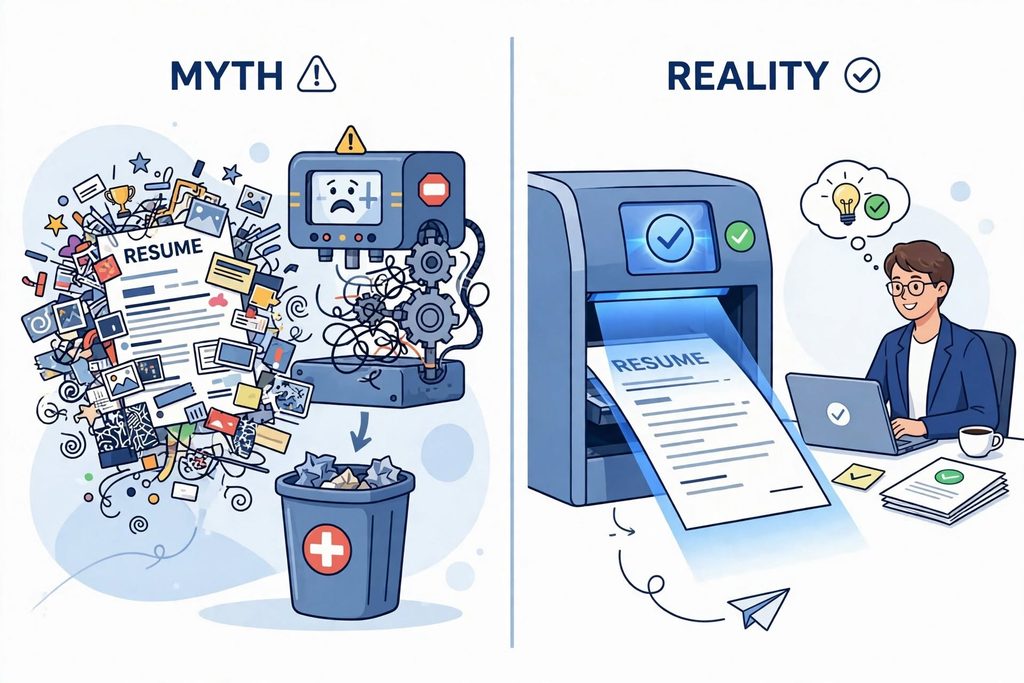
ATS Resume Optimization is what every placement student worries about when their resume gets flagged. When I submitted my resume to the placement cell for ATS Resume Optimization check, I assumed I’d get a couple of small corrections. Instead they flagged almost everything: the layout, the tables, the portfolio links. I’ve been reworking my resume for ATS Resume Optimization ever since. Around the same time, every piece of advice I came across blamed one thing for resume rejections, the ATS. So here is what’s actually true about ATS Resume Optimization myths, and what isn’t.
What ATS Resume Optimization Actually Means – What an ATS Actually Is
ATS is short for applicant tracking system. It’s the tool a company’s hiring team uses to keep every application in one spot. A recruiter types in a skill or a job title and the matching resumes show up. That’s most of it. It doesn’t care which font you picked.
The Biggest Myth: A Bot Rejects You InstantlyATS Resume Optimization Biggest Myth: A Bot Rejects You InstantlyThe Biggest Myth: A Bot Rejects You Instantly
Everyone seems to believe that software deletes most resumes before a person gets to see them. A 2025 study by Enhancv put this to 25 recruiters, and 92% said their system doesn’t automatically reject people over formatting, design or content. It’s a small, US-only sample, so I wouldn’t treat it as gospel. But it fits how the process works. Where automatic rejection exists, it usually comes from yes-or-no questions on the form, like location or work authorisation, and not from how your resume looks.
So Why Did My Placement Cell Flag Everything?
Here’s the part most online advice skips. Nobody said software had rejected my layout. Real people looked at my resume and each of them had something to point out. My problem was readability, not a machine.
That said, a cluttered file can read badly in software too, and sometimes the details come out scrambled in the application form. One trick I’d try is dumping the whole resume into Notepad. If the text comes out jumbled or the order goes weird, fix the file before you send it anywhere.
When Volume Is the Real Problem
Volume is the quieter problem. One opening can bring in somewhere between 400 and 2,000 applications, more than a single recruiter can get through. Many wrap up their review as soon as a decent shortlist exists, which is why the first few days after a posting goes live count for so much.
What Recruiters Notice Beyond the Resume
During a guest lecture at our college, a brand founder talked about how he looks at interns. According to him, the way a candidate speaks, their communication, is among the first things they notice when hiring.
Honestly, it changed how I look at my resume. It gets me through the door, nothing more. What comes after is on me, and a tidier layout won’t speak for me.
What I’d Fix First
If you’re in the same spot, here’s where I’d begin, since these are the things my placement cell kept pointing at. Simplify the layout. Take tables out, especially around your contact details and main sections. Click your portfolio links yourself. Do they open? Do they land on the right page? And name sections the usual way, like Education, Experience and Projects, so nobody has to hunt.
Timing matters too. Send applications in the first few days, not the last. And if you can find the recruiter on LinkedIn, message them. Two lines is enough. That probably helps more than fiddling with margins one more time.
Conclusion
Blaming the ATS is easy. For most students the real trouble is a resume that’s hard to read, an application that goes in late, and nothing prepared to say about their own projects. Layout and timing you can sort in a week. Talking confidently takes longer. Practise out loud, with a friend if you can. And before you hit send, click through every link once more and be sure you can explain each line you wrote.
References
[1] “Does an ATS Automatically Reject Your Resume?,” Hiration. [Online]. Available: https://www.hiration.com/blog/ats-auto-reject-resume-myth/
[2] “Study Reveals ATS Rarely Auto-Rejects CVs, Debunks 75% Myth,” CFOtech Asia, Nov. 19, 2025. [Online]. Available: https://cfotech.asia/story/study-reveals-ats-rarely-auto-rejects-cvs-debunks-75-myth
[3] “The Truth Behind Resume Rejections: Debunking the Myths That Mislead Job Seekers,” GeekWire. [Online]. Available: https://www.geekwire.com/contributor-content/the-truth-behind-resume-rejections-debunking-the-myths-that-mislead-job-seekers/
[4] “Recruiters Reveal ATS Doesn’t Kill Your Resume, It’s Overwhelming Volume,” ClearanceJobs, Jul. 29, 2026. [Online]. Available: https://news.clearancejobs.com/2026/07/29/recruiters-reveal-ats-doesnt-kill-your-resume-its-overwhelming-volume/
FAQs
1. What is ATS Resume Optimization?
ATS is applicant tracking system – tool hiring team uses to keep applications in one spot. Recruiter types skill or job title and matching resumes show up. It doesn’t auto-reject for font or design.
2. Does ATS automatically reject your resume?
No. 2025 Enhancv study of 25 recruiters found 92% said their ATS doesn’t automatically reject for formatting, design or content. Auto-rejection usually comes from yes/no form questions like location or work authorization, not resume look.
3. Why did my placement cell flag my resume layout?
Not because software rejected it, but because real people found readability issues – tables, cluttered layout, broken portfolio links. Dump resume into Notepad – if text comes jumbled, fix file before sending.
4. How many applications does one opening get?
One opening can get 400 to 2,000 applications. Many recruiters wrap review as soon as decent shortlist exists, so first few days after posting goes live matter most.
5. What should I fix first for ATS resume?
Simplify layout, remove tables from contact details and main sections, click portfolio links to check they work, use standard section names like Education, Experience, Projects, apply in first few days, and message recruiter on LinkedIn.