
3 Helpful Proven Ways to Cultivate a Positive Workplace Attitude
Introduction
I didn’t really think much about workplace attitude at first. I used to believe that if people had the right skills and a good plan, things would just work. But I’ve been with a few other teams, and I’ve seen it a little bit differently.
It’s not how smart people are. It’s more about how they show up. How do they treat each other? How do they deal with pressure? Whether they care enough to do the hard stuff properly.
You can assemble a team of smart people, but if the vibe isn’t working — if people are stressed out or detached — things slow down.
Decisions get stuck. People hold back. But then you see teams that aren’t all that skilled, and somehow they get things done. They trust each other. They stay open. They don’t freak out when things go wrong.
So yeah, attitude matters.
And it’s not just about being cheerful or smiling through meetings. That’s surface stuff. Real attitude shows when things get tough. When deadlines are tight. When someone messes up. Do people step up or shut down? Do they help or blame? Stay curious or get defensive?
And here’s the thing—attitude spreads. One person who’s always negative can quietly drag down the whole team, affecting overall employee engagement. You don’t notice it right away, but it shows. In how people talk. How they work. How they slowly check out.
But the opposite’s true too. One person who stays calm, listens, and keeps things constructive—they can shift the whole tone. Just by being steady.
I’ve seen it. It sticks.
What Engagement Really Means
Engagement’s not just about liking your job. It’s more like—do you care? Do you want the work to mean something? Do you feel like you’re growing while doing it?
That kind of mindset doesn’t just happen. It depends on who’s around you. How people treat each other. What the place feels like.
If it’s respectful, if people back each other up, you feel it. You lean in. If it’s not, you pull back—even if you don’t mean to.
People who are trusted take initiative. When they are heard, they are loud. When they feel valued, they stay.
What Shapes Attitude?
It’s usually the small stuff:
- How leaders act when things go wrong. Do they support or blame?
- Whether the effort gets noticed. Not just results.
- How feedback is given. Helpful or harsh?
- The tone of everyday stuff. Respectful or just robotic?
These things add up. They influence how others feel — and how they treat others.
What Can Be Done?
You don’t need a big culture fix. Sometimes it’s just small shifts:
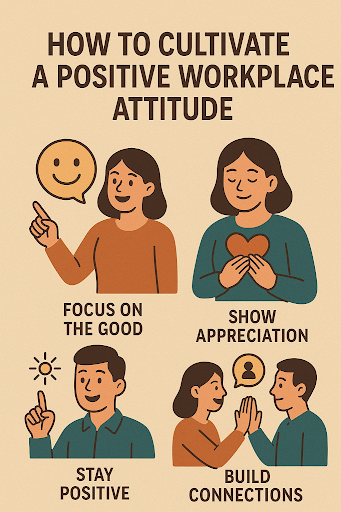
- Start meetings by checking in on people, not just tasks.
- Say thanks more often. And mean it.
- Let folks solve problems their way.
- Be honest when things are hard. People get it.
- Celebrate small wins. They matter.
Final Thought
Attitude isn’t some extra skill. It’s the thing that quietly shapes everything. How people work together. How they grow. How much they care.
You can’t control everything, but how do you show up? That’s yours. And it matters.
It’s not about being perfect. Nobody is. What counts are steadiness and straightforwardness, and leaving some room for others to be themselves.
That’s what sticks.
FAQs
1. What is workplace attitude?
Workplace attitude refers to how an employee behaves, thinks, and responds in a professional setting. It affects teamwork, productivity, and overall morale.
2. Why is workplace attitude important?
A positive workplace attitude builds trust, encourages collaboration, and motivates employees, while a negative one can lower morale and reduce efficiency.
3. Can workplace attitude impact employee engagement?
Yes, workplace attitude directly influences engagement. Employees with a constructive mindset are more motivated, committed, and willing to contribute.
4. What are signs of a positive workplace attitude?
Some signs include staying calm under pressure, helping colleagues, being open to feedback, and showing consistency in effort and respect.
5. How does a negative workplace attitude affect a team?
It can create stress, slow decision-making, lower morale, and reduce productivity, often leading to disengagement or turnover.
6. Can workplace attitude be improved?
Yes. With self-awareness, feedback, and support from leaders, employees can build better habits and shift towards a positive workplace attitude.
7. How can leaders encourage a healthy workplace attitude?
Leaders can set the tone by showing respect, recognizing effort, handling mistakes constructively, and encouraging open communication.
8. Is workplace attitude more important than skills?
While skills matter, workplace attitude often determines long-term success. A cooperative mindset helps teams adapt, learn, and grow together.
9. What role does feedback play in shaping workplace attitude?
Constructive, respectful feedback helps employees improve and feel valued, while harsh criticism may harm confidence and workplace attitude.
10. Can workplace attitude affect career growth?
Yes. Employers value adaptability, resilience, and positivity. A strong workplace attitude often leads to promotions and leadership opportunities.
11. How does workplace attitude spread within teams?
Attitude is contagious—positive energy encourages collaboration, while negativity can quietly lower motivation and team spirit.
12. What are small steps to build a better workplace attitude?
Simple acts like saying thanks, staying open to feedback, celebrating small wins, and supporting colleagues can create lasting change.
References
- S. Patel, 10 Proven Strategies to Cultivate a Positive Workplace Attitude, Workplace Wellbeing Hub, Feb. 2024. Available: https://www.workplacewellbeinghub.com/positive-attitude-strategies
- M. Johnson, How Team Attitude Shapes Productivity and Engagement, Business Culture Insights, Oct. 2023. Available: https://www.businesscultureinsights.com/team-attitude-productivity
Penned by Rahul Joshi
Edited by Shashank Khandelwal, Research Analyst
For any feedback mail us at [email protected]
Streamline Your Hiring with Eve Placement’s Custom Assessments
Eve Placement helps you engage, assess, and recruit top talent through tailored hiring challenges that go beyond resumes. From technical quizzes and real-world case studies to psychometric evaluations and audio/video submissions, our platform enables smarter, data-driven hiring decisions. Advanced security features ensure authenticity and eliminate fraud, giving you reliable results. Ready to hire better? Know More.
Mail us at [email protected]