
How Virtual Reality is Transforming Science Education
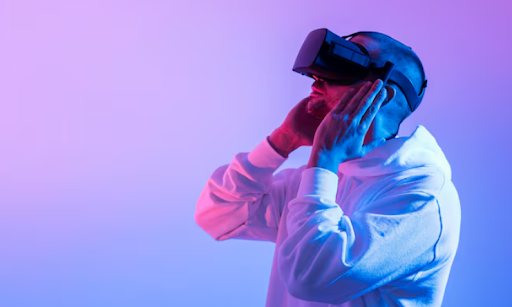
In recent times, VR Science learning has grown as a powerful tool for educators. Designed to support immersive STEM education, virtual reality allows university students to understand and comprehend complex scientific concepts in safe, engaging, and deeply understandable environments. With VR Science learning technology entering classrooms and labs globally, the shift from passive learning to active learning is reshaping how science is taught and how knowledge is retained by students.
The Promise of VR Science Learning
Virtual reality brings abstract or dangerous science topics to life. Students can sequence DNA, virtually enter a cell, or explore the surface of Mars, all with the help of a headset. According to ClassVR, VR enhanced teaching can improve knowledge retention by up to 75% and increase test scores by up to 20% in science subjects.
Moreover, an authentic review of immersive virtual reality in STEM education highlight regular improvements in engagement and learning performance across secondary and higher education setups. source
Evidence from Recent Studies
Recent meta analyses numerically state the VR’s impact on scientific and engineering skills. One analysis found a moderate positive effect (g ≈ 0.48) on practical science lab performance when compared to traditional methods, especially for medical and engineering students. Another review showed that “presence” the sense of spatial immersion, strongly correlates with motivation and task mastery.
In an experiment with 79 biology undergraduates using VR simulations to learn next-generation sequencing, outcomes improved significantly compared to traditional modes.
Real‑World Implementations in Classrooms
Setting | VR Use Case | Impact |
K–12 Schools | Virtual labs for anatomy or space exploration | Increased engagement and concept clarity |
Undergraduate STEM | Virtual engineering and physics modules | Higher test scores and confidence |
Specialized Training | Science labs for at‑risk or underserved groups | Gains: engagement +33.4 pts, interest↑ |
– In Nigeria, secondary students at risk of dropout saw engagement rise from 3.5 to 4.6 (out of 5) and performance increased by 33.4 points after VR STEM lessons. source
– In Texas, Midland ISD’s virtual lab allows students to explore brain anatomy through interactive VR—students reported transformative learning experiences
Advantages & Challenges of Immersive STEM Education
Benefits:
- Safe execution of experiments that would otherwise be dangerous or costly.
- Multimodal learning—visual, auditory, kinesthetic—drives better retention.
- High motivation and confidence through interactive tasks.
Challenges:
- Novelty effect: engagement may go down after initial excitement without sustained design.
- VR sickness: some students experience nausea or disorientation after extended use.
- Cost/access: while hardware prices are decreasing, many institutions still face budget constraints.
Recommendations for Implementation
For effective adoption of VR Science learning and immersive STEM education, educators should:
- Mix VR with traditional teaching, not replace it. Support VR modules with various explanatory sessions.
- Guide instructors to manage VR sessions and reduce cybersickness.
- Monitor and evaluate performance, tracking retention, confidence, and learning gains.
- Select scalable projects. Start with small VR labs (e.g., cellular biology) and expand.
- Plan for equity. Involve underrepresented groups to level access to high impact science experiences.
Conclusion
Virtual reality is continuously revolutionizing scientific education through VR Science learning, setting up paths to truly immersive STEM education. Student engagement, concept clarity, and confidence all increase in manifold when learners step into virtual environments tailored to scientific needs and requirements. Studies show average to significant rise in performance and retention rates along with increased student satisfaction.
Unlike traditional textbooks or videos, VR transforms education into a living laboratory, one where mistakes cost nothing, curiosity is rewarded, and complex ideas become more accessible. As VR hardware becomes more affordable and software more intuitive, educators have an increasing opportunity to create immersive, inclusive, and deeply effective science classrooms.
For those institutions who are dedicated to STEM education and its success, investing in VR Science learning is not just optional, it is now essential. By welcoming and accepting immersive STEM Education, schools and universities empower students to understand, experiment, and imagine in many ways other earlier generations could only dream of.
FAQs
Q1. What is virtual reality in science education?
Virtual reality in science education refers to immersive simulations where students can explore concepts like DNA sequencing or space travel in a safe digital environment.
Q2. How does virtual reality improve STEM learning outcomes?
Virtual reality enhances retention, increases test scores, and boosts confidence by turning abstract scientific concepts into interactive experiences.
Q3. Can virtual reality replace traditional teaching methods?
No. Experts recommend blending virtual reality with traditional approaches, as a mix of methods delivers the most effective STEM learning.
Q4. What are the main benefits of virtual reality in classrooms?
Key benefits include safer experiments, multimodal learning, higher motivation, and improved clarity of complex science topics.
Q5. Are there challenges in using virtual reality for STEM education?
Yes. Challenges include potential VR sickness, declining novelty over time, and cost barriers for some institutions.
Q6. How is virtual reality applied in K–12 and higher education?
In K–12, students use virtual reality for anatomy or space exploration. In universities, it supports advanced modules in engineering, physics, and biology.
Q7. What evidence supports virtual reality in science learning?
Meta-analyses show moderate positive effects on lab performance, stronger motivation, and significant knowledge retention when compared to traditional methods.
Q8. Why should schools invest in virtual reality for STEM education?
Virtual reality makes science more engaging and accessible, offering inclusive opportunities that prepare students for future careers in science and engineering.
References
- ClassVR: Benefits of Virtual Reality in Education – https://www.classvr.com/benefits-of-virtual-reality-in-education
- Systematic review on VR, AR in STEM – https://www.frontiersin.org/journals/education/articles/10.3389/feduc.2024.1410163/full
- Meta-analysis on practical skills in science/engineering – https://stemeducationjournal.springeropen.com/articles/10.1186/s40594-024-00487-2
- Impact of immersive presence and learning efficacy – https://arxiv.org/abs/2504.13845
- Case: syGlass VR STEM lab in Texas – https://www.mrt.com/news/education/article/diamondback-energy-syglass-stem-lab-20034271.php
- https://foinews.co.uk/categories/how-virtual-reality-is-transforming-science-education/
Penned by Kritika Gupta
Edited by Sneha Seth, Research Analyst
For any feedback mail us at [email protected]
Streamline Your Hiring with Eve Placement’s Custom Assessments
Eve Placement helps you engage, assess, and recruit top talent through tailored hiring challenges that go beyond resumes. From technical quizzes and real-world case studies to psychometric evaluations and audio/video submissions, our platform enables smarter, data-driven hiring decisions. Advanced security features ensure authenticity and eliminate fraud, giving you reliable results. Ready to hire better? Know More.
Mail us at [email protected]