
Trends in Remote Work Interviews for Graduates
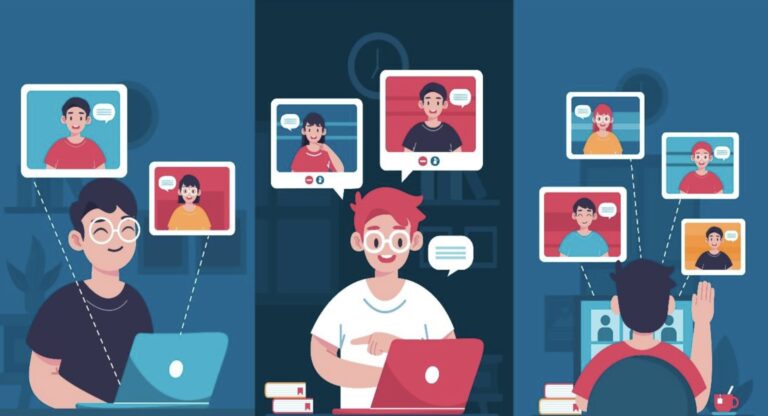
Topics to Be Covered: This article explores virtual interview trends in 2025, covering benefits, challenges, preparation tips, and the future of graduate hiring.
Table of Contents
Introduction: Why Virtual Interview Trends Matter
What Are Virtual Interviews?
Why Businesses Prefer Virtual Interview Trends
What Happens During Remote Interviews
Benefits of Virtual Interview Trends for Graduates
Challenges Faced by Students in Online Hiring
How to Prepare for Virtual Interviews Effectively
The Future of Remote Hiring and AI in Recruitment
Conclusion: Excelling with Virtual Interview Trends
- FAQs
Remote Interview Trends: Let’s Start with the 7 Basic Points
Remote interview trends are now shaping the entry of new graduates into the labor market. Previously, students visited office buildings, were exposed to a panel, and were asked questions face-to-face. But after the pandemic, the majority of organizations went digital for recruitment. Zoom, Google Meet, and Microsoft Teams occupied interview rooms [1]. So far, remote interviews are trendy because they are convenient and allow companies to communicate with students wherever they are.
1. What It Means
A remote interview is simply an interview that happens on the phone or computer. It may be a live video call, a recorded one in which you answer questions, or an activity on the internet [2]. Others have tests or group discussions done on the internet, too. The purpose is the same as in the normal face-to-face interview, but the equipment is all on the internet.
2. Why Businesses Use It
Companies employ online interviews because they are easy [3].
- They save time by interviewing more students within fewer hours.
- They minimize travel and other costs.
- They enable recruiters to contact applicants from different cities or nations.
- This method has proved to work, which is why companies continue to use it even after offices have reopened.
3. What Occurs in Remote Interviews
Students can anticipate several standard procedures [4]:
- Create an ID before starting.
- Join Meet live calls or Zoom.
- Take online quizzes or coding challenges.
- Have students provide answers on tape, at times with time constraints.
- In some cases, eye movement or background noise is monitored by AI applications.
- At first, one has to get used to it, but it becomes comfortable upon practice.
4. Benefits to Students
Remote interviews, besides being time-saving for businesses, are time-saving for students as well [5].
- No travel or other expenses
- Timing flexibility
- Equal opportunity for everyone
- Access to work in most areas
- It is more relaxed for most graduates than traveling to big cities for interviews.
5. Issues Confronted by Students
There are, nonetheless, a few problems. Internet or power failures delay the process. Some individuals are not prepared to be on camera. AI monitoring sometimes raises issues of equity. Privacy is also of concern as most interviews are recorded and stored [4].
6. Getting Ready for It
They will perform better if they are properly prepared in advance [5]:
- Test the laptop, microphone, and internet a day in advance.
- Select a quiet room with ample lighting.
- Dress to meet in person.
- Gaze directly into the camera.
- Practice interviewing with a friend.
They make one more confident and decrease errors.
7. The Road Ahead
Remote interviews will still be included in the recruitment process, too. All companies are adopting hybrid working, so hiring online is also rising. AI use in the future could be even smarter, and even virtual reality would be utilized in that [2]. Students familiar with such systems now will be prepared for the recruitment process of the next generation.
Conclusion
Virtual interviews are now the norm that graduates anticipate. They are cost-effective, time-saving, and provide access to students across the globe. Provided they are well prepared and confident, job seekers can excel. With adequate practical training in virtual hiring, graduates excel with this new way of job hunting.
FAQs
Q1. What are virtual interview trends in 2025?
Virtual interview trends in 2025 include AI monitoring, video calls, online assessments, and hybrid recruitment methods.
Q2. Why are virtual interview trends important for graduates?
Virtual interview trends help graduates prepare for modern hiring practices, ensuring they stay competitive in global job markets.
Q3. How can students prepare for virtual interview trends?
Students should test their devices, practice on camera, ensure strong internet, and follow remote hiring tips to succeed.
Q4. What challenges do virtual interview trends pose?
Challenges include internet instability, camera discomfort, AI monitoring concerns, and privacy issues with recorded interviews.
Q5. Do virtual interview trends benefit students?
Yes, virtual interview trends save travel costs, provide equal opportunities, and allow access to global job opportunities.
Q6. How do companies use virtual interview trends in hiring?
Companies use virtual interview trends to save time, reduce costs, and reach candidates across cities and countries.
Q7. Will virtual interview trends remain after 2025?
Yes, virtual interview trends will remain as hybrid and remote work models dominate the future of hiring.
Q8. Are virtual interview trends only about video calls?
No, virtual interview trends also include online quizzes, coding tests, AI monitoring, and even virtual reality simulations.
Q9. What role does AI play in virtual interview trends?
AI in virtual interview trends monitors responses, body language, and helps recruiters streamline candidate evaluations.
Q10. How can graduates turn virtual interview trends into opportunities?
Graduates can leverage virtual interview trends by practicing online communication skills and showcasing adaptability to employers.
References
[1] A. Rock, “A Guide to Remote Interviews,” Harvard Business Review, Jun. 2020. [Online]. Available: https://hbr.org/2020/06/a-guide-to-remote-interviews
[2] World Economic Forum, “Future of work: Digital recruitment,” WEF Agenda, Mar. 2021. [Online]. Available: https://www.weforum.org/agenda/2021/03/future-of-work-digital-recruitment
[3] McKinsey & Company, “The future of remote work,” McKinsey Insights, 2021. [Online]. Available: https://www.mckinsey.com/capabilities/people-and-organizational-performance/our-insights/the-future-of-remote-work
[4] Brookings Institution, “AI recruitment tools and bias,” Brookings, 2021. [Online]. Available: https://www.brookings.edu/articles/ai-recruitment-tools-and-bias [5] TopInterview, “How to prepare for a virtual interview,” TopInterview Blog, 2020. [Online]. Available: https://www.topinterview.com/interview-advice/how-to-prepare-for-a-virtual-interview
Penned by Riya Singh
Edited by Ragi Gilani, Research Analyst
For any feedback mail us at [email protected]
Streamline Your Hiring with Eve Placement’s Custom Assessments
Eve Placement helps you engage, assess, and recruit top talent through tailored hiring challenges that go beyond resumes. From technical quizzes and real-world case studies to psychometric evaluations and audio/video submissions, our platform enables smarter, data-driven hiring decisions. Advanced security features ensure authenticity and eliminate fraud, giving you reliable results. Ready to hire better? Know More.
Mail us at [email protected]