
8 Steps to Transform Hiring Scorecards for Campus Recruitment
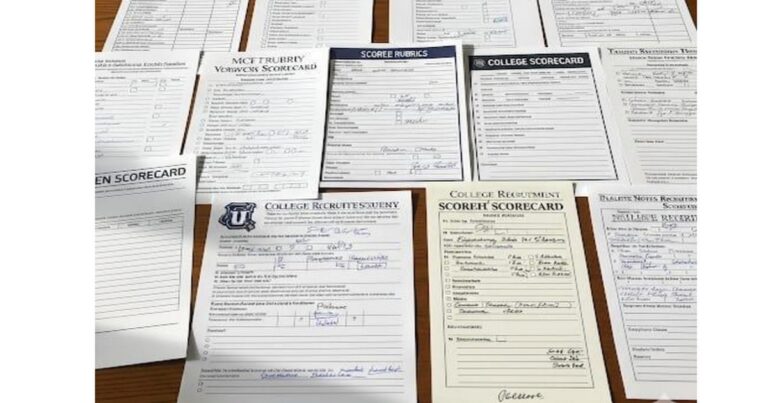
Let’s be honest. Campus recruitment regularly seems like a well-choreographed dance. We show up with smooth brochures, host mind-blowing information sessions, and compete for the “best” expertise from the same swimming pools of universities.
We communicate a huge sport approximately about variety and inclusion; however, while the dust settles and the provider letters are signed, we’re regularly left thinking:
Did we absolutely circulate the needle? It’s one thing to have a dedication to diversity; it’s another to have a clear, measurable, and human-centered device to make it a reality.
This is where the idea of a diversity hiring scorecard campus method comes into play. It’s now not approximately lowering human beings to numbers.
It’s about the usage of statistics to inform a tale, uncover biases, and intentionally construct a higher, more consultant staff, beginning with your newest hires. Building a diverse expertise pipeline from universities is a marathon, not a dash. It calls for transferring from true intentions to intentional movements.
If you’re prepared to move past the brochure and construct an inclusive access-stage application, here are 8 concrete steps to get you started. 1. Start with Your Why, Then Define Your Who. Before you make an unmarried wide variety, acquire your team and reaffirm why these topics are in your agency.
Is it to power innovation? Better serve your customers? Simply be a fairer business enterprise? This “why” is your anchor.
2. Then, collaboratively define what the “variety” approach is in your particular employer and roles. Is it gender identification, race/ethnicity, neurodiversity, socioeconomic background, or a mixture? You can’t measure what you have not defined. This clarity is the foundation of your whole range hiring scorecard campus effort.
Map the Entire Candidate Journey & Pinpoint Touchpoints. Grab a whiteboard and map out each step.
3. Build Your Scorecard with a “Less is More” Approach. Don’t attempt to sing 50 metrics at once.
You’ll get overwhelmed and surrender. Start with an easy but powerful scorecard targeted on 3 areas: Pipeline: % of programs from underrepresented businesses.
Process: Conversion charges from utility → interview → offer for every institution. (This is your largest supply of perception!).
4. Gather Qualitative Data (The Stories Behind the Numbers). This is where inclusion metrics reporting comes alive.
The numbers tell you what is going on; tales inform you why. Create a simple candidate review survey, and send it to anyone who has been put through an interview.
Ask one open-ended query: “How did you perceive our commitment to inclusion at some stage in the process?”
5. Train Your Brand Ambassadors (Recruiters & Interviewers)
Your team is the dwelling, breathing embodiment of your subculture to candidates. Equip them to be triumphant.
Train them on subconscious bias and the way to run structured interviews.
Ensure they can speak authentically about your corporation’s D&I adventure, along with the demanding situations, no longer just the wins. Diversify your interview panels.
Its indicators belong to something greater than any slogan ever ought to. An untrained interviewer can single-handedly undermine your whole variety approach.
6. Widen Your Talent Pool, Not Just Your Metrics
If your applicant pool isn’t always diverse, your hires might not be either. You cannot fix a pipeline problem on the final interview.
Go beyond the same old target colleges. Build partnerships with HBCUs, HSIs, and student golf equipment for underrepresented businesses in tech, commercial enterprise, etc.
Sponsor and attend meetings like SHPE, NSBE, SWE, and o4U. Ensure your marketing imagery and language resonate with a wide audience.
A portfolio of past interns from diverse backgrounds is more powerful than any inventory picture.
7. Close the Loop: Communicate and Act. Data gathered and then hidden in an HR folder is useless.
Create a virtuous cycle of communication: Share the findings (both the best and the bad) with leadership, recruiters, and interviewers.
Celebrate the wins publicly to preserve momentum. Most importantly, act on the remarks.
If applicants record that a certain interview question is complicated, trade it. If survey records show your recruiter is not representing your lifestyle well, offer coaching.
Showing that you pay attention and adapt builds colossal agreement.
8. Iterate, Don’t Perfect. Your first scorecard might not be perfect. Your first year of information might be messy.
That’s ok. The purpose is to start, examine, and improve. Review your scorecard and your strategy at the end of each recruitment season.
What metrics were useless? What new questions did the qualitative information enhance? Tweak your technique for the next 12 months.
This is not about achieving perfection on day one.
It’s approximately building a lifestyle of responsibility, empathy, and non-stop improvement. By taking these steps, you’re now not simply hiring diversely; you’re constructing a basis for a definitely inclusive business enterprise, beginning with its most modern individuals.
References
The ideas in the previous articles are built on the work of many experts in diversity, equity, and inclusion (DEI), talent acquisition, and data-driven HR. If you’re looking to dive deeper and explore the concepts from credible sources, here are a few places to start.
We’ve grouped them to help you find exactly what you need, whether it’s the strategic “why” or the tactical “how.”
Foundational Concepts & Strategy
These resources help establish the business case for DEI and the importance of moving from intention to measurement.
- [1] Deloitte, The Diversity and Inclusion Revolution: Eight Powerful Truths, 2018. [Online]. Available: https://www2.deloitte.com/insights/us/en/deloitte-review/issue-22/diversity-and-inclusion-at-work-eight-powerful-truths.html
- [2] I. Bohnet, What Works: Gender Equality by Design. Cambridge, MA: Harvard University Press, 2016. [Online]. Available:https://www.hup.harvard.edu/catalog.php?isbn=9780674089037
- [3] D. Rock and H. Grant, “Why Diverse Teams Are Smarter,” Harvard Business Review, Nov. 2016. [Online]. Available: https://hbr.org/2016/11/why-diverse-teams-are-smarter
FAQ:8 Steps to Transform Hiring Scorecards for Campus Recruitment
1. What is a hiring scorecard and why is it important in campus recruitment?
A hiring scorecard is a structured evaluation tool used by recruiters to assess candidates based on predefined skills, traits, and qualifications. In campus recruitment, a hiring scorecard ensures consistency and objectivity when comparing fresh graduates with diverse academic backgrounds.
2. How does a hiring scorecard improve the campus recruitment process?
A hiring scorecard standardizes the evaluation process, minimizes biases, and ensures that hiring decisions are based on measurable criteria. This leads to better candidate matches and more efficient hiring from university campuses.
3. What are the 8 steps to transforming a hiring scorecard for campus recruitment?
The 8 steps include:
Define role-specific competencies
Align with academic expectations
Involve campus recruiters in scorecard creation
Standardize interview rubrics
Automate scoring with technology
Use real-time feedback
Benchmark past hires
Continuously update your hiring scorecard
Each step helps ensure that your hiring scorecard remains relevant and impactful.
4. Can a hiring scorecard help reduce bias during campus interviews?
Yes, a well-designed hiring scorecard can greatly reduce unconscious bias by focusing on objective, skill-based criteria rather than subjective impressions.
5. Should hiring managers be involved in developing the hiring scorecard for campus recruitment?
Absolutely. Involving hiring managers ensures the hiring scorecard reflects the real needs of the team and helps align expectations between recruitment and functional departments.
6. How often should we update our campus recruitment hiring scorecard?
It’s recommended to review your hiring scorecard after every major campus hiring season or whenever job roles or skill requirements change. Regular updates keep it aligned with business goals.
7. What tools can help automate the hiring scorecard process?
There are many ATS (Applicant Tracking Systems) and HR tech tools that offer customizable hiring scorecard features, enabling automated scoring, feedback collection, and data analysis during campus drives.
8. How can we train recruiters to use a hiring scorecard effectively?
Provide hands-on workshops and create a guide for using the hiring scorecard during interviews. Make sure everyone understands how to score consistently and interpret the results meaningfully.
9. What are the top metrics to include in a hiring scorecard for fresh graduates?
Key metrics for a campus-focused hiring scorecard might include:
Communication skills
Problem-solving abilities
Cultural fit
Technical knowledge
Learning agility
10. Can a hiring scorecard be customized for different universities or departments?
Yes. Customizing your hiring scorecard by role, department, or university allows more accurate assessment of candidates based on the specific environment they’ll work in.
11. How does a hiring scorecard contribute to long-term hiring success?
A strategic hiring scorecard helps identify candidates who are not only qualified but also a strong fit for the organization, leading to higher retention and better performance over time.
12. What’s the difference between a hiring scorecard and a traditional interview evaluation form?
A hiring scorecard is more structured and competency-based, while traditional forms are often subjective. A hiring scorecard promotes consistency, fairness, and data-driven hiring.
13. Is it possible to use a hiring scorecard in group interviews or panel interviews?
Yes. In fact, using a hiring scorecard in group settings ensures all panelists evaluate candidates based on the same criteria, improving alignment and reducing discrepancies.
14. What are common mistakes when designing a hiring scorecard for campus recruitment?
Some common mistakes include:
Overcomplicating the hiring scorecard
Using vague criteria
Ignoring feedback loops
Not updating it regularly
15. Why should startups and SMEs invest in a hiring scorecard for campus hiring?
Even small businesses benefit from using a hiring scorecard, as it helps them compete for top campus talent with a clear, professional, and data-backed selection process.
Penned by Shrutt
Edited by Seema Acharya , Research Analyst
For any feedback mail us at [email protected]
Streamline Your Hiring with Eve Placement’s Custom Assessments
Eve Placement helps you engage, assess, and recruit top talent through tailored hiring challenges that go beyond resumes. From technical quizzes and real-world case studies to psychometric evaluations and audio/video submissions, our platform enables smarter, data-driven hiring decisions. Advanced security features ensure authenticity and eliminate fraud, giving you reliable results. Ready to hire better? Know More.
Mail us at [email protected]