
Modern educational institutions and industry employers are recognizing the distinguishing characteristics of a student portfolio website in distinguishing outstanding candidates from standard applicants. The strategic implementation of digital showcases through creative job showcase methodologies has transformed the conventional recruitment process. With portfolio websites, students are able to convey their abilities beyond the traditional methods of academic transcripts and standardized tests.
Today’s workforce environments require students to demonstrate multidimensional skill sets that are not typically outlined in formal qualification programs. Portfolio websites allow students to curate the storytelling of their authentic projects and to establish how they uniquely articulate value.
The Value of Digital Portfolio Presentation
Portfolio websites fundamentally transform how educational accomplishments translate into employment opportunities by providing complete visibility of students’ abilities in any given field. Research shows that over seventy-two percent of employers indicate that portfolios are considered useful when hiring. The virtual arena enables more elaborate multimedia presentations to show visual demonstrations, interactive elements, and extensive case studies. Portfolio evolutions collaboratively promote authentication in personal branding, allowing the individual participants to stand out from the talent pool.

Key Parts of Well-Crafted Portfolios
Successful website portfolios provide evidence of skills in handling clients while also providing effective messaging guidelines for professional purposes. Successful portfolio development includes well-documented projects that drive visibility for skills and education, problem-solving approaches, and measurement of project outcomes:
- Technical skill demonstration through working examples and prototypes.
- Writing samples of professional communication, such as reports and collaborative documentation.
- Leadership evidence that demonstrates self-initiation, coordination of multiple contributors, and management of projects.
- Industry-recognized certifications, awards, and recognition that distinguish exceptional performance.
Professional biographies establish personal brand identity, career targets, and differentiators as a professional. Content applicable to a portfolio needs to be updated regularly to provide relevant and current evidence of learning continuums and to demonstrate continual learning patterns.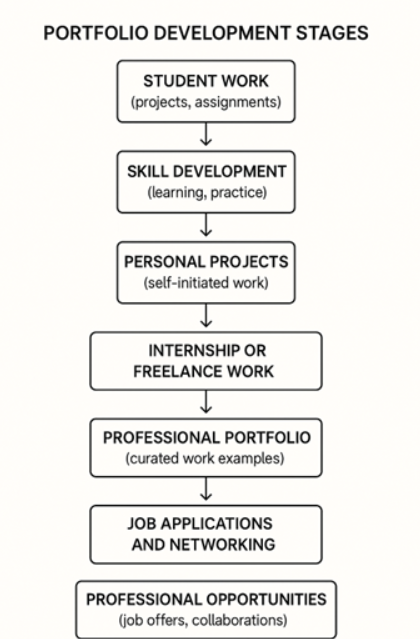
Technological Infrastructure and Design Considerations
Portfolio websites today often require responsive web design standards to produce a consistent user experience across desktop, tablet, and mobile devices. The navigation architecture that guides visitors through the logical progression of content must have easy-to-understand menus or search capabilities as well.
Additionally, navigational and content loading speeds must be fast, and components of the visual design must be visually appealing, as first impressions count. Integrating analytics provides a wealth of information to help with the future direction of the website, and will give some insight into visitor use, popular sections, and engagement with content.
Real-World Apps examples for Strategic Content Development
Using real-world applications in portfolios evidences useful experience and specialization. The following examples illustrate how students leverage different apps:
- Figma (UI/UX specialization): Used to create interactive prototypes of mobile and web interfaces. Portfolios that exhibited Figma wireframes, component libraries, and visual user flow diagrams illustrated the capabilities of design thinking and collaboration workflows.
- Tableau (Data visualization specialization): Employed to turn raw data into interactive dashboards. Embedding Tableau public links represents one’s analytical skills, making data a story—essentially making complex information digestible to stakeholders.
- GitHub (Software development specialization): Showcase version-controlled code repositories representing both front-end project examples and back-end project examples. Including commit history and all issues tracked during each project provided evidence of collaborative coding practices, particularly while working on small team projects, and demonstrated the concept of continuous integration.
- WordPress (Content strategy specialization): Used to build a responsive blog or news site; Portfolios that furnished custom themes from scratch, along with custom plugin integrations, evidenced full-stack development capabilities and sophisticated content strategies.
The portfolios include these applications, giving evidence of specialized skills. For example, a student with a focus on UI/UX could use a Figma prototype to show how they created a design iteratively. A candidate for data science could link to a Tableau dashboard visualizing real datasets. Showing these real-life examples in points and story form will situate professional authenticity and show how technical skills are immediately employed in industry contexts.
Evaluation and Optimization
Evaluating the effectiveness of a portfolio relies on exposing analytics for visitors, engagement rates, and conversion rates, such as interview requests. The completed content audit is a way of taking things to measure the accuracy and opportunity for improvement from what to learn, both through employer feedback and one’s assessment of trends as they evolve. Employer feedback gives a good indication of the extent of effective presentation, and evaluating network growth metrics, in turn, provides a basis for tracking the opportunities created through professional opportunities. It’s also an analysis of portfolios from competing industries, effective portfolios, that can also seek to take note of ways that publish emerging trends and to integrate, or continue to learn about trends.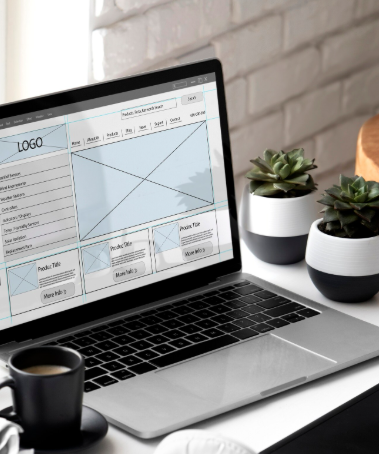
Conclusion
The use of student portfolio website platforms strategically adds a competitive advantage in today’s job markets, where traditional materials do not meet needs these days. These creative job showcases allow people to display skills authentically, set up a professional brand, and build valuable connections beyond the process of applying. Students who dedicate their resources to developing a comprehensive portfolio or student website are creating career opportunities for themselves and enhancing professional visibility.
Commonly Asked FAQs:
1. What is a student portfolio website?
A student portfolio website is a digital showcase of projects, skills, achievements, and experiences that represent a student’s capabilities to recruiters.
2. How do portfolio websites improve placements?
They provide recruiters with a quick, interactive way to evaluate a student’s work beyond just resumes and transcripts.
3. Why are portfolio websites considered game-changing for students?
Because they create a lasting first impression and show proof of skills, which improves placement chances.
4. What should be included in a student portfolio website?
Projects, case studies, achievements, certifications, soft skills, and a professional bio should all be showcased clearly.
5. How often should a student portfolio be updated?
It should be updated every semester or after completing significant projects to keep it fresh and relevant.
6. Can a portfolio website replace a traditional resume?
It doesn’t replace a resume but enhances it by providing depth and real examples that a PDF cannot show.
7. Do employers actually check portfolio websites?
Yes, studies show more than 70% of employers find portfolios helpful when deciding who to interview.
8. What design elements make a good portfolio website?
Clean layouts, easy navigation, responsive design, and fast loading times are crucial for a professional impression.
9. Should students include unfinished projects?
Yes, if they clearly state that the project is ongoing—it shows initiative and process thinking.
10. How do multimedia elements help in portfolios?
Videos, images, and interactive demos make the portfolio engaging and show practical application of skills.
11. Can non-tech students benefit from a portfolio website?
Absolutely—students in arts, commerce, law, and even social sciences can showcase research, essays, and presentations.
12. Do portfolio websites help in networking?
Yes, students can share their portfolio link on LinkedIn, helping recruiters and alumni connect more easily.
13. How can analytics improve a portfolio website?
Analytics show which projects recruiters view most, helping students optimize and highlight the most impactful work.
14. Should a portfolio website have a blog section?
Yes, writing blogs about industry trends or projects shows thought leadership and strong communication skills.
15. How important is a custom domain name?
Having a personalized domain builds credibility and shows professionalism compared to a free hosting link.
16. Can a portfolio website help international students?
Yes, it allows them to show their global experience, research work, and collaborations across countries.
17. Should students include grades or CGPA?
They can include them, but the focus should be on skills and projects that show practical ability.
18. How do portfolio websites benefit freshers with no work experience?
They allow freshers to showcase academic projects, internships, and personal experiments that replace formal experience.
19. What tools are best for creating a portfolio website?
WordPress, Wix, Squarespace, or no-code tools like Webflow are common for students with no coding background.
20. How can coding students make their portfolios stand out?
By embedding live demos, linking GitHub repositories, and sharing case studies with performance metrics.
21. Should students add client testimonials?
Yes, if they have freelanced or done internships, testimonials build trust and credibility.
22. Are interactive portfolios better than static ones?
Yes, interactive features like clickable projects and videos keep recruiters engaged longer.
23. Can a portfolio website be password-protected?
Yes, for sensitive projects, students can provide recruiters with access-only links.
24. How can students track job leads from their portfolio site?
Using contact forms with integrated email notifications or tracking clicks via Google Analytics.
25. What is the ideal number of projects to include?
5–7 high-quality projects are better than many small ones; focus on relevance and depth.
26. Should students include extracurricular activities?
Yes, showcasing leadership roles, volunteering, and event participation demonstrates well-rounded personality.
27. Can students include team projects?
Yes, as long as they specify their personal contribution to avoid confusion about ownership.
28. How do portfolios support campus recruitment?
They help placement cells present students to recruiters with an easy-to-browse digital profile.
29. Do portfolio websites improve personal branding?
Yes, they create a strong, professional online identity that differentiates a student from peers.
30. How often should design be refreshed?
At least once a year to keep it modern and aligned with current UI/UX trends.
31. Should students use templates or custom design?
Templates are fine for beginners, but custom design adds uniqueness and a personal touch.
32. Are portfolios useful for higher education applications?
Yes, they are highly valued for graduate school applications, scholarships, and research opportunities.
33. Can students add downloadable resumes to their portfolio?
Yes, a resume download button is convenient for recruiters and is highly recommended.
34. How does SEO affect a portfolio website?
Good SEO helps recruiters find the portfolio through Google searches, improving visibility.
35. Should students add social media links?
Yes, adding LinkedIn, GitHub, or Behance links can strengthen their professional presence.
36. What common mistakes should students avoid?
Avoid clutter, broken links, outdated projects, and overly complex navigation.
37. How long does it take to build a good portfolio site?
It can take a weekend for a basic version or a few weeks for a polished, customized site.
38. Can a portfolio website help in freelance work?
Yes, it acts as a digital business card to attract freelance projects and collaborations.
39. Should students display contact info openly?
Yes, but use a contact form to avoid spam; keep email and phone optional.
40. Why are portfolio websites considered future-proof?
Because they can evolve as students grow, making them a long-term career asset.
References
[1] “Best student portfolios examples, with tips for how to stand out,” Wix Blog, Aug. 26, 2025. [Online]
Available: https://www.wix.com/blog/student-portfolios-examples
[2] “15 Inspiring Portfolio Website Examples & Tips | Figma,” 2024. [Online]
Available: https://www.figma.com/resource-library/portfolio-website-examples/
[3] “15 inspiring professional portfolios and how to create your own with Adobe Express,” [Online]
Available: https://www.adobe.com/express/learn/blog/15-inspiring-professional-portfolios
[4] “8 expert tips for creating a killer design portfolio Feb. 13, 2025. [Online] Available:https://www.creativebloq.com/professionaldevelopment/portfolios/tips-portfolio
[5] “28 unique design portfolio examples built in Webflow,” [Online]
Available: https://webflow.com/blog/design-portfolio-examples
[6] “Student Career Portfolios,” May 30, 2025 [Online]
Available: https://www.jobready360.com/student-career-portfolios/
[7] “How to Make a Digital Portfolio That Gets You Hired,” Mar. 10, 2023. [Online]
Available: https://www.indeed.com/career-advice/finding-a-job/how-to-make-digital-portfolio