
Techniques For Successful Group Discussion That Impress Employers in 2025
Introduction
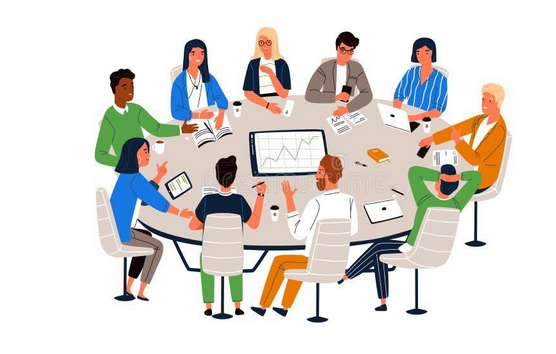
In today’s fast-paced world, group discussions have become a key component of hiring processes. Recruiters use them to not only assess a candidate’s communication skills but also to evaluate leadership skills, critical thinking and the ability to collaborate with a team. As organizations increasingly value interpersonal skills, collaboration and leadership qualities that are best accessed in a group discussion. It does not matter whether you are a fresher, a working professional or someone willing to pivot their career. Your ability to stand out in a group discussion can greatly influence the hiring decision and your impression on the employer.
In this article, we’ll explore the most effective group discussion techniques that not only help you perform better but also these techniques will help you leave a lasting impression on the employer. These techniques will help you stand out as a capable team player and effective communicator.

Why do employers use group discussion?
Before we jump into what the group discussion techniques one should follow, we need to know why group discussions are used by employers. Group discussion stimulates real workplace scenarios, which allow employers to assess and help them identify who will be needed for the future gains of the organization or the company. So, what do recruiters look for?
communication clarity
critical thinking and logical reasoning
leadership and initiative
teamwork and cooperation
conflict management
Your performance in group discussion will decide your deflection of how you function in a team, and make it a vital part of teamwork interview assessments, and will affect your impression in front of the employer.
Group discussion techniques to impress your employer:-
- Before you speak, understand the objective
Whether it’s problem solving, brainstorming or debating, know the goal and before diving into conversation, have a grasp of the purpose of the discussion.
Here is a tip you can use while being in a group discussion if you do not have enough understanding of the topic and you’re unfamiliar with it: listen to the first few speakers and then build your point based on the gap you notice.
- Initiate with confidence
Your voice is enough. Starting a discussion is a great way to stand out. If you are confident, initiate with a brief and structured overview, avoid arguments, just introduce the topic and suggest possible angles to explore your perspective.
Employers are always impressed by a candidate who initiates first, but with clarity and not with aggression.
- Stay calm under pressure
Group discussion can lead to arguments and become a heated matter. But staying composed, respectful and solution-oriented in such a moment can demonstrate how the professional is emotionally intelligent and mature. The traits are crucial for team dynamics.
- Build and bridge ideas
Instead of pointing out mistakes in the other speakers in group discussion, always try building on someone’s point or bringing composing ideas. Employers look for individuals who can provide perspective to a specific Idea or integrate ideas and move the discussion forward, rather than winning the argument.
- Conclude effectively
If you have allowed summarizing the discussion, takeaways and share your opinion in the group discussion. You not only showcase leadership skills but also showcase your ability to synthesize information that is highly valued in teamwork interview settings.
- Use data and real examples
The interview also builds on the foundation of trust and knowledge. Use of data and real examples will make the employer create a perception about you that you have a clear understanding of the topic and how much you are aware of the current scenario. In the group discussion, support your point with facts, real-life examples or case studies. This will strengthen your argument and signal that you are prepared for the interview.
Final thoughts
Acing a group discussion requires preparation, practice and emotional awareness. It acquires strategic communication, team orientation and emotional intelligence. By mastering these group discussion techniques, you are not only increasing your chances of selection but also demonstrating the traits employers value the most in collaborative environments, and you are building your impression and creating an outlook of what you are going to do in the future for the organization.
Whether you’re preparing for an assessment center, campus recruitment or high-stakes team interviews, these techniques will always help you in presenting yourself as a confident and collaborative professional.

Bonus FAQs:
1. What is a Group Discussion and why is it important in job interviews?
A Group Discussion (GD) is a structured conversation where participants share their ideas on a given topic, usually in a group of 6-10 individuals. It is widely used in hiring processes to evaluate a candidate’s communication, analytical thinking, leadership, and team collaboration skills. Employers consider GDs as a way to simulate workplace scenarios to observe how well candidates interact in team-based environments. Mastering Group Discussion techniques can be a decisive factor in making a strong impression during recruitment.
2. How does a Group Discussion help recruiters evaluate a candidate?
Recruiters use Group Discussions to evaluate several key traits that matter in professional settings, including:
Communication clarity
Critical thinking and logical reasoning
Teamwork and cooperation
Leadership qualities
Conflict resolution and emotional intelligence
These discussions mimic real-life workplace challenges, helping recruiters predict how a candidate might perform on the job.
3. What are some key Group Discussion techniques to stand out?
To stand out in a Group Discussion, consider the following techniques:
Understand the objective before contributing.
Initiate with confidence but avoid dominating the discussion.
Stay calm under pressure, especially when conversations get heated.
Build and bridge ideas, rather than criticizing others.
Conclude effectively, summarizing key points.
Support your views with real-life examples or data.
These techniques demonstrate professionalism and maturity during the GD.
4. How can I start a Group Discussion if I don’t know much about the topic?
If you’re unfamiliar with the Group Discussion topic, don’t panic. Listen actively to the first few speakers, identify the gaps or angles they’ve missed, and build your point based on those observations. This approach allows you to contribute meaningfully without appearing unprepared. Make sure your tone remains calm and analytical.
5. Is it always better to initiate a Group Discussion?
While initiating a Group Discussion can help you gain attention, it must be done wisely. Only initiate if you:
Clearly understand the topic
Can offer a brief and structured introduction
Avoid being overly aggressive or dominating
Initiating with confidence and clarity showcases leadership but poor initiation can have the opposite effect.
6. What should I avoid during a Group Discussion?
Avoid the following during a Group Discussion:
Interrupting others while they are speaking
Dominating the conversation
Being aggressive or argumentative
Going off-topic
Overusing fillers like “um,” “you know,” etc.
Repeating what has already been said without adding new insight
Maintaining professionalism and relevance in your responses keeps the discussion productive.
7. How do I show leadership in a Group Discussion without being aggressive?
Leadership in a Group Discussion isn’t about being the loudest. It involves:
Guiding the discussion back on track if it drifts
Encouraging quieter participants to contribute
Summarizing key points toward the end
Resolving conflicts with tact
True leaders in GDs are those who uplift the group and add value rather than dominate.
8. What role does emotional intelligence play in a Group Discussion?
Emotional intelligence is crucial in a GD. Staying composed during disagreements, showing empathy, and responding to criticism constructively highlight your emotional maturity. Recruiters look for candidates who can stay professional, even under stress, which is common in real-world team situations.
9. Can I disagree with someone in a Group Discussion? How should I do it?
Yes, disagreement is natural in a GD and can even strengthen your position if handled well. Here’s how to do it:
Disagree respectfully: Use phrases like “I see your point, but I would like to add…”
Focus on ideas, not individuals
Provide data or examples to back your argument
Avoid sarcasm or personal attacks
Constructive disagreement shows confidence and analytical thinking.
10. How important is data or real-life examples in a Group Discussion?
Data and real-life examples greatly enhance your credibility during a GD. Using facts, statistics, or case studies demonstrates:
A strong grasp of the topic
Real-world application of knowledge
Research skills
Recruiters often remember candidates who can connect theory to practice effectively.
11. What should I do if the Group Discussion becomes chaotic or unproductive?
In such cases, use this opportunity to shine by:
Calming the group with a neutral, composed tone
Proposing a return to the main agenda
Suggesting structured turns to speak
Reiterating key points for clarity
Bringing structure to chaos in a Group Discussion demonstrates leadership and composure.
12. Should I use hand gestures or body language during a Group Discussion?
Yes, but use them appropriately. Positive body language enhances your verbal communication. Maintain:
Good posture
Eye contact
Polite gestures
Avoid crossing arms, fidgeting, or pointing. Non-verbal cues matter as much as what you say in a Group Discussion.
13. How should I conclude a Group Discussion if given the chance?
If you’re asked to conclude the GD, briefly:
Summarize the key ideas and points discussed
Highlight common consensus, if any
Offer your closing opinion backed by reasoning
Maintain a neutral tone if there were conflicting views
A well-structured conclusion gives a positive closure to the discussion and demonstrates your ability to synthesize information.
14. How can I practice for a Group Discussion?
Here are a few ways to prepare for a GD:
Join mock GD sessions with peers
Stay updated with current affairs
Read and discuss opinion-based editorials
Record and review your GD performances
Work on voice modulation, clarity, and confidence
Regular practice builds fluency and helps identify areas for improvement.
15. Does confidence matter more than content in a Group Discussion?
Both are important. In a GD, confidence makes your delivery impactful, while content gives substance to your contribution. Aim to balance the two by:
Preparing well in advance
Speaking clearly and with conviction
Staying relevant and concise
Without confidence, your content may go unnoticed. Without content, your confidence may seem hollow.
Penned by Prashansa Rastogi
Edited by Ragi Gilani, Research Analyst
For any feedback mail us at [email protected]
Streamline Your Hiring with Eve Placement’s Custom Assessments
Eve Placement helps you engage, assess, and recruit top talent through tailored hiring challenges that go beyond resumes. From technical quizzes and real-world case studies to psychometric evaluations and audio/video submissions, our platform enables smarter, data-driven hiring decisions. Advanced security features ensure authenticity and eliminate fraud, giving you reliable results. Ready to hire better? Know More.
Mail us at [email protected]