
7 Powerful Strategies: Using Data Analytics to Improve Career Decisions
Topics: Student career analytics, Job data tools
Introduction
The contemporary labor market requires well-informed decision-making based on extensive data analysis. Workforce analytics and job data tools such as student career analytics have changed the way people approach their professional career paths, and career planning has become less of an instinctive guessing game and more of a strategic, evidence-based plan. This evolution allows professionals to make choices based on what employers are demanding, what skills they will need, and what ultimate growth potential there is.
Diving into Data-Driven Career Planning
Data analytics associated with career development includes systematically using quantitative information to inform employment related decisions. Data analytics as part of career development includes examining job trends in the labor market, the demand for skills, salary forecasts, and industry growth patterns to inform career decisions. Today’s platforms provide a detailed framework about the workings of labor force, in relation to how well we are positioning ourselves to meet the labor market, and identify directions in the labor market that we would like to consider for our careers.
More and more organizations are utilizing analytical platforms, or within the organization, to analyze and assess what their workforce needs are and potential talent gaps that may present themselves. These platforms are designed to collect data from thousands or millions of job postings, take into account trends in salaries, and help identify skill sets that are emerging or in demand across sectors.
Tools and Platforms
In the changing job market today, data analytics is replacing how people make career decisions. Newer platforms use artificial intelligence to explain each user’s strengths, skills, interests, and work preferences in relation to thousands of career options. For instance, CareerExplorer uses machine learning to connect users with potential, continuous job roles based on meaningfully developed datasets throughout different contexts, including changing market conditions.
Similarly, OpportuNext has demonstrated the power of job shifting through large data analytics, taking into account fascinating data sources such as job postings, occupational models, and labor survey experiences. OpportuNext helps users examine thousands of potential careers to find the best next step and possible unique career directions.
Alongside these larger multi-model career tools are many market research technology platforms like Mantiks, which offers visual and trend analysis at an industry standard. They provide relevant analyses that exhibit the expanding nature of each job and emerging and growing fields where skillsets will be leveraged. They also maintain global datasets that are updated regularly, advancing learning outcomes about the past and future job market. These technologies support job seekers and employability professionals in connecting their self-directed goals and how they align with relevant opportunities.
Data-Driven Decision-Making in Careers
Skills Gap Analysis and Development Planning
- Market-Alignment Assessment: Assess current capability against the expectations of industry by conducting an all-industry job market evaluation.
- Predictive Analytics: Explore predictive models that determine skills required in the future and how industries will shift.
- Competitor Intelligence: Understand the plans of competitors in the industry by examining competitors’ market research tools. Conducting analysis enables understanding of future career opportunities as well as distinguishing oneself from others.
Skills development based on analysis of data requires ongoing monitoring and adaptation. Contemporary analytics platforms provide instant feedback on skill acquisition, as well as relevance in the job market.
The Role of Technology in Career Planning
The advent of artificial intelligence and machine learning has revolutionized career coaching into a proactive rather than reactive process. Analyzing the potential outcomes for hundreds of thousands of career options as predicted by historical datasets. The platform uses a huge amount of information to break down into data that explains job satisfaction, wage increase, and progression alignment to provide evidence-based direction.
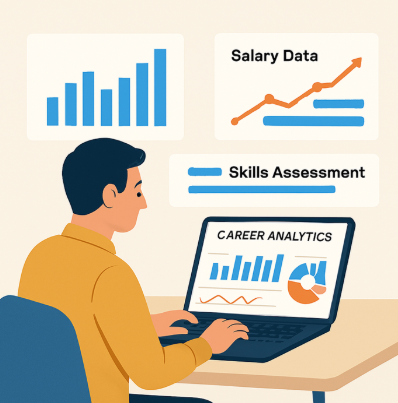
Current career analytics platforms allow users to create dashboards that monitor their metrics in real-time through customizable interfaces. The customizable dashboard allows people to track metrics related to their career alignments and notify them of new or emerging opportunities.
Strategic Implementations
In contemporary times, we are witnessing a transition to career development from instinct to informed strategic planning through the use of analytics. This is in response to the reality that 82% of large enterprises are investing in AI-driven analytics and forecasting to inform workforce planning and development. Professionals who can analyze and apply talent insight will gain a strong advantage.
Advantages of mastering career analytics:
- Increased confidence- Evidence-based career direction reduces ambiguity and confirms direction.
- Improved market awareness- Understanding trends that can anticipate changes and opportunities.
- Strategic lineup- Align personal aspirations more closely with evidence-based insights.
- Competitive advantage- Combine professional goals with evidence-based trends.
Most modern platforms use a combination of job postings, labor market indicators, reports, and other relevant sources to help identify potential career paths, jobs of interest, and directional alternatives. When used simultaneously, then:
- Triangulate multiple reliable sources.
- Evaluating confidence and credibility of data before drawing conclusions.
- Better understand how statistical inference works in real-world applications.
Blending professional capabilities with strong analytical capabilities will allow individuals to identify employment options, respond to new job market demands, and plan for sustained employment. In the era of transformations, constant change is no longer optional but a defining capability that empowers career growth.
Conclusion
Data analytics has fundamentally changed how we make career decisions. Unprecedented access to market intelligence, propensity and predictive analytics, student career analytics, and job data tools makes strategic and comprehensive market analysis possible. Current platforms are powerful in their abilities to assess skills, undertake market analysis, and develop career pathways, and allow individuals to test potential for professional development.
The shift towards data-driven career planning also requires individuals and organizations to build analytical literacy alongside developing other traditional professional skills. Organizations and individuals ready to employ analytical approaches will be able to gain a competitive advantage in a job market that presents increasing complexity, position themselves for sustained career advancements, and achieve success in professional settings.
References
[1]”20 Market Research Tools (With Importance and Types),” June 5, 2025. [Online].
Available: https://www.indeed.com/career-advice/career-development/market-research-tools
[2]”Is Data Analyst a Good Career in 2025?”, May 29, 2024. [Online]. Available: https://www.ccslearningacademy.com/is-data-analyst-good-career/
[3]”Data Analytics Certificate & Training – Grow with Google, March 31, 2023. [Online].
Available: https://grow.google/certificates/data-analytics/
[4]”Labor Market Analytics tool – Mantiks,” August 7, 2025. [Online]. Available: https://mantiks.io/labor-market-analysis
[5]”7 Data Analytics Careers That Are in High Demand, and How to Stand Out,”, July 22, 2025. [Online].
Available: https://www.bentley.edu/news/7-data-analytics-careers-are-high-demand-and-how-stand-out
[6] ” Real-Time Labor Market Intelligence from Job Data,” July 22, 2025. [Online].
Available: https://www.jobspikr.com
FAQs: Student Career Analytics & Job Data Tools
1. What is student career analytics, and how does it help in career planning?
Student career analytics refers to the systematic collection and analysis of data related to students’ skills, interests, and job market trends. Using student career analytics, individuals can make informed career decisions, identify emerging skills, and align their educational choices with in-demand industry roles.
2. How do job data tools support evidence-based career decisions?
Job data tools aggregate real-time information from job postings, salaries, and market trends. By using job data tools, students and professionals can compare their skills with market demand, anticipate future opportunities, and strategically choose career paths with higher growth potential.
3. What are the key benefits of using student career analytics for students?
Student career analytics offers several benefits, including personalized career recommendations, identification of skill gaps, and a clearer understanding of industry expectations. This helps students build targeted skills and increases their employability in competitive job markets.
4. How do job data tools improve understanding of labor market trends?
Job data tools analyze thousands of job postings across industries and geographies. This provides insights into emerging roles, in-demand skills, salary patterns, and sector growth, allowing users to make data-driven decisions about their careers.
5. Can student career analytics predict future career opportunities?
Yes, advanced student career analytics platforms use predictive analytics and AI to identify potential career paths based on historical data, current trends, and skill requirements, enabling users to proactively plan for high-demand roles.
6. What types of job data tools are commonly used for career planning?
Common job data tools include labor market dashboards, career forecasting platforms, and AI-driven job matching software. Examples include CareerExplorer, OpportuNext, and Mantiks, which provide insights into emerging careers, skill gaps, and salary expectations.
7. How does student career analytics identify skills gaps?
Student career analytics evaluates a student’s current skills against industry standards and emerging trends. By identifying gaps, it helps learners focus on acquiring the most relevant and high-demand skills to boost employability.
8. Are job data tools useful for early career professionals?
Absolutely. Job data tools provide early-career professionals with insights into market demands, career progression, and industry-specific requirements. This enables them to make strategic career moves and enhance skill sets effectively.
9. How does AI enhance student career analytics?
AI enhances student career analytics by processing massive datasets to recommend suitable career paths, forecast trends, and provide actionable insights. AI-driven analytics also personalize guidance based on individual skills, interests, and market opportunities.
10. Can job data tools help in choosing the right educational courses?
Yes. By analyzing skills required for high-demand jobs, job data tools can suggest courses and certifications that enhance a student’s qualifications. This helps align academic decisions with career objectives.
11. How do organizations use student career analytics for recruitment?
Organizations leverage student career analytics to identify candidates with the right skill sets and potential. By analyzing data from resumes, academic performance, and online profiles, recruiters can target high-potential candidates efficiently.
12. Can student career analytics improve career satisfaction?
Yes. By providing insights into market trends, skill requirements, and potential career paths, student career analytics allows individuals to choose roles that align with their strengths and interests, leading to higher career satisfaction.
13. Are job data tools only for tech-related careers?
No. Job data tools are versatile and cover multiple industries, including healthcare, finance, education, and renewable energy. They provide comprehensive insights into in-demand roles and emerging sectors across the job market.
14. How can students integrate student career analytics into internships?
Students can use student career analytics to identify internship opportunities that match their skills and career goals. Insights from analytics can guide them in selecting meaningful experiences that enhance their resumes and professional networks.
15. How frequently should one use job data tools for career planning?
Regular use of job data tools is recommended to stay updated on evolving market trends, salary changes, and skill demands. Quarterly or semi-annual checks can ensure that career strategies remain aligned with industry requirements.
16. What metrics are analyzed in student career analytics?
Student career analytics examines metrics like academic performance, skill proficiency, career interests, extracurricular activities, and industry trends. These metrics help generate personalized career recommendations and highlight skill gaps.
17. How do job data tools support global career opportunities?
Job data tools provide insights into international labor markets, identifying skills in demand globally and emerging sectors. This allows professionals to explore cross-border opportunities and plan for relocation or remote work in high-growth industries.
18. Are student career analytics platforms expensive?
Costs vary depending on features and depth of analytics. Many platforms, such as CareerExplorer and OpportuNext, offer both free and premium versions, making them accessible to students and professionals at different levels.
19. How does student career analytics contribute to long-term career growth?
By continuously tracking industry trends, skill demands, and personal performance, student career analytics enables proactive career planning. This helps individuals remain competitive, upskill effectively, and achieve sustainable career growth.
20. What is the future of career planning with student career analytics and job data tools?
The future of career planning is increasingly data-driven. With AI, predictive analytics, and global labor market insights, student career analytics and job data tools will empower individuals to make strategic, evidence-based career decisions, ensuring higher employability and professional success.
Penned by Priyansh Sharma
Edited by Sneha Seth, Research Analyst
For any feedback mail us at [email protected]
Streamline Your Hiring with Eve Placement’s Custom Assessments
Eve Placement helps you engage, assess, and recruit top talent through tailored hiring challenges that go beyond resumes. From technical quizzes and real-world case studies to psychometric evaluations and audio/video submissions, our platform enables smarter, data-driven hiring decisions. Advanced security features ensure authenticity and eliminate fraud, giving you reliable results. Ready to hire better? Know More.
Mail us at [email protected]