
Negotiate Your First Salary Like a Pro

Topics: First Salary Negotiation
Fortunately, even though the job offer may seem perfect, it is not flawless. What if it doesn’t live up to the hype today because it is financially inadequate, meaning that it doesn’t pay as much as one would hope? Salary negotiation forms a common and essential part of the entire hiring process, mainly for inexperienced professionals.
Here are 7 tried-and-true strategies that will help you negotiate your very first salary like a pro.
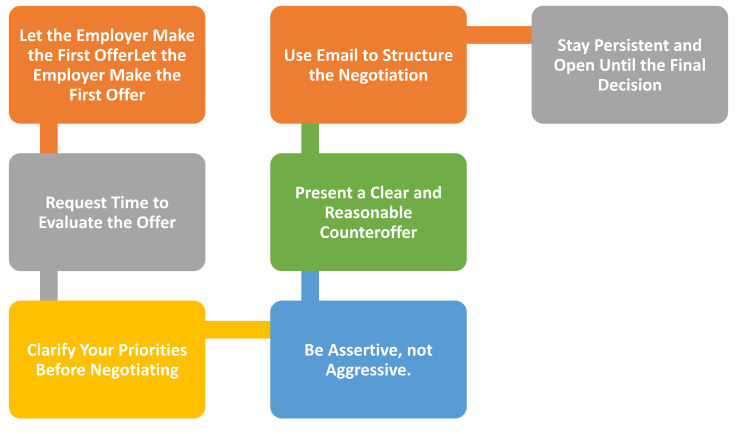
- Let the Employer Make the First Offer
You can start negotiating your salary much earlier than you think, often during your first conversation. This initial conversation is called the “pre-screen” or “pre-interview”, which usually happens with a recruiter from the company.
Right now, it is probably when you are likely to hear that question, which is a standard in hiring:
“How much do you expect to make, if I may ask, before we proceed?”
It’s natural to want to give a number, but the best thing to do is not to give any specific numbers. Allow the employer to state their offer first to understand their range and position.
Being non-committal at first gives you more power later on in the negotiation.
2. Request Time to Evaluate the Offer
You would want to spend some time contemplating your plan, what they are offering, what you want, and where you draw the line. So, when they say offer, just say casually but lay it out like, “We’re thinking these numbers; what do you think?” Then your best answer is something like, “Thank you so much. Would you kindly send me all the details by email? That way, I can consider it for a day or two.”
That is how you keep control from the very beginning.
3. Clarify Your Priorities Before Negotiating
Lay down your clear priorities before entering negotiations. Find out what matters to you: a bigger salary, flexible hours, more options for growth, or a lovely benefits plan. Know your non-negotiables and put yourself in a position to negotiate smartly and walk away with an acceptable deal.
Long story short, clarity turns to power. Your negotiation becomes intentional and highly confident.
4. Be Assertive, not Aggressive.
The desire to defend your position is what distinguishes assertiveness from aggression. Being overly kind and not asking for much is one of the things you can be doing incorrectly. For example, you were offered ₹20,00,000 and you responded with ₹20,20,000. That is a whisper, not a negotiation.
So, what level of aggression is appropriate? Countering the offer with an extra 10%–20% is a common strategy. Try aiming for 20% and see if they bite when you feel you have made a significant contribution to success, and your worth is comparable to that of other pros.
This helps in maintaining a professional demeanor.
5. Present a Clear and Reasonable Counteroffer
Be straightforward when it’s time to act, give a precise figure rather than a broad range. Although wage ranges are frequently mentioned by employers, bringing one up in response can backfire. They will tend to settle on the lower end—₹18,00,000—and conclude the conversation if you reply, “I’d be comfortable with something between ₹18,00,000 and ₹19,00,000.”
Aim high instead of the range. Simply select the highest figure you have in mind and confidently deliver it. Furthermore, don’t mention ₹18,10,935; you don’t need to be too exact. Use rounded figures, such as ₹18,50,000.
It keeps things straightforward, feels more natural, and still demonstrates that you have done your research.
6. Use Email to Structure the Negotiation
What may seem to be a great idea is not; in fact, it often places you at a disadvantage, especially over the phone with a recruiter who lives and breathes negotiated offers. They’re highly skilled, trained to pitch and to manipulate in real-time, rendering clarity and confidence in your arguments somewhat more difficult.
This is why salary negotiations should be conducted by email; the argument allows sufficient time for thought so that a counteroffer can be articulated in precise terms without a hitch!
7. Stay Persistent and Open Until the Final Decision
From the first counteroffer onward, the negotiating is still in process, and just because they placed a new offer does not mean that you have to accept the job. Your only exercise here is to shape the best version of the offer so that you can arrive at a good decision as to whether or not it works for you.
You can negotiate for a signing bonus, extra vacation days, or a flexible work schedule if the pay still seems set in stone. One or two add-ons that just might require some considerations aren’t ones you need to feel guilty asking for.
Remember- you’re under no obligation to say “yes” to the particular offer. If the offer doesn’t meet your needs, accept with thanks, but just walk away. Be confident and flexible; know your worth and accept nothing less than what you truly deserve.
Commonly Asked FAQs:
1. What is first salary negotiation and why is it important?
First salary negotiation is the process of discussing and improving the compensation package offered for your very first job. It is important because it sets the foundation for your future earnings, benefits, and career growth. Entering your first role with confidence in first salary negotiation shows employers you value your skills and understand your worth.
2. When should I start thinking about first salary negotiation?
You should begin preparing for first salary negotiation during the interview process. From the moment a recruiter asks about your expected salary, you’re already in the negotiation phase. Research market rates early, identify your priorities, and wait for the employer to make the first offer before you respond.
3. Should I let the employer make the first offer?
Yes. In first salary negotiation, allowing the employer to make the first offer gives you an advantage. Their initial figure sets the baseline and reveals their budget. Once you know their range, you can craft a well-informed counteroffer that is both fair and strategic.
4. How do I respond when asked about my expected salary?
In first salary negotiation, it’s best to avoid giving a specific number early on. Instead, respond with something like, “I’d like to learn more about the role and responsibilities before discussing salary.” This shifts the focus back to the employer’s offer and keeps you from undervaluing yourself.
5. How much should I counter in my first salary negotiation?
A good rule of thumb is to counter 10–20% higher than the employer’s initial offer. This shows confidence without appearing unreasonable. For example, if the offer is ₹20,00,000, countering at ₹22,00,000 is a strong yet professional move.
6. What if my counteroffer gets rejected?
In first salary negotiation, rejection of your counteroffer is not the end. Employers often expect pushback. If they reject, ask if there is flexibility in benefits like bonuses, vacation days, or professional development opportunities. This keeps the negotiation alive and may result in a more balanced package.
7. Should I negotiate my first salary over the phone or email?
It’s often better to negotiate your first salary over email. Email allows you to carefully craft your counteroffer, avoid pressure in real-time conversations, and maintain written records of the agreement. This makes your arguments stronger and reduces the risk of mistakes.
8. What role does research play in first salary negotiation?
Research is critical in first salary negotiation. Use platforms like Glassdoor, Payscale, or LinkedIn to understand industry averages. Knowing the market value for your role prevents you from accepting too little and strengthens your case when justifying your counteroffer.
9. How do I clarify my priorities before negotiating?
Before entering first salary negotiation, list your must-haves (like base pay), nice-to-haves (like remote work), and non-negotiables. This clarity allows you to stay confident, avoid distractions, and focus on securing an offer that aligns with your goals.
10. How do I avoid sounding aggressive when negotiating?
First salary negotiation should be assertive, not aggressive. Use polite language, focus on facts, and explain why your counteroffer is justified. For example: “Based on industry averages and my skills, I believe ₹18,50,000 would be a fair starting point.” This keeps the tone professional.
11. Is it okay to negotiate even if I really need the job?
Yes. First salary negotiation is not only acceptable but expected. Employers rarely withdraw offers simply because a candidate asks for more. Even if you urgently need the job, negotiating respectfully shows confidence and may secure you better pay.
12. What should I do if the employer says the salary is fixed?
If the base salary is fixed, first salary negotiation can shift toward other benefits. Ask for signing bonuses, health coverage, paid training, relocation assistance, or additional vacation days. These perks can significantly enhance the value of your package.
13. How do I know if my counteroffer is realistic?
In first salary negotiation, a realistic counteroffer is usually within 10–20% above the original offer. Anything far above market standards may be dismissed quickly. Balance ambition with practicality by using salary data and aligning your counteroffer with industry benchmarks.
14. Should I mention other job offers during first salary negotiation?
Yes, but carefully. Mentioning other offers can strengthen your case, but avoid sounding like you’re pressuring the employer. Frame it positively: “I’m very interested in this role, but I do have another offer at ₹XX. I’d love to join here if the package can reflect my value.”
15. What are the risks of skipping first salary negotiation?
Skipping first salary negotiation can have long-term consequences. Your initial pay often determines future raises and promotions. Accepting too little now may limit your earnings for years. Even a modest increase during negotiation compounds significantly over your career.
16. How do I keep control of the negotiation?
Control in first salary negotiation comes from preparation and patience. Ask for the full offer in writing, take time to evaluate, and never feel pressured to respond instantly. Phrases like “I’d like to review this over a day or two” help you maintain confidence and authority.
17. Should I give a salary range instead of a number?
In first salary negotiation, it’s better to state a single figure. Giving a range often leads employers to settle at the lowest number. For example, saying “₹18–₹19 lakhs” usually results in ₹18 lakhs. Instead, confidently ask for your top number.
18. Can I negotiate for growth opportunities instead of salary?
Yes. First salary negotiation can include career development requests, like paid certifications, mentorship, or fast-track promotions. These opportunities may add long-term value even if immediate salary adjustments aren’t possible.
19. How can body language affect in-person salary negotiations?
During face-to-face first salary negotiation, body language plays a big role. Maintain eye contact, sit upright, and use open gestures. Calm confidence communicates professionalism and helps reinforce your verbal message.
20. What should I do after successfully negotiating my first salary?
After completing first salary negotiation, request the updated offer in writing. Review all terms carefully before signing. Then, thank the employer professionally for their flexibility and confirm your enthusiasm for the role. This builds goodwill and sets a positive tone for your career start.
21. Final Advice: How do I negotiate my first salary like a pro?
-
Research salary ranges thoroughly
-
Let the employer make the first move
-
Counter 10–20% higher
-
Use email for clarity
-
Stay professional, assertive, and flexible
By following these strategies, you’ll not only maximize your starting salary but also gain negotiation skills that benefit your entire career.

Penned by Tanjal Kapoor
Edited by Reeya Kumari, Research Analyst
For any feedback mail us at [email protected]
Streamline Your Hiring with Eve Placement’s Custom Assessments
Eve Placement helps you engage, assess, and recruit top talent through tailored hiring challenges that go beyond resumes. From technical quizzes and real-world case studies to psychometric evaluations and audio/video submissions, our platform enables smarter, data-driven hiring decisions. Advanced security features ensure authenticity and eliminate fraud, giving you reliable results. Ready to hire better? Know More.
Mail us at [email protected]