
The Youth Roadmap: Navigating Career Growth with a Professional Plan
Introduction
The move from education to the professional world is the time of the youth, which is both thrilling and sometimes scary. Industries are changing fast, and the need for a versatile skill set makes it so that a mere degree is not sufficient anymore. What it takes to be successful today is being planned for in advance and in an intentional way. This is the point at which a professional plan becomes a must-have.
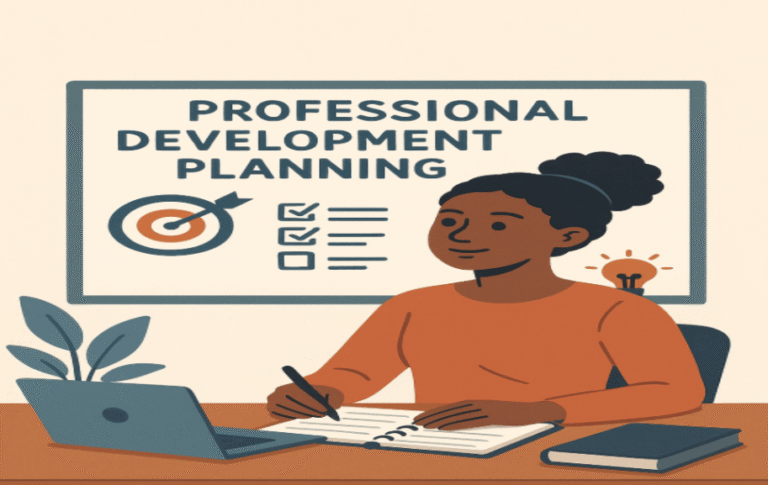
For young people, a professional development plan is not only a paper; it is a strategic roadmap that helps them to convert their vague dreams into concrete, doable steps; thus, not only is their career growth accelerated to a great extent, but also they keep on being relevant in the workforce in the long run.
A Professional Development Plan for Youth is more than just a document—it is a strategic roadmap that helps young individuals transform big dreams into actionable steps. It not only accelerates career growth but also ensures long-term relevance in a highly competitive workforce.
Why a Professional Plan is Necessary for Youth
A professional plan is a detailed career growth plan that shows an individual’s current skills, the future vision, and the steps that help one get from the present to the desired state. Youth professionals, who are usually in the skill acquisition and exploration phase, can benefit immensely from the plan, which gives them clarity and focus.
Clarity and Focused Action
Once in a career, a person can be very confused because he/she might be dazzled with the options to choose from and skills to be learned. A professional plan obliges the youth to set long-term goals (e.g., “In five years I will be a Senior Data Scientist”) and, by starting from the end, to come up with short-term, measurable objectives (e.g., “In this quarter I will get a Python certification”).
This concentration saves one from going to waste by taking irrelevant courses, as well as ensuring that each action directly contributes to the final career growth.
Bridging the Skills Gap
The beginning point of the plan is self assessment, where young people consider their strengths, weaknesses, and interests in comparison with the requirements of a target role.
This moment is crucial as it shows what technical and interpersonal skills, communication, leadership, and resilience are missing. The plan then specifies the courses, mentorship, or projects, followed by the completion of which the youth will have bridged their gaps, and thus, they will be the most suitable ones.
Enhancing Employability and Competitive Edge
They can earn the employers’ trust and admiration the most who can perfectly convey their career growth vision and hence prove their structured manner of self-development.
It is a sign that a person is ambitious, self-driven, and has a growth mindset when he/she keep such a professional plan in good order. Besides, young professionals raise their worth and thus, their income potential, if they are undertaking the relevant certification and training they have planned for, on time without being told by anyone, which, in turn, gives them a considerable competitive advantage in the labor market .
Key Components of the Youth Professional Plan
The plan of a realistic youth professional should not be a one-time thing, but rather a continuous revision and change; however, it must have at least these fundamental parts:
Self-Assessment
What am I good at? (Current skills, talents, and strengths)
What do I value? (Work, life balance, impact, compensation, company culture)
What do I need to improve? (Developing areas and skill gaps)
Plan: Rely on self, reflection methods, personality tests (like Myers, Briggs or DISC), and get honest feedback from friends, mentors, or supervisors.
Action Strategy & Resources
The plan for each short, term objective should lay out the precise steps and resources available:
Formal Learning: Degree programs, online courses (Coursera, LinkedIn Learning), workshops.
Social Learning: Mentoring or coaching, attending industry events for networking, learning from peers.
Experiential Learning: “Stretch assignments”, cross, functional projects, job shadowing, and volunteering as ways to get new skills and practice them.
Conclusion
A youth comprehensive plan is probably the most powerful single lever that one can use to chart a trajectory of career growth successfully. Doing so, it helps to build discipline, facilitates the continuous intake of new knowledge, and makes sure that every opportunity, whether it be formal training or on the job experience, is part of a greater strategic plan.
Becoming the owner of their own development and at the same time keeping strategic professional plans, young people today will be able to navigate the complicated modern labor market with confidence, thus, making their potential real achievements in the professional field. The moment for planning is here, the future career aspirations become a reality right now.
References
[1] Cornell Institute for Public Affairs. (2024). What is a Professional Development Plan and Why Do You Need One?Cornell University. [Online].
Available: https://mpastories.publicpolicy.cornell.edu/blog/what-is-a-professional-development-plan-and-why-do-you-need-one
[2] Qualee. (2023). Professional Development Plan: Definition and Key Components. Qualee HR Glossary. [Online].
Available: https://www.qualee.com/hr-glossary/professional-development-plan
[3] Harvard Division of Continuing Education. (2024). Why Is Professional Development Important? Harvard Professional Development. [Online].
Available: https://professional.dce.harvard.edu/blog/why-is-professional-development-important/
[4] Upskillist. (2024). The Importance and Benefits of Professional Development. Upskillist Blog. [Online].
Available: https://www.upskillist.pro/blog/the-importance-and-benefits-of-professional-development
FAQs :-
1. What is a Professional Development Plan for Youth?
A Professional Development Plan for Youth is a structured career roadmap that helps young individuals identify skills, goals, and actionable steps needed for long-term growth. This plan supports youth in understanding their strengths, improving weak areas, and aligning their learning with future career goals.
2. Why is a Professional Development Plan for Youth important?
A Professional Development Plan for Youth is important because it gives clarity in decision-making, helps avoid random career moves, and ensures that students or fresh graduates follow a focused direction. It also increases employability by preparing them with the right skills at the right time.
3. How does a Professional Development Plan for Youth improve career clarity?
A Professional Development Plan for Youth guides young people to set long-term and short-term career goals, making it easier to choose the right courses, experiences, and opportunities. This reduces confusion and helps them understand what steps matter the most for future success.
4. What skills can a Professional Development Plan for Youth help identify?
A Professional Development Plan for Youth helps identify both technical and soft skills. Through self-assessment, youth can discover strengths like problem-solving or communication and recognize gaps in areas such as leadership, time management, or digital skills.
5. How does a Professional Development Plan for Youth bridge skill gaps?
A Professional Development Plan for Youth highlights missing skills by comparing current abilities with industry requirements. It then suggests courses, certifications, mentorship, or internships that help youth bridge those gaps effectively and strategically.
6. Can a Professional Development Plan for Youth increase employability?
Yes, a Professional Development Plan for Youth significantly increases employability. Employers prefer candidates who show commitment to learning, self-improvement, and long-term thinking. When youth follow a structured plan, they appear more confident, prepared, and career-focused.
7. What components should be included in a Professional Development Plan for Youth?
A Professional Development Plan for Youth should include self-assessment, goal-setting, skill gap analysis, learning plans, timelines, and progress tracking. These components help youth build a strong foundation and ensure consistent improvement throughout their career journey.
8. How does a Professional Development Plan for Youth support continuous learning?
A Professional Development Plan for Youth keeps young individuals engaged in continuous learning by motivating them to take up new courses, certifications, workshops, or experiential projects. It also encourages them to stay updated with industry trends and adapt accordingly.
9. What role do mentors play in a Professional Development Plan for Youth?
Mentors play a crucial role by guiding decision-making, offering industry insights, and helping youth avoid common mistakes. With a mentor’s support, a Professional Development Plan for Youth becomes stronger, more practical, and more aligned with real-world expectations.
10. How often should a Professional Development Plan for Youth be updated?
A Professional Development Plan for Youth should be updated every few months or whenever goals change. Since industries evolve quickly, updating the plan ensures it stays relevant and continues to support meaningful career progress.
Penned by Tushar Sharma
Edited by Preksha Khatod, Research Analyst
For any feedback mail us at [email protected]
Streamline Your Hiring with Eve Placement’s Custom Assessments
Eve Placement helps you engage, assess, and recruit top talent through tailored hiring challenges that go beyond resumes. From technical quizzes and real-world case studies to psychometric evaluations and audio/video submissions, our platform enables smarter, data-driven hiring decisions. Advanced security features ensure authenticity and eliminate fraud, giving you reliable results. Ready to hire better? Know More.
Mail us at [email protected]