
10 Revolutionary Placement Gaming Tournaments Transforming Employer Branding in 2025
The face of recruitment is being revolutionized as companies adopt placement gaming employer brand models that transform the way organizations recruit and assess the best candidates. Contemporary businesses are realizing that competitive culture hiring strategies via gaming tournaments provide genuine engagement experiences that no conventional recruitment strategy can offer. These creative placement gaming employer brand programs are more than recruitment vehicles but holistic approaches that highlight company culture, values, and career opportunities and build competitive culture hiring climates that automatically attract top-performing candidates.
The trend in placement gaming employer brand strategy is a paradigm shift in company approaches to engaging the workforce, transcending traditional job advertisements to make interactive, memorable experiences that appeal to today’s professionals.
The Gaming Revolution for Talent Acquisition
Conventional hiring processes fall short to capture the real personalities, problem-solving skills, and teamwork competencies of outstanding employees. Gaming competitions overcome the constraints by generating interactive settings where candidates freely exhibit their strengths and get familiar with the company culture. This model strongly appeals to millennial and Gen Z workers who are passionate about genuine experiences at workplaces and look for employers that recognize their way of communication and values.
Effective gaming tournaments need thorough design that optimizes entertainment value against valid assessment opportunity. Most effective programs integrate team challenges, individual skill showcases, and collaborative problem-solving exercises that uncover candidate abilities while highlighting employer values and workplace culture.
Strategic Framework for Gaming-Based Recruitment
Today’s placement games tournaments are run on sophisticated systems that tie game mechanics to precise recruitment goals and employer branding purposes. Most of these programs start with thorough planning stages that determine target candidate profiles, outline assessment criteria, and create game scenarios that disclose relevant professional competencies.
Effective implementations combine several game styles to evaluate varied skill sets, ranging from solo puzzle-solving activities that test analytical proficiency to strategic team games that uncover leadership ability and collaboration skills. The diversity achieves broad candidate assessment and keeps participants engaged during lengthy recruitment processes.
Technology platforms facilitating such tournaments usually feature real-time analytics, behavioral evaluation tools, and automated scoring mechanisms that offer objective metrics of candidate performance while upholding the entertaining, participative environment that makes gaming tournaments worthwhile recruitment drives.
Industry-Specific Gaming Applications
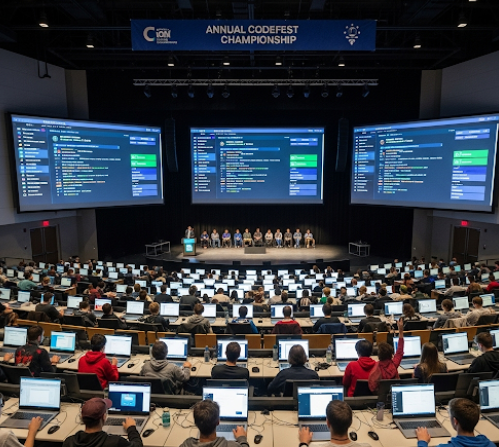
Technology firms have led the way with advanced coding contests, hackathons, and algorithm challenges that specifically evaluate programming abilities as well as display innovation cultures and technical excellence levels. The events typically include actual business issues that candidates solve in groups, giving insight into technical abilities as well as cultural fit.
Financial services companies use trading simulations, risk analysis games, and market analysis challenges that test quantitative competencies, high-pressure decision-making, and strategic thinking skills. These simulations tend to use real market data and time constraints factors that reflect real-world workplace environments.
Creating Authentic Employer Brand Experiences
The most effective gaming tournaments go beyond mere recruitment tools to become genuine employer branding events that effectively convey company culture, values, and professional opportunities. Players get real insights into organizational personalities, work environments, and opportunities for growth that conventional recruitment processes fail to offer.
Interactive company presentations, employee endorsements, and behind-the-scenes visibility at the time of tournament events build holistic employer brand experiences that affect candidate perception well beyond direct hiring choices. Several participants become ambassadors for the brand who share positive experiences through professional networks, carrying recruitment influence exponentially.
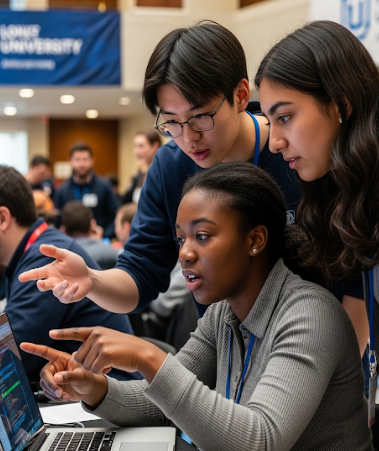
The multiplayer culture of game tournaments enables candidates to engage with existing employees, managers, and executive leaders directly in casual, natural environments that expose true organizational cultures instead of highly scripted recruitment pitches.
Technology Integration and Platform Development
Virtual and hybrid competition models enhance accessibility while offering global reach and minimizing logistical hurdles and costs of live events. Sophisticated platforms enable real-time collaboration, video conferencing integration, and an end-to-end gaming experience that keeps players engaged regardless of their locations.
Artificial intelligence and machine learning features more and more assist tournament platforms by examining player behavior trends, recognizing high-potential candidates, and giving predictive analysis on candidate success likelihood and cultural fit compatibility.
Overcoming Challenges of Implementation
Effective gaming tournament implementation involves thoughtful consideration of legality, just assessment processes, and accessible design principles that provide equal opportunity for every candidate. Entertainment value must be weighed against professional assessment needs while upholding ethical standards of recruitment.
Budget elements involve platform licensing, event operations, prize money, and technology infrastructure investments that differ widely depending upon program complexity and scope. Positive ROI is reported by most organizations within 12-18 months of program operation, although initial investment costs can be considerable.
Change management issues typically occur as established recruitment teams integrate gaming-based methods, with extensive training, well-defined success measurements, and ongoing support being needed to allow effective implementation and long-term program success.
Cultural Influence and Worker Involvement
Gaming competitions tend to create strong internal enthusiasm and involvement among existing staff who engage in the capacity of mentors, judges, or team participants. This engagement intensifies company culture as it offers genuine worker endorsements that consolidate employer branding impact.
Worker loyalty gains come through in gaming competitions as they illustrate organizational dedication to greatness, staff growth, and cultural superiority that transpires with existing team participants and solidifies great workplace experiences.
Measuring ROI and Recruitment Measurement
Hierarchical measurement frameworks assess gaming tournament effectiveness using various metrics such as candidate quality, speed improvements in time-to-hire, cost reductions per hire, and employer brand perception improvement. Companies usually monitor longitudinal data to determine whether the performance of the tournament has a correlation with long-term employee success.
Participant feedback gives important insight into employer brand perception shifts, recruitment process satisfaction, and future participation in the organization. High levels of satisfaction are often reflected in higher rates of referral and positive employer reviews on professional sites.
Future Trends and Evolution
Trending are greater integration with virtual reality and augmented reality technologies that generate even more immersive recruitment experiences. Such advanced platforms will provide more advanced skill testing and cultural fit assessments while preserving the engaging, interactive feature that makes gaming tournaments successful.
Specialization by industry will intensify as organizations create gaming situations that increasingly closely align with particular role specifications and industry needs, resulting in thoroughly focused recruitment experiences targeting the ideal range of candidates with precisely the appropriate skill sets and cultural fit.
Transforming Recruitment Through Innovation
The growth of placement gaming employer brand approaches is more than a recruiting trend – it’s an essential shift in how companies reach talent and showcase their culture, values, and opportunities. Firms that adopt competitive culture hiring via gaming tournaments are creating better, more engaged teams while fostering authentic employer brand experiences that speak to today’s professionals.
As the work environment evolves further toward digital, collaborative, and innovation-driven workplaces, placement gaming employer brand programs will become even more necessary for organizations in search of the best and brightest talent. The effectiveness of such programs at building substantive relationships among employers and candidates proves that competitive culture hiring strategies are the way to the future of strategic talent acquisition and employer brand brilliance.
Commonly Asked FAQs:
1. What is a placement gaming employer brand?
A placement gaming employer brand is a recruitment approach where companies use gaming tournaments, simulations, and challenges to showcase their culture, attract top talent, and evaluate candidate skills. It blends employer branding with interactive hiring methods.
2. How does a placement gaming employer brand improve recruitment?
It transforms hiring into an engaging, skill-focused experience. Instead of just interviews, candidates demonstrate problem-solving, teamwork, and creativity in realistic game-based scenarios, leading to more accurate assessments.
3. Why is placement gaming popular with Gen Z and Millennials?
Younger generations value authentic, interactive experiences. A placement gaming employer brand appeals to them because it reflects modern workplace culture, encourages collaboration, and feels more like participation than interrogation.
4. How can companies design effective placement gaming tournaments?
Planning involves defining target candidate profiles, selecting game mechanics that reflect real job tasks, and integrating fair scoring systems. Including team-based and individual challenges ensures a well-rounded evaluation.
5. What industries benefit most from a placement gaming employer brand?
Technology, finance, consulting, and creative industries are leading adopters. Tech firms use coding contests and hackathons, while financial services use trading simulations and decision-making games to gauge candidate capabilities.
6. What technologies power modern placement gaming tournaments?
Advanced platforms support virtual collaboration, AI-based behavior analysis, real-time scoring, and automated analytics. Many programs also integrate video conferencing and gamified dashboards to enhance candidate engagement.
7. How does a placement gaming employer brand improve cultural fit assessment?
Games replicate real workplace scenarios, allowing recruiters to observe how candidates solve problems, communicate, and collaborate. This provides insights into whether they align with company values and culture.
8. Are placement gaming tournaments cost-effective?
Yes. Although initial setup costs can be high, most organizations report ROI within 12–18 months through faster hiring cycles, better candidate quality, and stronger employer brand perception.
9. Can smaller companies adopt placement gaming employer brand models?
Absolutely. Smaller firms can host scaled-down versions, using affordable platforms or even gamified challenges during campus recruitment drives. This levels the playing field against larger competitors.
10. How does a placement gaming employer brand affect employee engagement?
Employees often join as mentors, evaluators, or teammates, which strengthens internal culture and promotes pride in the company. It becomes a shared experience that reinforces loyalty and motivation.
11. How do placement gaming programs measure success?
Companies track metrics like time-to-hire reduction, cost-per-hire, candidate performance scores, and post-hire success rates. Candidate feedback and social media sentiment also indicate employer brand impact.
12. What role does AI play in placement gaming tournaments?
AI analyzes candidate behavior patterns, predicts success likelihood, and highlights potential cultural misalignments. It ensures objective assessments while reducing unconscious bias in recruitment.
13. Are there challenges in implementing a placement gaming employer brand?
Yes, challenges include ensuring fairness, legal compliance, accessibility, and balancing entertainment with serious assessment. Proper planning, training, and transparent criteria help mitigate these issues.
14. How can placement gaming improve employer branding long-term?
It leaves candidates with a positive impression, even if they are not selected. Many participants share their experiences online, generating organic employer brand advocacy and increasing future talent interest.
15. What future trends will shape placement gaming employer brand strategies?
Expect greater use of virtual reality, augmented reality, and adaptive game mechanics that evolve based on player behavior. Industry-specific games will also become more precise in assessing job-specific skills.
16. How do placement gaming tournaments appeal to passive candidates?
Gamified recruitment events are less intimidating than formal interviews, attracting candidates who might not actively be seeking jobs but are open to exploring opportunities through engaging challenges.
17. Can placement gaming tournaments replace interviews completely?
Not entirely. They work best as part of a hybrid recruitment strategy, where game performance is combined with interviews, portfolio reviews, and behavioral assessments for a comprehensive hiring decision.
18. How do companies promote placement gaming tournaments?
Employers use campus promotions, social media campaigns, employee referrals, and partnerships with universities or coding communities. This ensures high-quality participation and strong talent pipelines.
19. What is the candidate experience like in a placement gaming employer brand model?
Candidates report higher engagement, reduced stress, and better understanding of the company. They feel evaluated fairly on skills rather than just resumes, which improves satisfaction with the hiring process.
20. How does a placement gaming employer brand support diversity hiring?
By focusing on performance in neutral, skill-based tasks rather than background or pedigree, it allows diverse candidates to shine and promotes equitable access to opportunities.
References :
“Employer Branding in Today’s Competitive Hiring Landscape,” Recruitment Industry Trends, Pandologic, May 19, 2023.