
National Placement Cosmic Alignment: The Significance of Skill-Market Alignment
Introduction
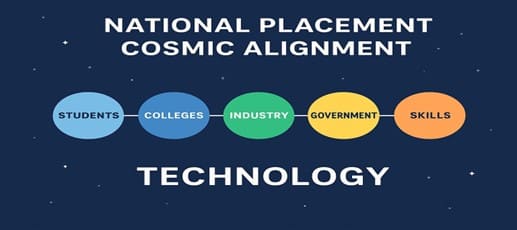
In a country like India,with a vast young population and a developing industry, simply receiving a degree no longer assures a job. What determines actual employability is when education,skill training, industry requirements,and employment possibilities coincide well. The cosmic alignment of education with market demands has the potential to greatly enhance national placement results and support the pursuit of a universal job.
The Reality of Employment in India
A significant number of Indian graduates, as per the latest information, are reported to struggle in finding jobs that match their level of education or skills. The Mercer | Mettl India Graduate Skills Index 2025 reveals that just 42.6% of Indian graduates are considered employable, which is a significant drop from 44.3% in 2023.
One more recent survey also reported the growth of the last ten years: employability went up from 33.95% in 2013 to 54.81% in 2024. However, the cut in the 2025 report highlights that the “skills-market mismatch” issue is still there. To a greater extent, employers demand a combination of technical and non-technical skills (such as communication, problem-solving, and adaptability), while many graduates do not have these skills.
Research and publications highlight that the quality and applicability of graduates’ education and training are more important than the quantity of graduates.
What “Cosmic Alignment” Means for National Placement
“Cosmic alignment” here denotes a proper fit between many elements.
What students learn (education and training)?
Employers’ requirements for skills (both soft and technical).
What employment is accessible in the economy.
How effectively placement systems connect graduates with jobs.
When everything is aligned:
Graduates actually have the skills required for the job ,helping them move closer to a universal job opportunity.
Employers get the talent they want, which is qualified and relevant.
With the help of higher placement rates, underemployment and the loss of unrealized potential are abolished.
When the alignment is poor:
A lot of graduates, in addition to being unemployed, suffer from underemployment despite the fact that they have a degree.
Industries face skill shortages and the problem of hiring people who are underqualified.
There is an absolute loss of talent,which harms not only the individuals but also the economy.
Challenges in Achieving Alignment
There are still quite a few obstacles:
1. Skill gaps:
The majority of graduates are deficient in the non-technical skills that businesses require, for example, communication, critical thinking, and adaptability.
2. Rapid changes in job demands:
Traditional courses are often considered to be lagging when it comes to the demand for AI, data science, and new-age technical roles.
3. Mismatch between education and industry demands:
Even if universities produce a large number of graduates, their courses and training may not be aligned with the industry’s needs.
4. Poor placement mechanisms and weak bridging of the academia–industry gap:
Without the presence of interns, vocational training, or industry partnership, the majority of graduates remain unqualified for actual careers.
Positive Trends & Why Alignment is Possible
There are positive developments despite obstacles:
For technical and AI/ML-related occupations, employment among graduates is rising. The 2025 research reveals about 46% employability in AI/ML-driven occupations, higher than in previous years. Awareness is emerging that soft skills and adaptability are important, not just degrees — leading initiatives to strengthen vocational training, skill development, and industry-aligned courses. Policy initiatives and training programmes (public or private) focused on bridging the skill gap and boosting job preparation can increase alignment (education ↔ industry ↔ placement).
What Needs to be Done — Building a Powerful Placement & Skill Ecosystem
To attain “cosmic alignment” at the national level and improve placement outcomes, the following procedures are crucial:
First of all, the curriculum and pedagogy have to be changed by the educational establishment so that they can focus more on the development of soft skills, adaptability, real-world problem solving, as well as relevant technical skills. Alongside the academic programme, industrial exposure, internships and vocational training should be made attractive and accessible so that the knowledge gap between the academic world and business, that is caused by the rapid changes in technology, can be narrowed.
The interaction between education and business should be strengthened and made more intensive. Colleges, training centers and businesses should join forces to develop courses that are relevant and useful for the labour market.
Building up local placement systems and enhancing support services is also very important: Career counselling, workshops, résumé assistance, job-readiness training, and upskilling/reskilling initiatives.
Another very essential point to be made is that the concept of lifelong learning and upskilling should be put in the limelight. Technology and employment markets may change rapidly (AI, automation, data science), but professionals and recent graduates must always be ready and willing to upgrade their skills.
Conclusion — Why Cosmic Alignment Matters for India’s Future
“National placement” is not something that can be based only on a large number of graduates being produced in a country like India ,which has a large youth population and changing industries. The real secret to success is “cosmic alignment” – education, skills, training and industry demands being perfectly in line to strengthen the pathway towards a universal job framework. When this happens, employability goes up, industries get skilled labour and the economy benefits from efficient, productive workers. India is able to convert its demographic advantage into real economic growth, job opportunities, and widespread prosperity if it can revamp its education and training institutions, become job market changes compliant, and build robust ecosystems for placement and skill development.
References
[1] India faces growing job crisis: Just 42.6% of graduates are employable | Economy & Policy News – Business Standard. [Online].
Available: https://share.google/fyuv6fNPBjcUnloT6
[2] Indian graduate employability soared from 33.95% to 54.81% in a decade, says Union minister Mandaviya | India News. [Online].
Available: https://share.google/3tz2z4N0PLWWWVQox
[3] Employability of Indian graduates dips in 2024, AI/ML skills surge, Mercer-Mettl report finds – The Economic Times. [Online].
Available: https://share.google/0Z4usNR0DruXcyd2R
[4] Indian graduate employability crisis skills gap youth unemployment job market challenges – India Today. [Online].
Available: https://share.google/nu3Rfk2XX5bbrEAOM
[5] One in two Indian graduates unemployable: Economic Survey 2023-24 – India Today. [Online].
Available: https://share.google/jR0PNEA5mEYOVY14L
Cosmic Alignment: India Jobs FAQ Guide
- What is the core message of the article’s title, “National Placement Cosmic Alignment”?
Successful national placement relies on perfect alignment of education, skills training, industry needs, and job availability. - Why is a degree no longer enough to guarantee a job in India?
India’s vast youth population demands relevant skills and practical training over degrees alone, amid skill-market mismatches. - What percentage of Indian graduates are considered employable according to the latest reports?
The Mercer | Mettl India Graduate Skills Index 2025 reports only 42.6% of graduates as employable. - How does poor alignment affect graduates?
Graduates face unemployment or underemployment despite degrees, reducing overall employability. - What are the two main types of skills employers demand?
Employers seek technical (hard) skills alongside non-technical (soft) skills like communication and problem-solving. - What non-technical skills are most often deficient in graduates?
Critical thinking, communication, and adaptability are commonly lacking. - How does this skills gap impact the economy?
It causes talent loss, damaging careers and hindering national economic growth. - What is the main cause of the Skill-Market Mismatch?
Job demands evolve faster than traditional curricula, especially for AI and data science roles. - What is the role of vocational training in achieving alignment?
It offers practical exposure and internships to bridge academia-industry gaps. - What specific positive trend in job placement is mentioned?
Employability rises in specialized technical roles, especially AI and Machine Learning. - How high is the reported employability in AI/ML roles?
2025 research shows about 46% employability in AI/ML occupations, up from prior years. - What must educational institutions change first?
Curricula and teaching must prioritize soft skills, real-world problem-solving, and relevant technical skills. - Why is industrial exposure essential for students?
Internships close technology-driven knowledge gaps and boost employability. - What does strengthening the interaction between education and business involve?
Colleges partner with businesses to co-create market-relevant courses, resolving mismatches. - What role does the government or policy play in improving placement?
Policies promoting skill development and industry-aligned education enhance alignment. - What is the concept of “lifelong learning”?
Ongoing skill upgrades amid tech changes ensure sustained employability. - Besides training, what support services are important for placement?
Career counseling, résumé help, job workshops, and reskilling programs are key. - What specific negative consequence occurs for industries when alignment is poor?
Industries suffer skill shortages and hire underqualified workers. - What is the true secret to India’s success, according to the conclusion?
“Cosmic alignment” integrates education, skills, training, and industry demands. - What is the ultimate benefit of achieving ‘Cosmic Alignment’ for the country?
It transforms demographic strengths into economic growth, jobs, and prosperity.
Penned by Sandhya
Edited by Pranjali, Research Analyst
For any feedback mail us at [email protected]
Streamline Your Hiring with Eve Placement’s Custom Assessments
Eve Placement helps you engage, assess, and recruit top talent through tailored hiring challenges that go beyond resumes. From technical quizzes and real-world case studies to psychometric evaluations and audio/video submissions, our platform enables smarter, data-driven hiring decisions. Advanced security features ensure authenticity and eliminate fraud, giving you reliable results. Ready to hire better? Know More.
Mail us at [email protected]