
Introduction
Every day is a battle for people’s attention in the digital economy, and students and professionals search for ways to learn that are quick, efficient, and engaging. An emerging and increasingly popular way of learning is using an emoji revision guide—an approach which uses emoji’s as visual memory cues to pin down concepts, definitions and processes.
Emoji’s are also cultural connectors so they carry extra potential learning meanings. Underpinned by the principles of visual memory study, emoji approaches can be excellent memory aides for recall, understanding and retention.
5 Powerful Ways Emoji-Based Revision Guides Boost Memory and Learning
Why Emoji’s Work in Revision Guides
Visual memory is a very useful cognitive tool. The brain processes images as much as 60,000 times faster than text, and visual triggers can create more stable long-term memory routes than just words alone (1). Emoji’s can easily symbolize what you want to remember, as they are simple, visual, emotional, and universal.
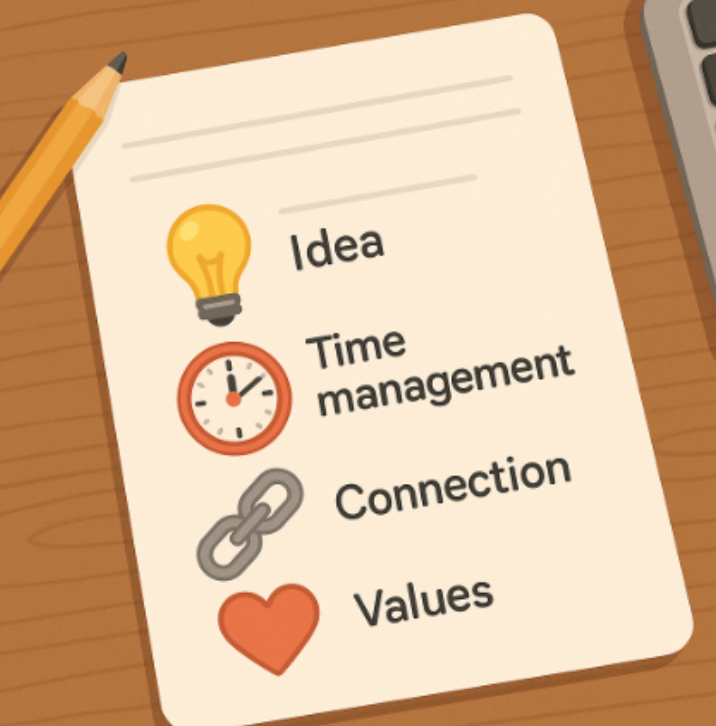
Emoji’s can allow you to turn abstract concepts into much more memorable visual icons. For example, you can use emoticons to store and recall abstract concepts easier, ie.: a lightbulb for “idea,” a clock for “time management,” or a chain link for “connection.”
Good visual memory study utilizes dual-coding theory: retention is higher when it’s coded both visually and verbally. Emoji’s are supplementary icons to the standard text-based facts, sentence cues, or bullets, enhancing cognitive connections.
Emoji’s also cue emotional responses (and emotional response is a key element of memory consolidation).
For example, when students emotionally link an emoji with a concept (a heart symbol for values, fire emoji for urgency or importance), the emotional link supports deeper encoding.
Designing an Emoji Revision Guide
Creating a successful emoji revision guide takes some careful thought and process. Here are the steps:
- Clearly Identify Objectives
Begin with identifying the salient topics or concepts to be reinforced. Whether vocabulary terms, formulas, historical events, or theorists, being clear in scope allows you to keep the guide focused and achievable.
- Select Relevant Emoji’s
Choose emoji’s that have a finite visual or metaphorical link to the concept. For example, a target  for goals or objectives, a microscope
  for thorough analysis, a book
  for reading comprehension, or a tree
  for branched structures.
Try not to be ever too abstract or use emoji’s that are overloaded with meaning. This will confuse students rather than help them clarify their thinking.
- Pair emoji Use with concise text
Each emoji should have a brief explanation or keyword underneath it. For example: “Cell division – (mitosis/meiosis stages).” The emoji is a visual cuing mechanism, the text ensures clarity of meaning.
- Present information logically
Try to group emoji by topic or series. For example, in revision guides, organizing emoji by chapter or process order, or in order of complexity, helps the learner begin to link ideas.
For example, group them under headings such as “Foundational Ideas”, “Processes”, and “Applications”.
- Keep it Consistent and Clean
Using the same emoji (for a consistent concept) repeatedly across sessions promotes recognition. Avoid clutter. Empty space and limited texts are better for visual clarity. Limit the color to only what is necessary, since the emoji color is usually enough.
- Test and Revise with Peers
Share your emoji guide with classmates and colleagues. Do the visuals signify the intended meaning? Seeking their input can assist with clarifying connections that might be ambiguous.
How Emoji-Based Guides Enhance Visual Memory Study?
The educational psychology literature highlights multimodal scaffolding. Learners who experience information in both a visual (image) and verbal (text) means, increase the accuracy and efficiency of recall [2].
The emoji revision guide approach exploits this by combining emotional and image-based coding with visual labels of text/words.
In addition, emoji’s in revision guides foster active recall. When a learner is reviewing, they will see an emoji and must “think of” the concept that was coded before reading the text—they are generating a “thinking of” event, which is a powerful way to work with memory in consolidation. As the learner progresses, the active recall becomes automatic—the learner recalls the concept from just the emoji.
Tips for Integration and Sustainability
To keep emoji revision guides useful and effective, consider some of the following best practices:
- Digital Resources: Use note-taking applications (such as Notion, Evernote, OneNote) that allow you to insert emoji’s. Consider the ability to access studies from a mobile device, enabling you to engage with them while you are on the go.
- Printed Flashcards: Print off flashcards that have emoji’s either hand drawn or printed along with your keywords – printing the emoji’s on flashcards is great for cognitive engagement by providing a tactile element.
- Collaborative Groups: Encourage collaborative emoji revision guides in study groups—providing multiple perspectives will work to improve the accuracy and relatability of pairing emoji’s to the concepts you create.
Conclusion
The emoji revision guide is a unique, simple resource that harnesses the power of visual memory study to increase learning. The process where abstract concepts are transformed into emotional representations and symbols next to short texts offers learners opportunities to engage the dual-coding process, enhance retrieval practice and comprehension.
Emoji guide concepts are a fun and effective revision strategy for both digital and printed formats, for individual or group use at school or at home.
In a contemporary learning environment influenced by visual cultures, both educators and students stand to gain by creating space in their revision practices for using emoji guides.
Commonly Asked FAQs:
1. What is an emoji revision guide and why is it so effective for students?
An emoji revision guide is a learning tool that uses emojis as visual cues to represent key concepts, processes, or definitions.
Instead of relying solely on text, learners pair short explanations with carefully chosen emojis to strengthen recall and make studying more engaging.
This works because the brain processes images much faster than words, and using emojis taps into the power of visual memory study.
Students find that an emoji revision guide keeps learning fun and helps them quickly retrieve information during exams or presentations.
2. How does an emoji revision guide use visual memory study principles?
Visual memory study relies on dual-coding theory, which states that people remember information better when it’s encoded both verbally and visually.
An emoji revision guide applies this principle by pairing images (emojis) with short keywords or phrases. When learners review their notes, the emoji triggers mental associations, leading to stronger memory retention.
This combination of image plus word strengthens neural pathways, making it easier to recall complex ideas.
3. What types of topics can benefit most from an emoji revision guide?
Almost any subject can benefit from this approach, but it is particularly powerful for subjects that rely on sequences, categories, or symbolic ideas.
For example, biology students can use a microscope emoji for cell study, chemistry students can use a beaker emoji for lab reactions, and history students can use a crown emoji to represent monarchy.
An emoji revision guide works equally well for professional learning, like remembering workflow steps or project stages in corporate training.
4. How do I choose the right emojis for my emoji revision guide?
Choosing emojis carefully is key. Each emoji should have a clear, direct connection to the concept it represents. Avoid overly abstract or confusing symbols that might mislead you during recall.
For instance, a tree emoji can represent branching processes, a lightbulb can symbolize ideas, and a clock can stand for time management. Consistency is important — always use the same emoji for the same idea across all your materials to strengthen recognition.
5. Can an emoji revision guide really improve exam performance?
Yes, many students report better performance after adopting this method. The reason is that an emoji revision guide enhances active recall. When students review their notes, they first see the emoji, mentally retrieve the concept, and then check the text to confirm.
This recall process strengthens memory consolidation.
By the time of the exam, simply thinking of the emoji can trigger the correct answer. This is a powerful memory strategy that turns passive reading into active engagement.
6. What digital tools can I use to create my emoji revision guide?
There are many tools available for designing an effective emoji revision guide. Popular note-taking apps like Notion, Evernote, and OneNote allow easy insertion of emojis alongside text.
Students can also create visually appealing slides in Google Slides or PowerPoint, or make printable flashcards with emojis included.
For those who prefer mobile study, apps like Quizlet can pair emojis with questions and answers for gamified revision.
7. How do emoji revision guides work for group study sessions?
Collaborative study groups can benefit greatly by sharing emoji-based guides. Each member can suggest different emojis for concepts, leading to more creative and memorable connections.
Discussing which emoji fits which topic also helps reinforce understanding because learners explain their reasoning aloud.
A shared emoji revision guide becomes a collective memory tool that supports group learning and encourages participation.
8. Are there psychological benefits to using an emoji revision guide?
Yes, using an emoji revision guide can reduce study fatigue and make the learning process more enjoyable. Emojis often evoke emotional reactions, and emotional engagement helps with memory consolidation.
Seeing a fun or relatable emoji next to a concept can lighten the mood and reduce anxiety before exams. This emotional connection is a subtle but powerful advantage of visual memory study.
9. Can emoji revision guides be used outside academic learning?
Absolutely. Professionals use emoji revision guides to memorize workflows, meeting agendas, or even presentation structures.
Corporate trainers often integrate emojis into slide decks to make key points memorable.
The method is flexible and can be applied to any scenario where retention and recall are important, from personal development courses to language learning.
10. How should an emoji revision guide be structured for best results?
Structure is critical to avoid confusion. Start with clear objectives — list what topics or chapters you want to cover.
Group emojis by theme or process order, so learners can see connections between related ideas. Keep the design minimal, use white space, and avoid overloading with too many symbols.
A well-structured emoji revision guide should feel like a visual map, not a cluttered picture wall.
11. Can an emoji revision guide replace traditional notes completely?
Not entirely. While emojis are excellent cues, they work best when paired with short text for clarity. The emoji is the trigger, and the text provides exact meaning.
Think of it as a complement to traditional notes rather than a replacement.
A balanced emoji revision guide will contain both elements, making it both easy to skim and precise enough for serious study.
12. How can I test the effectiveness of my emoji revision guide?
You can test your guide by attempting active recall without looking at the text portion. Cover the words and see if the emoji prompts you to remember the concept accurately.
You can also ask a friend or peer to review it and check if they interpret the emojis the way you intended.
Regular testing and small revisions ensure your emoji revision guide stays relevant and effective.
13. Are there any disadvantages to using an emoji revision guide?
While highly effective, an emoji revision guide can become distracting if overused. Too many emojis can create clutter and overwhelm learners instead of helping them.
Another challenge is ambiguity — if an emoji has multiple meanings, it can confuse the user during recall.
The solution is to keep designs minimal, consistent, and aligned with the learning objectives.
14. How often should I update my emoji revision guide?
Updating your guide regularly keeps it accurate and useful. As you learn new material or identify better emojis, revise the guide to maintain clarity.
Periodic updates also refresh your memory and reinforce previous learning. Treat your emoji revision guide as a living document that grows with your knowledge base.
15. How can teachers integrate emoji revision guides into classroom learning?
Teachers can create shared emoji-based summary slides, distribute them as handouts, or assign students to build their own as part of collaborative projects.
This makes learning interactive and gives students ownership of their study material.
Educators who adopt emoji revision guides often report higher engagement levels and improved recall among students.
Reference
[1] A. Paivio, Imagery and Verbal Processes. Hillsdale, NJ: Erlbaum, 1971.
[2] J. K. Ochsner, “The role of emotion in memory,” Annual Review of Psychology, vol. 69, no. 1, pp. 55–78, 2018.