Building a Winning Personal Website
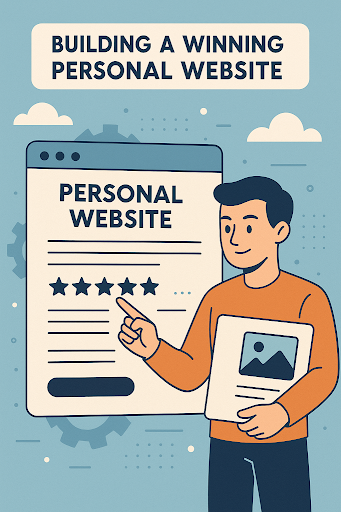
Personal career websites are a collection of webpages that can be used to establish one’s online presence and identity. The content and the structure of the personal career websites are focused on a single entity or a single person. The main aim of a personal website is to exhibit your expertise and boost your brand while building trust with your viewers. They prove to be great assets for individual professionals, freelancers, entrepreneurs, etc. They help you make a prominent space in your industry, can significantly increase your revenue, and thus, help you progress in your career.
It is needless to say that by building a personal website, you gain more credibility. You can also benefit by playing on various digital marketing techniques like search ads, Search Engine Optimisation (SEO), banner ads, and many more.
Essential Components of a Personal Website
- Homepage: Homepage is the first page that opens up when someone views your website. You should give careful thought to preparing the design of your homepage to make a strong first impression. It should have a summary of the work you do and the services that you offer.
- About Me Page: You can strategically introduce yourself on this page by sharing your personal journey, skills, and achievements. Through this page, you get your chance to leave a good impression on your viewers and make them feel connected with you. You can also add your resume and portfolio to this page.
- Contact Us: Your contact information should be readily available on your site so that your potential clients, collaborators, and employers can get in touch with you if they seem to like your website. It must contain your address, email ID, social media handles and maybe a business phone number.
- Testimonials: Adding testimonials to your website increases your credibility. These can be added in the footers.
- Blog: The content of your blog posts should be relevant and tailored according to your target audience. This not only increases your SEO rankings but also builds trust.
9 Easy Steps to Build a Personal Website
- Define your purpose: The aim of creating a website must be clear in your mind, which would help you to create a structure that best suits your purpose.
- Search for inspiration: After you have figured out your purpose for building a website, it is now necessary to look at the websites of the leaders of your industry and the people whom you admire. You must try to understand the design and particular content that they have used, which makes them stand out from others. The key is not to copy but to take inspiration only.
- Choose a template style: You should choose a template that suits your purpose, matches your content, and enhances your brand identity. The theme, typography, layout, design, etc., should be carefully chosen for this purpose.
- Tailor your content: The level of engagement on your website is decided by the content that you choose to put up. Add related and relevant content to your website and make sure that it is coherent.
- Customize your design: Another deciding factor for increased engagement is the design of your website. The design should be eye-catching so that your website retains viewers.
- Make it mobile-friendly: The data says that over 62% of the internet traffic comes from mobile devices, which makes it necessary for your website to be pixel-perfect and adaptable to various screen sizes.
- Optimize for SEO: Search engine optimization is used to improve the ranking of your website on search engines. The right set of keywords must be identified and used for this purpose.
- Test before Publishing: Preview your website and check for typos and other errors like broken links. Fix the identified errors and take a third-person opinion for necessary tweaks before publishing.
- Promote your website: Once you hit the “Publish” button, it is now time for you to go ahead and promote it using email marketing, social media handles, business cards, etc.
Conclusion
Personal websites are brilliant tools for personal branding. It helps you build your professional online presence and increases your credibility. Through various strategies discussed above, like choosing the right template, customizing your design, tailoring content, optimizing for SEO, etc., you can easily build a winning personal website.
FAQs
1. What is a personal website?
A personal website is a digital platform that highlights your skills, experiences, and achievements to build a professional online identity.
2. Why do professionals need one?
It creates visibility, credibility, and makes you stand out in a competitive job market.
3. Is it better than only having a LinkedIn profile?
Yes, because a site allows you full creative control and customization.
4. What should I include on the homepage?
A short introduction, key services or expertise, and links to other sections.
5. How does a personal website help freelancers?
It works as a portfolio and client magnet by showcasing real projects.
6. Do I need technical skills to build one?
No, platforms like Wix, WordPress, and Squarespace make it beginner-friendly.
7. Should I add an About Me section?
Yes, this section builds trust by showing your journey and personality.
8. What role do testimonials play?
They build credibility and encourage new clients or employers to trust you.
9. Is a blog necessary?
Not required, but it can boost SEO and demonstrate thought leadership.
10. How can I make my site mobile-friendly?
Use responsive design templates that adapt to all devices.
11. What is the importance of SEO?
SEO improves search visibility, making your personal website easier to find.
12. How often should I update content?
At least once every few months to ensure relevance and accuracy.
13. Can I link my resume and portfolio?
Yes, adding them creates a one-stop resource for recruiters.
14. Should I buy a custom domain?
A custom domain strengthens your personal brand and looks more professional.
15. How do I promote my site after launch?
Share it on social media, business cards, and email signatures.
16. Can a personal website replace a resume?
It doesn’t replace it, but it enhances your professional presence.
17. What are common mistakes to avoid?
Overloading with information, using poor design, or ignoring mobile optimization.
18. How does it support long-term career growth?
By showcasing consistent achievements and building a trusted online brand.
References
- Curator.io, “10 Key Elements To An Effective Personal Website Design,” [Online]. Available: https://curator.io/blog/personal-website-design
- Shopify, “How To Create a Personal Website in 9 Steps (2025),” [Online]. Available: https://www.shopify.com/blog/personal-website
- Wix, “How To Make a Personal Website: A Step-By-Step Guide,” [Online]. Available: https://www.wix.com/blog/how-to-make-a-personal-website
Penned by Kinjal Bagrecha
Edited by Reeya Kumari, Research Analyst
For any feedback mail us at [email protected]
Streamline Your Hiring with Eve Placement’s Custom Assessments
Eve Placement helps you engage, assess, and recruit top talent through tailored hiring challenges that go beyond resumes. From technical quizzes and real-world case studies to psychometric evaluations and audio/video submissions, our platform enables smarter, data-driven hiring decisions. Advanced security features ensure authenticity and eliminate fraud, giving you reliable results. Ready to hire better? Know More.
Mail us at [email protected]