
The 74% Reality: 5 Critical Findings in Gig Workers Analysis and Social Impact
Imagine you are in your car at 2:00 AM, rain pouring down. You wait for the notification that means you need to pick someone up. You have a fever, and your back hurts from sitting in the same spot for ten hours. Normally, you would call in sick and stay in bed, still getting paid. But sitting in the driver’s seat, you reconsider: If you go home, you can’t pay the car insurance due on Tuesday. You take some aspirin, turn up the heat, and keep driving.
This is the hidden reality for millions. The billboards for apps like Uber, DoorDash, and TaskRabbit promise freedom and independence. However, the truth is these opportunities come with a high-stakes gamble and no safety net.
We are seeing a change in how the world operates. Yet, analysis of gig workers shows that our laws are outdated. We have a social contract made in the 1930s for a physical workforce, but it still applies to a digital one in 2020.
To understand this issue, it’s essential to consider how labor science researchers refer to what they call the “74% Reality.” This statistic appears often in studies about labor. It reflects the significant number of gig workers who operate full-time yet lack basic benefits like unemployment, sick leave, and healthcare that regular employees receive.
“Study 74” presents a troubling statistic. Nearly 75% of gig workers say they would face financial disaster if they lost their gig and could not find another job in a few weeks. They walk a tightrope; if they fall, they do not recover.
What is “Study 74”? (The Freedom Trap)

Topics: gig workers analysis, and social impact
The term “Study 74” comes from key research done by the Society for Human Resource Management (SHRM) and SAP SuccessFactors.
Contrary to the common belief that gig workers are just those who can’t find “real” jobs, this study revealed that 74% of gig workers choose this path freely. They are not forced; they actively select it for flexibility and control over their own schedules.
Why is this a problem? This statistic creates a “Freedom Trap.” Because policymakers see that 74% of workers want to be freelancers, they often claim these workers don’t need the same protections as traditional employees. The logic goes: “They chose independence, so they chose the risk.”
However, wanting flexibility shouldn’t mean accepting poverty in old age. The “Study 74” reality highlights the tension workers face: they want the lifestyle of freelancers but need the safety net of employees.
Let’s explore the five major challenges affecting this workforce and the serious social impact of leaving them unprotected.
The “Study 74” Divide: Employee or Entrepreneur?
Understanding this term is vital for grasping the problem.
Legally, workers generally fit into two categories.
The Employee:
You have a boss who schedules your work. In exchange, your boss pays half your Social Security taxes, contributes to unemployment insurance, and might offer health plans.The Independent Contractor:
You work on your own. You have full control but bear all the responsibility.
The main debate about the gig economy revolves around classifying workers as independent contractors while treating them like employees.
Challenge 1
The “Invisible” Retirement Crisis

Saving for retirement in a traditional job can be automatic. You fill out a form, and money gets automatically taken from your paycheck and put into a 401(k). Your company often matches that amount.
For gig workers, saving for the future depends on personal effort.
When your income varies widely—Rs.1,000 one week and Rs.200 the next—setting aside money for emergencies becomes a massive stress. You have to pay rent now. You need gas for your car and groceries now. Saving for a future self is not only hard; it may feel impossible.
Challenge 2
The Healthcare Gamble
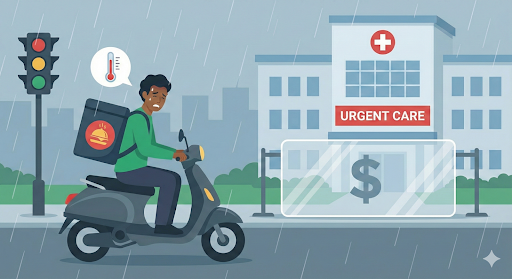
Now, imagine the driver who is feeling sick. They drive while ill, not just for the job; visiting a doctor can be really expensive. In regular employment, healthy workers help cover costs for older or sick workers.
Freelancers face the individual insurance market. Unless they qualify for specific subsidies, their costs can be extremely high, with high deductibles.
This situation creates a major public health issue.
- Gig workers delay preventive care. A concerning mole goes unchecked. Toothaches wait until they require serious treatment.
- They use emergency rooms for basic health care. This ends up costing taxpayers much more.
- They keep working while contagious since they lack sick leave, which puts their customers at risk.
Challenge 3
The Anxiety of “Deactivation”
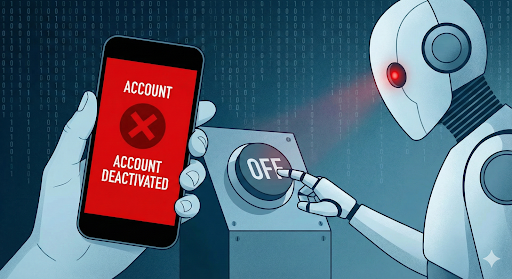
There is a unique psychological issue in the gig economy that many do not recognize: “Deactivation.”
In a regular job, the process for termination involves warnings, meetings with human resources, and possibly a severance package.
In the gig economy, your employer is an algorithm. When your rating drops below 4.6 stars or if a customer tries to game the system, the app can deactivate your account.
One morning, you wake up, try to log in, and see the message: Your account has been deactivated.
Suddenly, you have no income. Often, there’s no one to contact for help, no office to visit, and no process for appeals. You live with a constant, low-level fear that your livelihood could vanish because of a glitch or a bad review.
Challenge 4
The Tax Trap
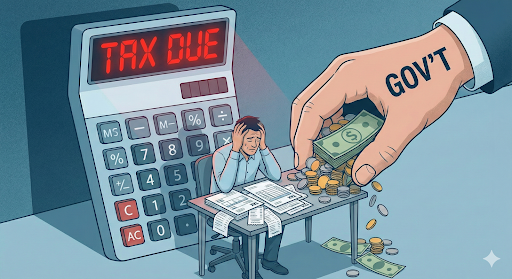
The gig economy attracts many who want to earn quick money without realizing that, as independent contractors, taxes are not withheld from their pay.
When tax season arrives, they face a “double whammy.”
Income Tax:
The standard rate on their earnings.Self-Employment Tax:
They pay both the employee and employer parts of Social Security and Medicare taxes.
An employee might think they earned Rs.30,000, only to find out they owe the government Rs.5,000 or more that they did not set aside. They can fall into debt, working extra hours to cover previous earnings.
The Broader Social Impact: Why This Matters To You
This issue is significant, and you should be aware of it, even if you don’t use a ride-share app or work as a freelancer.
An economy is fragile when a large part of the workforce lacks a safety net. Estimates suggest over 30% of workers engage in gig activity.
Economic growth is an illusion fueled by consumer confidence. People buy homes, dine out, and take vacations. However, if “Study 74” is correct and 74% of gig workers live in constant financial distress, that is not spending; it is merely survival.
When these workers age out of the workforce without retirement savings, they will depend on a social security system that is already strained. We allow them to benefit from their labor but shift the costs of supporting them onto society.
The Way Forward: Portable Benefits

Is it all hopeless? Not necessarily. While the diagnosis is tough, the solution is simple. Labor experts and some forward-thinking politicians propose a new idea called Portable Benefits. Imagine a backpack. Inside are benefits like sick leave, health care, and retirement funds. For every hour you work, a few dollars go into that backpack. Whether you do a project for a client or deliver groceries, you add to that backpack. Those benefits are yours, not tied to any company. You carry them with you from one job to another. This approach acknowledges that work has changed, and our methods of protecting workers must change too.
The gig economy brings great innovation and convenience. However, we should not allow that progress to come at the expense of dignity or security.
FAQs
What does gig workers analysis reveal about job security today?
Gig workers analysis shows that many workers lack long-term job security, relying on platforms without access to benefits, contracts, or employment protections.Why is gig workers analysis important for understanding modern labor trends?
Gig workers analysis helps explain how platform-based work affects income stability, legal status, and the broader social impact on labor systems.How does the gig economy create social impact beyond individual workers?
The social impact includes pressure on public healthcare, retirement systems, and increased financial vulnerability across communities dependent on gig income.What role does the “74% reality” play in gig workers analysis?
In gig workers analysis, the 74% reality highlights that many full-time gig workers lack benefits despite choosing flexibility, deepening long-term social impact.How does algorithm-based management affect gig workers?
Gig workers analysis shows that algorithm control increases stress, job insecurity, and income unpredictability, contributing to negative social impact.Why are healthcare access and social impact closely linked for gig workers?
Without employer benefits, gig workers often delay treatment, creating serious social impact issues for public health and emergency care systems.What financial risks are identified through gig workers analysis?
Gig workers analysis identifies unstable earnings, unexpected tax burdens, and lack of retirement savings as key risks affecting long-term social impact.How does misclassification influence the social impact of gig work?
Classifying workers as contractors shifts risk to individuals, which gig workers analysis links directly to widening economic and social impact gaps.Can policy reforms reduce the social impact highlighted in gig workers analysis?
Yes, portable benefits and updated labor laws are frequently proposed solutions in gig workers analysis to reduce negative social impact.Why should non-gig workers care about gig workers analysis?
Gig workers analysis shows that widespread insecurity eventually affects the entire economy, increasing social impact through public welfare dependence.
References
[1] SAP Fieldglass and SHRM, “The External Workforce: Your Competitive Advantage,” SAP Fieldglass, 2018. [Online].
Available: https://www.fieldglass.com/resources/research/external-workforce-your-competitive-advantage.
[2] International Labour Organization, “World Employment and Social Outlook 2023: The value of essential work,” ILO, Jan. 2023. [Online].
Available: https://www.ilo.org/weso-2023.
[3] Economic Policy Institute, “Gig workers in the coronavirus crisis,” Economic Policy Institute, Mar. 2020. [Online].
Available: https://www.epi.org/blog/gig-workers-in-the-coronavirus-crisis/.
[4] Upwork, “Freelance Forward 2023: The 10th Annual Study of the U.S. Independent Workforce,” Upwork, 2023. [Online].
Available: https://www.upwork.com/research/freelance-forward-2023.
[5] Pew Research Center, “The State of Gig Work in 2021,” Pew Research Center, Dec. 8, 2021. [Online].
Available: https://www.pewresearch.org/internet/2021/12/08/the-state-of-gig-work-in-2021/.
Penned by Sanskriti
Edited by Pranjali, Research Analyst
For any feedback mail us at [email protected]
Streamline Your Hiring with Eve Placement’s Custom Assessments
Eve Placement helps you engage, assess, and recruit top talent through tailored hiring challenges that go beyond resumes. From technical quizzes and real-world case studies to psychometric evaluations and audio/video submissions, our platform enables smarter, data-driven hiring decisions. Advanced security features ensure authenticity and eliminate fraud, giving you reliable results. Ready to hire better? Know More.
Mail us at [email protected]