
AutoML Frameworks: Simplifying the Machine Learning Journey
Introduction
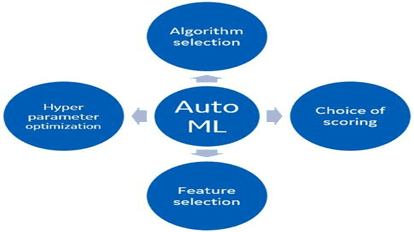
Machine learning has emerged as a key technique for solving practical problems. The process of developing efficient models typically necessitates specialized knowledge, time, and processing capacity. Selecting algorithms, tuning hyperparameters, and evaluating performance are tasks that can be quite complicated and monotonous. Together with sophisticated Framework tools that automate the entire machine learning lifecycle, AutoML has emerged as a significant innovation to address this issue.
AutoML frameworks are designed to make machine learning easy without compromising quality. Automating the technical processes enables more rapid development, more accessibility, and more reliable outcomes for many use cases.
What is an AutoML Framework Tool?
A Framework tool in AutoML is a structured software platform that helps in automating the machine learning workflow. To reduce manual intervention, the tools provide predefined pipelines, optimization algorithms, and evaluation systems.
An AutoML Framework tool basically performs:
Automated data preparation
Intelligent algorithm selection
Hyperparameter tuning
Model comparison and ranking
Optional deployment support
Framework tools might be open-source libraries targeted at developers or capable, user-friendly platforms with graphical interfaces. In any case, their objective is to facilitate the machine learning process and make it increasedreproducible.
Key Features of AutoML Frameworks
One of the most important aspects of AutoML frameworks is undoubtedly large-scale automation. In actuality, these technologies are far more efficient than any manual method at conducting several tests simultaneously and testing various models and combinations. The next very important feature is definitely reproducibility. Tools of an AutoML framework keep track of the configurations, datasets, and evaluation results automatically. This facilitates the confirmation of the experiments and also their audit, if there is such a need. AutoML frameworks commit to performance as well. By exhaustively searching through combinations of models, they usually find ways that perform better than the models that have been manually tuned, especially in the case of standard prediction tasks.
Benefits of Using AutoML and Framework Tools
One of the key features of AutoML is that it is very accessible. People who do not have a profound knowledge of machine learning can still create high-quality models by using an AutoML Framework tool. Therefore, machine learning becomes a less exclusive field and gets adopted by more industries. Also, a great advantage is the saving of time. What used to be a process of weeks can now be done in a matter of hours in most cases. The automated pipelines are less involved in the trial and error process, and therefore, the time decisions need to be made is shortened.
In addition, these AutoML frameworks can be scaled up. Most of the instruments are created in such a way that they can accommodate vast datasets and complicated models; thus, they can be utilised in applications at the enterprise level. Hence, the capability to scale gives organisations the assurance to implement machine learning solutions.
Challenges and Limitations
While AutoML frameworks have impressive capabilities, they also come with some limitations. Automated systems rely on the search spaces and evaluation metrics that have been predefined. In case these are not well-defined, the outcomes may be less than optimal. Interpretability is also a problem. AutoML might come up with complicated models that are hard to explain. In a sensitive area like healthcare or finance, it is still necessary to have a human check to make sure the decisions are made ethically and are transparent. Hence, AutoML Framework tools should not be considered as a complete takeover of human skills but rather as a support network to human experts.
Real-World Applications of AutoML Frameworks
AutoML frameworks are extensively implemented in different sectors. For instance, in healthcare, they are used for forecasting diseases and processing medical images. In the financial sector, AutoML is utilised to create models for credit scoring and detecting fraudulent activities. Additionally, e-commerce platforms employ AutoML to enhance recommendation engines and identify customer segments. Such applications are a clear indication of the power of AutoML and Framework tools in facilitating a quicker and more efficient way of machine learning adoption by organisations.
Conclusion
AutoML is a major factor in the change of the fashion of building machine learning models by eliminating the complex and repetitive tasks. Once an efficient Framework tool is in place to support AutoML, the latter becomes a powerful means of the three great advantages of machine learning: namely, efficiency, accessibility, and scalability. Although the intervention of a human is still absolutely necessary, the AutoML frameworks provide a good equilibrium between the so-called “hands-off” and “hands-on” approaches. In the future, when machine learning develops further, the AutoML Framework tools will be the main instruments that will determine the way of coming up with intelligent, data-driven solutions.
References
[1] IBM, “What is AutoML?,” 2025. [Online].
Available: https://www.ibm.com/think/topics/automl
[2] AutoML.org, “Automated Machine Learning,” 2025. [Online].
Available: https://www.automl.org/automl/
[3] GeeksforGeeks, “What is AutoML in Machine Learning?,” 2025. [Online].
Available: https://www.geeksforgeeks.org/what-is-automl-in-machine-learning/
[4] Wikipedia, “Auto-WEKA,” 2025. [Online].
Available: https://en.wikipedia.org/wiki/Auto-WEKA
[5] Wikipedia, “Neural Network Intelligence,” 2025. [Online].
Available: https://en.wikipedia.org/wiki/Neural_Network_Intelligence
Quick Machine Learning FAQ
- What is the main goal of these automated systems?
They aim to simplify the creation of predictive models by handling technical tasks like tuning and algorithm selection. - Who can benefit from using these software platforms?
Both expert data scientists and beginners can use them to speed up production and increase accessibility. - How do these tools handle data preparation?
They use predefined pipelines to clean and organize raw information before processing begins. - Can these platforms select the best algorithm?
Yes, they intelligently compare different mathematical approaches to find the most accurate one for a specific task. - What is hyperparameter tuning?
It is the process of adjusting the internal settings of a model to achieve the best possible performance. - Are these systems open-source?
Many are available as open-source libraries, while others are offered as commercial platforms with graphical interfaces. - How do these tools improve reproducibility?
They log every configuration and dataset used, allowing others to audit or repeat the experiment. - Do these platforms work with large datasets?
Yes, most are built to be scalable for enterprise-level applications involving vast amounts of data. - What are the time-saving benefits?
Processes that once took weeks can often be finished in hours due to high-speed iteration. - Are there limitations to this technology?
Yes, they depend on predefined search spaces and may struggle if the initial metrics are poorly defined. - Why is interpretability a concern?
Sometimes the resulting models are so complex that it is difficult for humans to understand how they reached a conclusion. - Are these systems meant to replace human experts?
No, they are designed to support humans by removing monotonous tasks, not to replace their high-level judgment. - How is this technology used in healthcare?
It helps in forecasting disease trends and analyzing medical imagery more efficiently. - What role does it play in the financial sector?
It is frequently used for credit scoring and spotting fraudulent transactions. - Can it help e-commerce businesses?
Yes, by powering recommendation engines that suggest products based on customer behavior. - Is human intervention still necessary?
Absolutely, especially in sensitive areas like finance or medicine where ethical checks are vital. - How does it handle model comparison?
It ranks different versions of a model based on performance metrics to find the most effective one. - What makes these frameworks efficient?
The ability to conduct hundreds of tests simultaneously, which is impossible to do manually. - What is the “hands-off” approach mentioned?
It refers to the software handling the repetitive technical steps without needing constant manual input. - What is the future of this field?
As data science evolves, these instruments will become the primary way organizations develop intelligent solutions.
Penned by Sandhya
Edited by Pranjali, Research Analyst
For any feedback mail us at [email protected]
Streamline Your Hiring with Eve Placement’s Custom Assessments
Eve Placement helps you engage, assess, and recruit top talent through tailored hiring challenges that go beyond resumes. From technical quizzes and real-world case studies to psychometric evaluations and audio/video submissions, our platform enables smarter, data-driven hiring decisions. Advanced security features ensure authenticity and eliminate fraud, giving you reliable results. Ready to hire better? Know More.
Mail us at [email protected]