Employer-Student Networking Events—Hybrid Format
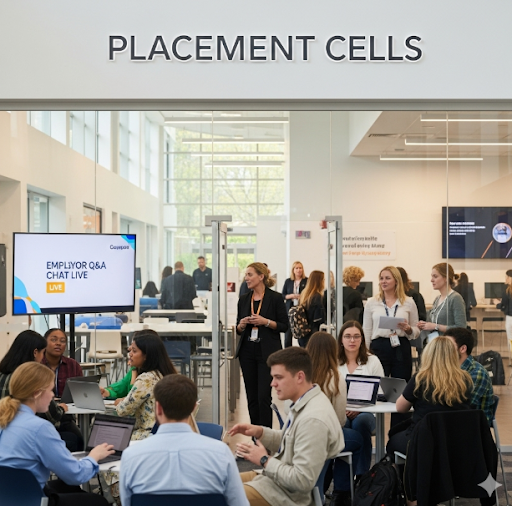
Table of Contents
Introduction: The Evolution of Employer-Student Networking
Challenges of Traditional In-Person Career Fairs
The Hybrid Format: Digital + In-Person Mix
3 Game-Changing Benefits of the Hybrid Model
For Students
For Employers/Signatories
For Universities and Institutions
Best Practices for Successful Hybrid Networking Events
The Future of Campus Networking
- FAQs
References
The status of employer networking hybrid campus events has undergone a major overhaul lately, with universities and companies embracing new ways to establish connections between students and potential employers. Such a change has enabled more significant professional relationships that cater to the diverse needs of both parties.
In-person career fairs that were traditionally held on campus and are still declining in-person have had a major influence historically, but at times, these in-person fairs were causing some logistical issues for both employers and students. Some of the common participation barriers were limited space, scheduling conflicts, and geographical constraints. With the hybrid format employer networking change, the situation has been reversed, and there are different ways for easier access and engagement that have become available.
Modern networking events have become more attractive as they feature friendly interaction and the wide functionality of online platforms. Students can participate in such events without being physically present. In contrast, employers can be in one place and still access the candidates from other universities.
3 Game-Changing Benefits of the Digital + In-Person Mix
- For Students – They gain access to a wider variety of employers and can prepare better using digital resources. They can search for companies, schedule meetings, and even conduct interviews online before attending in-person sessions.
- For Employers/Signatories – Companies can recruit more efficiently and at lower costs. The hybrid model lets them use digital tools for broad outreach and reserve in-person resources for a select group of high-potential candidates, leading to stronger recruitment results.
- For Universities and Institutions– They benefited from better data collection and improved event management. Hybrid formats allow them to track participation, collect feedback, and design more tailored experiences for their students.
The digital + in-person mix concept is advantageous to all stakeholders, without exception. Students have access to a wider variety of employers and can also prepare better with the help of the available digital resources before the event. To start with, job seekers can use the internet to search for companies, schedule meetings, and even conduct face-to-face interviews with company representatives without actually meeting them.
As for the signatories, the implication is that they have the opportunity to accomplish the task in a more efficient manner and at a lower cost. The hybrid format employer networking hybrid campus structure offers the possibility to leverage the advantages of both types of media while utilizing in-person resources for a select number of candidates, thereby increasing efficiency. By this means, organizations achieve a high level of communication with a few quality candidates, and in turn, better recruitment results.
Universities regard the increased potential and the improved data collection that the hybrid forms of events offer. They can measure participation statistics, collect feedback more efficiently, and design more tailored experiences for their students.
Best Practices for Success
Well-organized hybrid format employer networking events do minimize the need for precise planning and organization. Extensive data concerning the event’s composition helps users carry out their functions in a more effective manner as they move between online and offline parts. A seamless digital experience is indispensable when the digital space is supported by technical support and good platforms.
In case a person aimed to increase the productivity of planned networking events, he would do so by setting up distinct objectives for every session. As an illustration, companies may become more effective if they carry out digital presentations and the first visit is made in the morning, while in-person meetings in the afternoon facilitate getting to know each other and deepening relationships.
The Future of Campus Networking
The advent of technology has and will continue to revolutionize the way hybrid networking solutions come into being. We will very likely see virtual reality networking spaces, AI-powered matching algorithms, and advanced video conferencing tools not as novelties but as the standard features of these events.
The digital + in-person mix concept has dispelled the myth that networking events have to be either convenient or genuine. The hybrid approach allows universities to develop richer and more inclusive events that better serve their students and employer partners simultaneously.
This is more than a simple justification for upgrading to the next generation of technology; it’s a fundamental change towards a more accessible, efficient, and meaningful professional network, simply by going hybrid. The refinement processes by institutions are thus reaping the benefits of the best periods of connection and career outcomes for both students and employers.
FAQs
1. What is employer-student networking?
Employer-student networking is a structured interaction where students connect with potential employers to explore career opportunities.
2. What are hybrid networking events?
Hybrid networking events combine online and in-person participation, allowing flexibility for both students and employers.
3. Why are hybrid formats popular?
They overcome logistical barriers such as location, scheduling, and limited space, making networking more accessible.
4. How do students benefit from hybrid events?
Students can access more employers, schedule online meetings, and prepare digitally before attending in-person sessions.
5. How do employers benefit from hybrid events?
Employers can recruit efficiently, reduce costs, and reach a wider pool of candidates without being physically present at multiple campuses.
6. How do universities benefit?
Universities gain better data collection, improved event management, and enhanced engagement insights.
7. What platforms are used for hybrid events?
Video conferencing tools, online scheduling platforms, and interactive networking software are commonly used.
8. How can students prepare for hybrid networking?
Students should research companies online, schedule meetings in advance, and practice digital interviews.
9. Can hybrid events improve recruitment outcomes?
Yes, by combining broad online outreach with selective in-person interactions for high-potential candidates.
10. What technical support is needed?
Reliable internet, efficient digital platforms, and on-site technical assistance are essential.
11. How should companies structure hybrid sessions?
Digital presentations in the morning and in-person meetings in the afternoon often work best for engagement.
12. What data can universities collect?
Universities can track attendance, engagement levels, feedback, and participation trends.
13. Is hybrid networking suitable for introverted students?
Yes, online components allow easier initial engagement and comfort in participation.
14. Are hybrid events cost-effective?
Yes, they save travel and logistical costs for both students and employers.
15. Can hybrid networking improve diversity hiring?
Yes, because wider participation is possible across regions and demographics.
16. What future trends are expected?
AI-driven matchmaking, virtual reality networking spaces, and advanced video conferencing are emerging trends.
17. How can students maximize networking opportunities?
By actively engaging online, following up with employers, and attending in-person sessions prepared.
18. Can hybrid events replace traditional career fairs?
They complement traditional fairs rather than fully replacing in-person interactions.
19. What are common challenges of hybrid networking?
Technical glitches, scheduling conflicts, and tracking engagement can pose challenges.
20. How is the success of hybrid events measured?
Success is measured by participation rates, recruitment outcomes, and attendee feedback.
21. How can students identify the right employers during networking events?
Students can use employer-student networking platforms to filter companies by industry, role, or location.
22. What is the role of digital tools in employer-student networking?
Digital tools facilitate scheduling, online meetings, and access to company resources for employer-student networking.
23. Can employer-student networking improve internship opportunities?
Yes, hybrid networking allows students to connect with companies offering internships even before campus placement drives.
24. How often should universities host employer-student networking events?
Universities should plan them at least once per semester to maintain continuous student-employer engagement.
25. Are hybrid networking events suitable for all fields of study?
Yes, employer-student networking events can be tailored for any discipline or specialization.
References
[1] S. Kumar, A. Sharma, and R. Patel, “Hybrid Workplace: The Future of Work,” ResearchGate,July2021.https://www.researchgate.net/publication/353464236_Hybrid_Workplace_The_Future_of_Work
[2] M. Johnson and K. Lee, “Information sharing in a hybrid workplace: understanding the role of ease-of-use perceptions of communication technologies in advice-seeking relationship maintenance,” Journal of Computer-Mediated Communication, vol. 28, no. 4, June 2023.: https://academic.oup.com/jcmc/article/28/4/zmad025/7210242
[3] A. Thompson et al., “Social employee well-being challenges of academics in the hybrid work environment,” Frontiers in Psychology, vol. 16, Jan. 2025.: https://www.frontiersin.org/journals/psychology/articles/10.3389/fpsyg.2025.1524804/full
[4] N. Bloom, P. Mizen, and S. Taneja, “Hybrid is the future of work,” Stanford Institute for Economic Policy Research (SIEPR), 2021.: https://siepr.stanford.edu/publications/policy-brief/hybrid-future-work
[5] L. Davis, “An introvert’s guide to academic networking and hybrid events,” Impact of Social Sciences, Nov. 2022. https://blogs.lse.ac.uk/impactofsocialsciences/2022/09/15/an-introverts-guide-to-academic-networking-and-hybrid-events/
[6] R. Martinez and C. Wilson, “True nature of hybrid work,” Frontiers in Organizational Psychology,Aug.2024.:https://www.frontiersin.org/journals/organizationalpsychology/articles/10.3389/forgp.2024.1448894/full
Penned by Akshat Duggal
Edited by Reeya Kumari, Research Analyst
For any feedback mail us at [email protected]
Streamline Your Hiring with Eve Placement’s Custom Assessments
Eve Placement helps you engage, assess, and recruit top talent through tailored hiring challenges that go beyond resumes. From technical quizzes and real-world case studies to psychometric evaluations and audio/video submissions, our platform enables smarter, data-driven hiring decisions. Advanced security features ensure authenticity and eliminate fraud, giving you reliable results. Ready to hire better? Know More.
Mail us at [email protected]