
The Role of Emotional Intelligence in Hiring Success
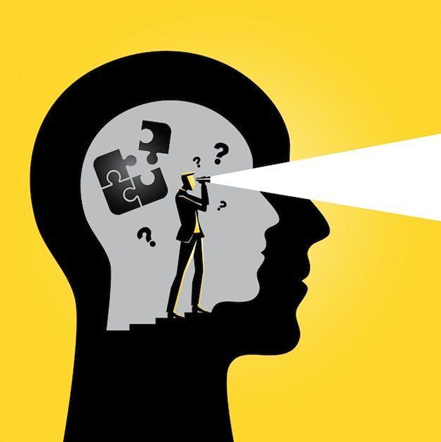
Article: emotional intelligence hiring
The “Checklist Hiring” Phase
I’ll be honest, I used to believe hiring was all about hard skills. You just look at the resume, check for the right keywords and hard skills like for example Python, project management, certifications and then you ask a few questions, and boom, you have your industry ready candidate. Emotional intelligence (EI)? That sounded like a cherry on top, but not the cake.
But then I observed something interesting: candidates with perfect technical skills could still completely mess up in a team environment. It was never about how much they “knew” but something much deeper— workplace communication. It was always about how they handled pressure, conflict, and, honestly, humans. That’s when I got to know that Emotional Intelligence hiring wasn’t a fluff. It was the secret ingredient to stability in the organization.
What EI Really Is and what it Isn’t
At its core, emotional intelligence is the ability to recognize, understand, and manage emotions—your own and others’ (Salovey & Mayer, 1990). It’s not just “being nice” and impossibly perfect in an interview but, its self-awareness, empathy, and emotional management. Mostly in workplaces where stress is the default environment, those skills aren’t the “cherry” anymore but the whole cake.
Managers are Obsessed with EI? Is it?
Research keeps proving the thing which I accidentally learned. Professional studies tell us about that employees with higher EI perform better in team-based roles and leadership positions because they can manage stress and relationships more effectively (Côté & Miners, 2006). Another study shows that EI is heavily linked to job performance across various industries, especially when work involves collaboration with other humans (O’Boyle et al., 2011).
Think of it this way: technical skills may build the product, but emotional intelligence keeps the “people” behind that particular product from falling apart.
Lightbulb Incident
I once worked on a project with a teammate who, on CVs, wasn’t the most experienced. But their EI was through the roof. They could sense problems in a meeting before anyone could speak, and they somehow knew exactly how to reframe the conversation to keep things on table. That project didn’t hit its deadline because of raw coding ability. It became a success because someone in the team had the emotional radar to hold the team together.
Emotional Intelligence Hiring measurable?
That’s the exact question we have in mind. You can’t ask, “Are you emotionally intelligent?” But hiring managers are so creative:
- Behavioral questions: “Tell me about an incident where you got tough feedback.” Their answer exposes their self-awareness.
- Team exercises: Observing someone’s workplace communication under pressure expresses more than their resume ever could.
- Active listening: Employees who acknowledge mistakes and adapt them mid-conversation usually have stronger EI.
There’s research backing this too. Structured interviews and scenario-based assessments have been linked to effectively predict the EI-related patterns in the workplace (Joseph & Newman, 2010).
Skill vs. EI, A Wrong Debate
People often frame it as if you have to choose between hard skills or emotional intelligence. However, higher EI isn’t a replacement for technical ability. It’s not the cherry on top but it’s the icing to the cake. That makes our cake, a well finished cake. You can teach someone new software, but can you teach them to manage their emotions in a conflict? That’s a much harder run.
Final Thoughts
If you’re hiring, don’t just look for the right technical buzzwords, do the emotional intelligence hiring. Look for the signs of how candidates handle humans, including themselves. And if you’re finding a job? Work on your own EI the same way you keep redefining your technical skills. Active listening, empathy, stress management, workplace communication, these are all your cheat codes to quietly tip the scales in interviews more than we realize.
Essentially, emotional intelligence during hiring isn’t some HR trend. It’s the fine line between a team that survives and a team that thrives. Or as one study put it, “EI is not the cherry on the cake: it’s part of the cake itself” (Goleman, 1998).
References:
* Côté, S., & Miners, C. T. H. (2006). Emotional intelligence, cognitive intelligence, and job performance. *Administrative Science Quarterly, 51*(1), 1–28.
* Goleman, D. (1998). *Working with Emotional Intelligence*. Bantam Books.
* Joseph, D. L., & Newman, D. A. (2010). Emotional intelligence: An integrative meta-analysis. *Journal of Applied Psychology, 95*(1), 54–78.
* O’Boyle, E. H., Humphrey, R. H., Pollack, J. M., Hawver, T. H., & Story, P. A. (2011). The relation between emotional intelligence and job performance. *Journal of Organizational Behavior, 32*(5), 788–818.
* Salovey, P., & Mayer, J. D. (1990). Emotional intelligence. *Imagination, Cognition and Personality, 9*(3), 185–211.
Penned by Swarna Sharma
Edited by Sneha Seth, Research Analyst
For any feedback mail us at [email protected]
Streamline Your Hiring with Eve Placement’s Custom Assessments
Eve Placement helps you engage, assess, and recruit top talent through tailored hiring challenges that go beyond resumes. From technical quizzes and real-world case studies to psychometric evaluations and audio/video submissions, our platform enables smarter, data-driven hiring decisions. Advanced security features ensure authenticity and eliminate fraud, giving you reliable results. Ready to hire better? Know More.
Mail us at [email protected]