Building Digital Portfolios in Non-Tech Sectors
Topics: digital portfolio, non-tech jobs
Introduction
In the fast-changing work environment of today, a digital portfolio has turned out to be a strong instrument not only for professionals in fields that are heavily technology-based but also for those that are in traditionally non-tech industries. The likes of education, hospitality, retail, healthcare, logistics, fashion, and the arts industries are progressively coming to the idea that presenting one’s skills, projects, and achievements in a digitally attractive and engaging way is of great worth. A meticulously designed digital portfolio is a non-tech jobs professional’s ticket to demonstrating his/her knowledge and skills, making oneself more employable, and even effectively conveying one’s personal brand. As digital revolution is influencing all sectors, the capability to record and present one’s work on the web is gradually becoming a must for everyone.
The Growing Importance of Digital Portfolios in Non-Tech Fields
The non-tech sectors are going through a significant change towards modernization which is immensely influenced by the growing customer demands, digital adaptation, and the competition. In any of the cases, be it a teacher showcasing his/her lesson plans, a hospitality manager illustrating his/her event management proficiency, or a healthcare professional demonstrating his/her patient-care initiatives, the result is the same – a digital portfolio turns into an effective means of differentiation. Today employers want those employees who can clearly put forward their accomplishments, reflect their personal development, and give real-world examples of their contributions.
In addition, the remote working mode, virtual networking, and digital recruitment platforms have been the major contributors to the professionals’ need to keep up with an online presence. A digital portfolio is what makes hiring managers and future collaborators instantly aware of a candidate’s or a partner’s strengths, skills, and past accomplishments in a brief and handy way, thus speeding up the process of making informed and data-driven decisions.
How Digital Portfolios Enhance Professional Visibility
Properly designed digital portfolio opens up quite a few possibilities for non-tech jobs sector professionals:
Showcasing Practical Experience:
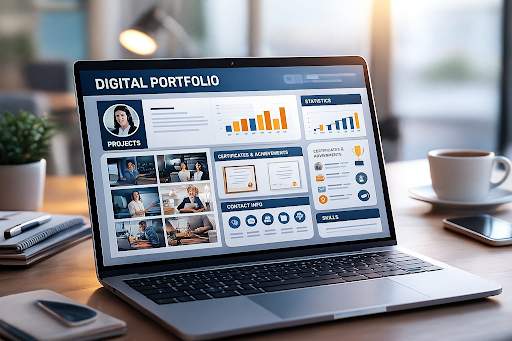
Non-technological roles are usually heavily dependent on practical work. Digital portfolios provide the opportunity to expose one’s work through detailed studies, pictures, videos, certificates, and word-of-mouth testimonials.
Demonstrating Soft Skills:
Included were examples from everyday life that illustrated the points made in the portfolio such as communication, leadership, problem-solving, customer interaction, and creativity.
Strengthening Personal Branding:
Individuals through a digital portfolio may establish a uniform personal brand which can be seen not only in LinkedIn but also in job portals and professional websites.
Creating a Competitive Edge:
Non-tech professionals without a portfolio still can exist on their resume only, while those organized digitally appear to be more up-to-date, accommodative, and time-goers ready for the future.
Digital Tools Suitable for Non-Tech Professionals
Various easy-to-use tools are at the disposal of anyone desirous of making a captivating portfolio:
Canva:
The best choice when the portfolio is to be rich in graphics and is intended for professionals in hospitality, fashion, or education.
LinkedIn:
Supports the creation of a semi-digital portfolio through posts, projects, and the featured sections.
Google Sites / Wix:
Not complicated and free ways of making websites if no coding is involved.
Behance & Dribbble:
Great resources for non-technological creative areas such as design, handiwork, or photography.
PDF Portfolio Builders:
They are great for those professionals who like having a version for download or printing.
Conclusion
Developing a digital portfolio is not a privilege that tech professionals alone have. In a digital world that comes first, those from non-tech job areas can be very well-positions by displaying their work, innovativeness, and skills online. A firm digital portfolio boosts one’s visibility, is a personal branding tool, and is helpful to professionals in making their way through a competitive job market. As sectors become more engaged in the digital transformation journey, having a well-organized and attractive digital portfolio will be a key element of both career progression and professional identity.
FAQs
What is a portfolio for non-technical professionals?
It is a collection of projects, achievements, and skills that highlights expertise and practical work experience.Why is having a portfolio important in non-tech sectors?
It helps professionals present their work and capabilities in a way that makes them more noticeable to employers.Which industries benefit from creating a professional showcase?
Education, healthcare, hospitality, retail, fashion, arts, and logistics gain an advantage when employees display their work digitally.What elements should be included in a portfolio for non-technical roles?
Work samples, project summaries, certifications, testimonials, images or videos, and examples of leadership or communication abilities.Can non-technical professionals compete with tech candidates using a portfolio?
Yes, a clear and organized collection of achievements demonstrates skills effectively, helping them stand out.Which tools are best for creating a portfolio for non-tech roles?
Canva, LinkedIn, Google Sites, Wix, Behance, Dribbble, and PDF builders allow professionals to showcase their work without coding.How does a portfolio strengthen personal branding?
It provides a consistent way to display skills and achievements across professional platforms, increasing visibility to potential employers.Does having a portfolio provide a competitive advantage?
Yes, it helps candidates appear organized, up-to-date, and ready for career growth compared to those relying solely on resumes.How often should professionals update their portfolio?
Updating regularly with new projects, achievements, and certifications keeps the showcase relevant and demonstrates continuous growth.Can a portfolio influence career progression in non-tech fields?
Absolutely. It improves visibility, attracts collaborators or employers, and supports advancement in competitive industries.
References
[1] Brown, T. (2021). Digital Identity and Modern Employment Trends. CareerPath Publications.
https://www.careerpathpublications.com/digital-identity-2021
[2] Smith, L. (2020). “The Rise of Online Portfolios in Non-Tech Industries.” Journal of Professional Development, 18(3), 45–58.
Available at: https://www.journalofprofessionaldev.com/vol18/issue3/online-portfolios
[3] Johnson, M. (2022). Future Skills in the Digital Workplace. Workforce Insights Press.
https://www.workforceinsights.com/future-skills-digital-2022
[4] Rogers, P. (2021). “Showcasing Skills in the Digital Era: A Practical Guide.” Talent & Careers Review, 7(2), 12–25.
https://www.talentcareersreview.com/v7i2/digital-skills-guide
Penned by Tushar Sharma
Edited by Preksha Khatod, Research Analyst
For any feedback mail us at [email protected]
Streamline Your Hiring with Eve Placement’s Custom Assessments
Eve Placement helps you engage, assess, and recruit top talent through tailored hiring challenges that go beyond resumes. From technical quizzes and real-world case studies to psychometric evaluations and audio/video submissions, our platform enables smarter, data-driven hiring decisions. Advanced security features ensure authenticity and eliminate fraud, giving you reliable results. Ready to hire better? Know More.
Mail us at [email protected]