
Wellness Retreats and Mental Health Resources for Students
Topics: College mental health support
According to the National Crime Records Bureau, 7.6% of the country’s total suicide deaths are of students. Competitive exam pressure, a tight job market, and lack of mental counselling are common reasons for anxiety and depression among students. Student retreats are designed for wellness design for students to cope with stress and societal pressure.
Every year 13000 students die, as stated in the NCRB report (2022). The university should have a college mental health support department, which will provide counselling to students and will be responsible for arranging student retreats.
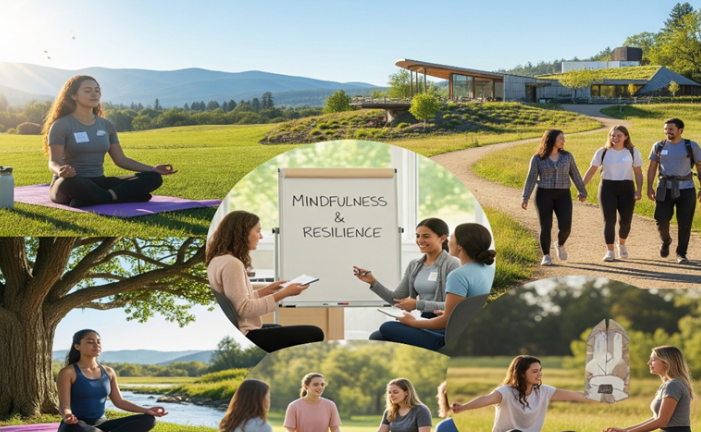
College mental health support departments should have occasional mandatory sessions, not necessarily a speaking session, but it can be an activity session where students can relax and can learn a work-life balance.
Impact of Self-diagnosis on Mental Health
Self-diagnosis means an individual assessing their own mental health without seeking any professional guidance. Many college students often seek help from online available resources and self-help material. Self-diagnosis harbours high risks and repercussions for student mental health.
Side effects of self-diagnosis
- Self-diagnosis will lead to misinterpreting symptoms and misidentifying conditions, potentially leading to incorrect self-management strategies.
- Lacking expertise in mental health, students might misinterpret ordinary stress or mood fluctuations as indications of severe disorders, causing unnecessary distress and anxiety.
- Self-diagnosis continues stigma and misconceptions surrounding mental illness, as individuals often rely on incomplete information and assumptions to characterise their experiences. Consequently, it leads to delaying evaluation and treatment and aggravating their symptoms.
College mental health support departments and student retreats should meet student mental needs and reduce the impact of self-diagnosis.

Spiritual Coping and Mental Health
Spiritual coping is a behavioral and cognitive strategy based on individual beliefs and values. This stress coping focuses on problems and emotions, meaning spiritual people see negative outcomes as opportunities. Spiritual people, instead of focusing on the negative side of the problem, see cause and meaning behind the particular situation. Spirituality helps in developing an optimistic attitude in people and lower levels of depression and distress.
In universities and colleges, authorities should form clubs and societies related to spirituality. For every person, the meaning of spirituality is different. Some people see spiritual and religious as the same word. But they are different; religion can be a way to spirituality. So, college can organize student retreats for promoting spirituality, as it is different from religion.
Mental Health and Academic Performance
A study conducted by NIH (National Institutes of Health) shows that mental health and academic performance have a direct relation. It is like a vicious cycle of students stuck in their first year, where the pressure of scoring high marks leads to poor mental health, and this in turn reduces the learning efficiency and concentration, which leads to bad performance in exams.
An unhealthy lifestyle is one of the reasons for poor mental health in college students. In the first year of college, students take time to adjust to their new phase of life, which results in skipping breakfast, fewer hours of sleep, and bundles of unfinished work. This imbalance of work and life continues forever.
So, students need to understand from a young age the importance of self-care.
Good Routine for Good Mental Health
- Get regular exercise: Just 30 minutes of walking every day can boost your mood and improve your health.
- Eat healthy, regular meals and stay hydrated: A well-balanced diet and plenty of water can improve your energy. Watch intake of caffeine and alcohol.
- Make sleep a priority: Make sure to get enough sleep and read books instead of using your phone before bedtime because blue light emitted from electronic devices makes it harder to sleep.
- Try a relaxing activity: Schedule regular times for healthy activities you enjoy, such as listening to music, reading, spending time in nature, and engaging in low-stress hobbies.
- Human Interaction: Talk to your family and friends on a regular basis to avoid a feeling of alienation.

Conclusion
Depression and anxiety have become common diseases in college students these days. And the main problem is that students don’t seek any professional help, and this delay in seeking help worsens the situation. So, universities should establish a college mental health support department and arrange student retreats to guide and foster the idea that seeing a counsellor is not a big deal and eliminate this stigma of seeing psychiatrists. Spirituality and a healthy lifestyle are directly linked to good mental health.
Commonly Asked FAQs
1. What is college mental health support, and why is it important?
College mental health support refers to services, departments, and initiatives created to help students cope with stress, depression, anxiety, and academic pressure. It is important because students often experience overwhelming challenges during their academic journey. Support systems provide professional counseling, wellness activities, and coping strategies that improve both mental health and academic performance.
2. How does college mental health support reduce exam-related stress?
Exam stress is one of the most common issues faced by students. College mental health support helps by offering workshops on time management, stress reduction techniques like mindfulness, and access to trained counselors. By creating student retreats or relaxation activities, universities allow learners to manage anxiety before it harms academic performance.
3. What role do student retreats play in mental health support?
Student retreats are wellness-focused events designed to help learners step away from academic pressure and reconnect with themselves. These retreats may include yoga, meditation, art therapy, or outdoor activities. By participating in retreats, students experience improved self-awareness, emotional resilience, and stress relief. Universities that integrate student retreats as part of college mental health support foster stronger student well-being.
4. How does self-diagnosis affect student mental health?
Self-diagnosis, often through online research or self-help materials, can be harmful. Students may misinterpret symptoms and mistake normal stress for serious disorders. This leads to unnecessary panic, poor coping strategies, and a delay in seeking professional help. College mental health support departments aim to reduce this risk by providing accurate assessments, guidance, and professional counseling sessions.
5. Can spiritual coping be part of college mental health support?
Yes. Spiritual coping is an approach where individuals rely on personal values, beliefs, or mindfulness practices to view challenges positively. Colleges can incorporate spirituality into mental health support by forming clubs or societies that promote meditation, gratitude, and purpose-driven activities. Unlike religion, spirituality is personal and flexible, making it a valuable element of student wellness programs.
6. How does mental health affect academic performance?
Mental health and academic performance are directly connected. Anxiety, depression, or sleep deprivation reduce concentration, memory, and learning efficiency. According to NIH studies, students with poor mental health often perform worse academically. College mental health support helps break this cycle by offering counseling, wellness activities, and lifestyle guidance to balance academics and emotional well-being.
7. What are the warning signs that a student needs mental health support?
-
Persistent sadness or withdrawal
-
Difficulty concentrating or declining grades
-
Changes in sleep or eating patterns
-
Irritability or emotional outbursts
-
Loss of interest in activities
If students experience these symptoms, college mental health support should be sought immediately.
8. How can universities integrate mental health support into everyday campus life?
-
Creating mental health clubs and awareness campaigns
-
Offering mandatory wellness workshops
-
Scheduling regular student retreats
-
Providing confidential counseling services
-
Training faculty to recognize signs of distress
This integrated approach ensures students feel supported throughout their academic journey.
9. What lifestyle changes support better mental health in college?
-
Exercising at least 30 minutes daily
-
Eating balanced meals and staying hydrated
-
Prioritizing 7–8 hours of sleep
-
Reducing caffeine and alcohol intake
-
Practicing relaxation activities like music, art, or nature walks
College mental health support often reinforces these habits through workshops and wellness programs.
10. How do peer groups contribute to mental health support in college?
Peer groups provide emotional safety and reduce feelings of isolation. Many college mental health support programs encourage peer mentoring, student-led support groups, and safe spaces for sharing experiences. By interacting with peers facing similar challenges, students feel validated, understood, and less stigmatized.
11. Why is professional counseling better than self-help alone?
While self-help books or online videos can be useful, they cannot replace professional counseling. Licensed counselors provide evidence-based therapy, identify root causes of distress, and tailor solutions to individual needs. College mental health support ensures that students receive accurate diagnosis and treatment instead of relying solely on self-diagnosis.
12. Are mandatory mental health sessions useful for students?
Yes. Occasional mandatory sessions ensure that every student engages with wellness resources, even if they are reluctant. These sessions can take the form of relaxation activities, stress management workshops, or interactive games rather than traditional therapy. By making mental health support part of campus culture, universities encourage students to prioritize self-care.
13. How can colleges reduce stigma around mental health?
Colleges can reduce stigma by normalizing conversations about mental well-being. Hosting seminars, celebrating Mental Health Awareness Week, and featuring student testimonials all help. When faculty openly discuss wellness and when mental health support is seen as routine, students are less likely to feel shame or fear when seeking help.
14. What role does technology play in mental health support for students?
Technology enhances accessibility to support systems. Many colleges now use apps, teletherapy, and online counseling platforms to reach students who may feel shy about in-person sessions. Virtual student retreats, mindfulness apps, and online workshops complement traditional college mental health support systems.
15. How do student retreats help in building work-life balance?
Student retreats encourage students to disconnect from academic stress and learn relaxation strategies. Activities like journaling, hiking, or art therapy teach students to balance productivity with leisure. By learning this balance early, students are less likely to burn out later in their careers. Retreats make college mental health support more experiential and effective.
16. Can college mental health support prevent suicides?
Yes. According to the NCRB, student suicides are alarmingly high. Many cases arise from academic pressure, lack of counseling, or untreated mental illness. College mental health support departments play a preventive role by offering intervention programs, 24/7 helplines, crisis counseling, and wellness retreats that provide students with hope and resilience.
17. How can parents and families be involved in mental health support?
Parental involvement is essential. Colleges can conduct parent orientations about student stress, send wellness updates, and encourage families to support open communication. College mental health support teams often work with parents to provide a united front for student well-being.
18. What is the long-term impact of college mental health support on students?
-
Better coping skills
-
Improved resilience
-
Stronger academic and professional outcomes
-
Healthier lifestyle habits
-
Reduced stigma around therapy
-
By investing in student well-being, universities prepare graduates to lead balanced, successful lives

References
- https://pdfs.semanticscholar.org/75c4/f33b0901389a469aa1e803d008086585fb1b.pdf
- https://www.sciencedirect.com/science/article/pii/S0001691824002282
- https://pmc.ncbi.nlm.nih.gov/articles/PMC11922383/
- https://journals.sagepub.com/doi/pdf/10.1177/00916471231223920
- https://www.nimh.nih.gov/health/topics/caring-for-your-mental-health
- https://pmc.ncbi.nlm.nih.gov/articles/PMC9976597/
- https://www.dw.com/en/india-what-is-behind-the-rise-in-student-suicides/a-73383151
Penned by Manshika
Edited by Sneha Seth, Research Analyst
For any feedback mail us at [email protected]
Streamline Your Hiring with Eve Placement’s Custom Assessments
Eve Placement helps you engage, assess, and recruit top talent through tailored hiring challenges that go beyond resumes. From technical quizzes and real-world case studies to psychometric evaluations and audio/video submissions, our platform enables smarter, data-driven hiring decisions. Advanced security features ensure authenticity and eliminate fraud, giving you reliable results. Ready to hire better? Know More.
Mail us at [email protected]