
Why Your College Canteen No Longer Serves Dosa: The LPG Shortage of 2026
Published: May 27, 2026
Key Points
- The West Asia conflict triggered an LPG shortage that forced Indian college canteens to cut fuel-heavy items like dosas from their menus.
- Commercial kitchens were hit hardest because the government prioritized domestic household supplies over businesses and educational institutions.
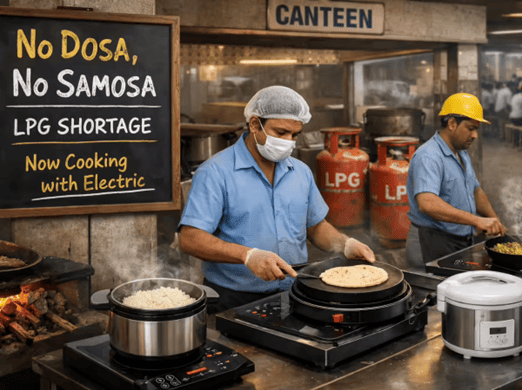
- Canteens adapted by shifting to simpler, less fuel-intensive meals like rice and dal or temporary alternatives like electric hot plates.
- The crisis highlights how deeply interconnected everyday Indian campus dining is with volatile international energy markets.
- To protect against future disruptions, experts recommend that institutional kitchens diversify into piped natural gas and renewable energy systems.
Introduction
Surprisingly, the dosa, samosa, fried meals and even fresh roti would no longer be available in canteens of several colleges in India, observed students in many Indian colleges recently. The principal source of this disturbance has been the LPG shortage in commercial kitchens at the beginning of 2026.
The heating fuel commonly used in canteens, hostels, restaurants, and roadside food stalls is Liquefied Petroleum Gas (LPG) due to the fact that it instantly heats and can easily be stored.
In cases where supply was erratic, institutions were forced to cut down menu dishes that needed to be cooked for a long time or on the flame. Despite government protection of the supply of household cooking gas, gas was in short supply, and delays were experienced by commercial consumers, such as canteens, and delivery of cylinders was restricted.
This scenario also revealed the pumping systems of fuel directly all over the world, which directly impact the daily lives within the campuses, and showed the bigger energy crisis involving the events all around the world.
Why Did the LPG Shortage Happen in 2026?
The immediate factor that triggered the shortage of LPG in India was the interference in fuel supply routes associated with the conflict in West Asia. A high percentage of LPG imports to India is accompanied by the Strait of Hormuz, one of the global energy shipment pathways. With a slow movement in shipping due to the tensions in the area, there was uncertainty over the imported LPG arrivals.
Oil companies were advised to make household cylinders the priority to prevent panic within the country, and commercial users will get fewer allocations. It was reported that one of the first areas to be impacted by the scarcity was the restaurants and the educational institutions, as commercial cylinders were limited before the domestic supply could be compromised.
Why Dosa Soared Ahead of Other Foodstuffs
Fuel does not have the same effect on all food products. Dosa requires constant heating on a hot tawa, repetitive oiling, as well as a number of minutes of the flame per serving. Conversely, rice that has been boiled or the simplest forms of curries can be prepared in bulk with reduced amounts of gas per plate. Due to this reason, canteens started to eliminate the foods which consumed a lot of fuel.
Today, there are also cases of some colleges cutting down on the amount of tea they produce or raising the price of tea since LPG is expended in water heating during the day. In a report to the Delhi campuses, a number of canteens cancelled server dosa and samosa in an attempt to preserve cylinders to serve vital meals.
Adjustments of College Canteens to the Shortage
Most institutions altered the cooking techniques to continue serving students. Canteens changed to simpler meals like rice, dal, boiled vegetables, and minimal preparation of bread.
In certain hostels, the kitchen personnel would use large pots to cook smaller quantities of food to save on the amount of gas wasted. Some campuses even made temporary use of other forms of fuel, like firewood or electric hot plates, as far as they could get.
Online student discussions also recounted that the hostel kitchens are becoming more labour-intensive due to the need for cooks to be careful about the fuel consumption and unnecessary reheating. These changes demonstrate the capability of a crunch in energy, even temporary, to cause immediate changes in operation in the daily institutions.
Government Response and Supply Management
The government made it clear that the domestic supply of LPG was sufficient and there was no need to panic-buy the cylinders amongst citizens. Oil companies came up with higher production at home and kept on checking the distribution so that there were no drastic deficits among the households. But since colleges, hotels and food vendors rely on commercial cylinders, they were still experiencing short-term delays.
The oil marketing companies established a special committee to consider requests by both restaurants and institutional kitchens. The authorities also urged people to be cautious regarding booking regulations to ensure that the stock available was distributed evenly.
What this says about the Energy Dependence in India
The example of the 2026 LPG shortage proved that the Indian food system is highly interwined with the international fuel markets. After all, a minor interruption of global shipping will soon have an impact on campus dining, food expenses, and schedules. India is importing a significant portion of its LPG requirements, so any kind of disruption in the fuel trade may lead to domestic scarcity.
It is also the reason why diversification of building piped natural gas, electric cooking systems and building kitchens with renewable energy are discussed more by experts as sources of reducing the vulnerability during an energy crisis.
Conclusion
Even the loss of dosa reviewing the college canteens will appear like a minor inconvenience, yet it is representative of a more critical issue of economics and energy. The LPG crisis of the year 2026 revealed the fact that global conflict, imports of fuel and domestic priorities of supplies directly influence the day-to-day life of the student.
College dining establishments reacted by streamlining menu items, substituting those with high fuel demands and saving up on the existing gas. More energy planning and alternative cooking systems in future could make educational institutions stable even during times of energy crisis. So far, the missing dosa is a reminder that even such basic food as meals relies on international energy systems.
Frequently Asked Questions
1. What caused the sudden disappearance of dosa and samosas from college menus?
The main culprit was a massive commercial LPG shortage at the start of 2026, which severely restricted the fuel allocations needed to run large campus kitchens.
2. Why did a global conflict specifically target commercial cooking gas lines?
When shipping lines through the Strait of Hormuz faced delays, the government chose to prioritize domestic household cylinders to protect families, leaving commercial entities with restricted supplies.
3. How does this localized campus situation tie into a broader global energy crisis?
This disruption serves as a mini case study for a larger energy crisis, illustrating how vulnerable a nation’s food security and daily routines are when heavily reliant on imported fossil fuels.
4. Why were fuel-heavy dishes like dosa dropped while rice and dal remained available?
Dosa requires continuous, high-intensity flame per serving on a flat tawa, whereas bulk items like rice can be boiled in large batches using significantly less fuel per individual plate.
5. What immediate operational changes did college canteens implement to survive the crunch?
Kitchen staff adapted by streamlining their menus, shifting to low-fuel cooking methods, maximizing pot sizes, and occasionally using alternative setups like electric hot plates.
6. Did residential students living in hostels experience any cooking changes?
Yes, hostel kitchens became far more labor-intensive as cooks had to meticulously plan meal times to prevent unnecessary reheating and conserve their existing cylinder stocks.
7. How did the government manage the 2026 LPG shortage for everyday citizens?
The government ramped up domestic production and assured the public that household cooking gas supplies were stable, focusing tight distribution rules strictly on commercial buyers.
8. What special measures did oil marketing companies take during the fuel crunch?
They established a special committee to monitor and systematically evaluate emergency supply requests coming from hotels, restaurants, and institutional kitchens.
9. How does a shipping delay in West Asia directly hit a student’s wallet in India?
Because India imports a vast majority of its liquefied gas, international trade hurdles instantly cause a domestic LPG shortage, driving up campus food prices and altering daily menus.
10. What long-term solutions can colleges adopt to prevent a future energy crisis?
Energy experts suggest that campuses must transition toward piped natural gas, adopt electric commercial appliances, and integrate renewable power to insulate themselves from the next energy crisis.
Citations & References
[1] Business Standard, “Why India faces LPG shortage amid ongoing West Asia war,” Business Standard, Mar. 11, 2026. [Online]. Available:
https://www.business-standard.com/markets/commodities/india-lpg-shortage-west-asia-war-hormuz-shipping-disruption-126031100779_1.html.
[2] Onmanorama, “How the LPG shortage is kicking dosa and uthappam off hotel menus,” Onmanorama, Mar. 11, 2026. [Online]. Available:
https://www.onmanorama.com/food/features/2026/03/11/lpg-shortage-india-restaurants-menu.html.
[3] ET EnergyWorld, “Hotel and restaurant associations flag commercial LPG shortage,” The Economic Times, Mar. 11, 2026. [Online]. Available:
https://energy.economictimes.indiatimes.com/news/oil-and-gas/hotel-restaurant-associations-flag-commercial-lpg-cylinder-shortage-seek-govt-intervention/129374995.
[4] The Economic Times, “The LPG Crunch: No Dosa or Samosa—Gulf War Shrinks India Inc’s Canteen Menus, Firms Turn Electric,” The Economic Times, Mar. 14, 2026. [Online]. Available:
https://economictimes.indiatimes.com/news/company/corporate-trends/no-dosa-or-samosa-gulf-war-lpg-crunch-shrinks-india-incs-canteen-menus-firms-turn-electric/articleshow/129563529.cms.
Streamline Your Hiring with Eve Placement
Engage, assess, and recruit top talent through tailored AI hiring challenges that go beyond resumes. Ready to hire better? Contact our research team for a custom consultation.