
Agricultural Technology’s Innovation: Increasing Food Production
Published: Jul 9, 2026
Key Points
- We need to come up with ideas for farming to feed the people on our planet by 2050.
- This thing called precision agriculture uses tools like sensors, drones, and computers to look at data and make crops grow better.
- It also helps us not waste water or fertilizers or pesticides.
- Biotechnology and genetic advancements are helping us make crops that can survive without water and are not eaten by pests, and have lots of good stuff in them.
- We have these irrigation systems now that help us save water by checking on it all the time and giving it to the crops in a smart way.
- Then there is this thing called vertical farming that helps us grow more food in small spaces, and it uses a lot less water, and it is cheaper to move the food around.
Introduction
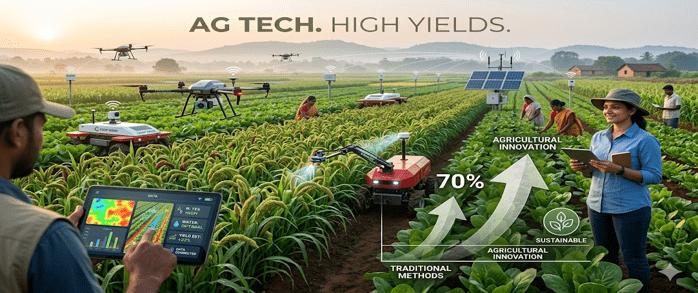
By 2050, Earth might hold nearly 10 billion people, pushing the need for much more food – about 70 percent extra. Deploying modern agricultural technology is now vital to meeting this unprecedented demand. Old ways of growing crops just won’t cover it without harming nature. Instead, smarter tools and tech in farming can lift harvests, use water and land better, yet keep things green long-term. Farms now shifting toward sensors, data, and precise actions mark a quiet turn away from age-old routines. That change? It’s less about tractors, more about timing, details, and decisions guided by information.
Precision Agriculture Technologies
Out in the fields, data flows through sensors that track what the soil actually needs. Instead of blanket applications, machines adjust fertilizer amounts on the move, matching spots that demand more or less. Moisture readings pop up instantly, showing exactly when a section gets too dry. Some systems update every few minutes, feeding fresh numbers into handheld tools. Where old methods guessed, today’s gear responds – not all at once but bit by bit. Even pesticide doses shift across acres based on live conditions.
This kind of setup cuts runoff because nothing goes where it is not required. Behind each adjustment sits a network – quiet, constant, watching. Farmers see changes unfold without stepping into the dirt themselves.
Up above, drones keep an eye on fields, spotting bugs, sickness in plants, or spots not getting enough water. Instead of waiting, satellite pictures teamed with smart software study plant color and growth patterns, hinting at harvest size before it’s obvious. Together, these tools push farm output up by nearly a fifth, sometimes more, while also trimming expenses on seeds, fertilizer, and water – usually around one out of every ten dollars saved.
Biotechnology and Genetic Advancement
Out in fields where rain rarely falls, drought-hardy plants now grow thanks to tweaks made through gene changes. Pests steer clear of certain crops, not because they’re sprayed but due to built-in defenses shaped by careful selection. When soil turns harsh from salt, new plant types still push up green shoots, turning once-useless ground into farmland again. Instead of lacking key nutrients, some foods pack more zinc or vitamin A – modified so people get what their bodies need just by eating regular meals. Bugs think twice before biting into these engineered leaves, which carry natural shields passed down through smart breeding.
Crop gains get a boost from CRISPR, editing genes to lift output, enrich nutrients, while lasting longer after harvest. Because spoilage drops – around one-third of produce vanishes in poorer regions – more food reaches plates than before.
Smart Irrigation Systems
Most farms around the world struggle to grow food because there is less water available. Sensors placed in the ground work together with local weather predictions so watering happens only when needed. Machines adjust flow using real-time conditions instead of fixed schedules. Water moves directly to plant roots drop by drop throughout the day. Less liquid evaporates under sunlight thanks to slow delivery timing. Yields go up since plants receive steady hydration without delays. Older sprinkler techniques waste more due to wind and uneven coverage.
From far away, a phone can tweak how watering gear runs, thanks to smart gadgets tied together. When storms pass through, catching runoff adds up – so does reusing old household water. These moves stretch supplies without stretching effort.
Vertical farming with controlled environments
Stacked layers of crops rise inside enclosed spaces where light, air, and nutrients are carefully managed. Instead of soil, plants draw nourishment through mist or water-based flows designed just for them. Lights tuned to each plant’s needs shine down during cycles that mimic perfect days. These setups grow far more food in the same floor area when compared to open-field methods. Water gets reused constantly, cutting overall need by nearly all but a tiny fraction.
Output climbs high without spreading outward across land. Each room operates like a living loop, repeating growth without pause.
Cities nearby mean shorter trips for fresh food, so shipping gets cheaper. Rain or shine, what grows stays reliable in taste and texture. Chemical sprays become unnecessary when setups work indoors.
Challenges And Adoption Barriers
Even with new tech around, getting it everywhere stays tough. Big startup prices shut out many small farms in poorer areas. Not knowing how to use digital tools, plus weak systems, slows things down. Rules for biotech differ by country, which makes selling across borders messy.
Even when farms use new tools, shifting climates still put harvests at risk. Yet keeping land rich in life while growing more food is a must. What grows today faces tomorrow’s storms. Healthy dirt underfoot makes all the difference. Though machines help, nature’s balance can’t be replaced. Crops depend on steady patterns, which now waver. Progress means protecting what lies beneath.
Future Directions
Working together pushes new ideas forward – researchers, officials, and farmers must stay linked. Low-cost tools built for small farms open doors across rural areas. When the government teams up with business, knowledge spreads faster. Shared work lifts entire farming systems.
When old wisdom meets new tools, farms can better weather tough times. Because problems keep changing, more money should go toward studying how crops grow. Progress needs support that keeps pace with what farmers face now.
Conclusion
Farms need better tools if we are to feed everyone reliably. Machines that measure soil needs, genetic advances in plants, smart sensors – these have already shown they can grow more food without harming land. Getting these into actual use depends on who gets them first, plus how fairly they spread. Spending wisely now on farming tech shapes whether communities thrive later, not just harvests.
Frequently Asked Questions
1: How does modern agricultural technology help optimize global food production?
Modern tools optimize food production by using data-driven sensors to precisely manage soil nutrients, which directly maximizes sustainable crop yields.
2: Can smart farming innovations help farmers survive extreme droughts?
Yes, advanced systems introduce gene-edited, drought-hardy plants that maintain stable food production even when water is scarce.
3: What role does precision agricultural technology play in modern farming?
Precision agricultural technology tracks live soil moisture levels, allowing machinery to adjust inputs instantly to secure high harvests.
4: How do automated irrigation setups stabilize seasonal crop yields?
By delivering water directly to roots based on real-time weather forecasts, this setup prevents evaporation and boosts crop yields.
5: Does implementing new equipment reduce overall farming expenses?
Yes, adopting precision tools trims asset waste by 10% while simultaneously lifting overall output.
6: How does vertical farming utilize agricultural technology to save space?
Vertical setups use indoor agricultural technology to stack plants dynamically, drastically amplifying production per square foot without expanding land use.
7: Can gene editing prevent post-harvest food spoilage?
CRISPR-driven adjustments extend the shelf life of produce, ensuring that high harvests successfully reach consumer plates.
8: What are the primary barriers to adopting agricultural technology globally?
High startup costs and limited digital literacy prevent small farms from accessing the agricultural technology required to maximize their crop yields.
9: How do overhead drones and satellites improve final crop yields?
This aerial equipment spots early plant diseases and pests, allowing swift interventions that protect vulnerable crop yields.
10: Why must public and private sectors collaborate on agricultural technology?
Joint investments make low-cost agricultural technology accessible to smallholders, lifting national food security and production levels.
Citations & References
[1] FAO, The Future of Food and Agriculture: Trends and Challenges, Rome: Food and Agriculture Organization, 2017. [Online].
Available:
https://openknowledge.fao.org/server/api/core/bitstreams/7468fe06-7dd7-4e7a-8f10-bb0084594977/content
[2] World Economic Forum, Innovation with a Purpose: The Role of Technology Innovation in Accelerating Food Systems Transformation, Geneva: WEF, 2021.
[3] EvePlacement. [Online].
Available:
https://eveplacement.com/
Streamline Your Hiring with Eve Placement
Engage, assess, and recruit top talent through tailored AI hiring challenges that go beyond resumes. Ready to hire better? Contact our research team for a custom consultation.