
Make Your Work Path: A Plan for Growth
Topics: Career Growth and Development Plan
Getting a great job is not just about the end goal. It’s about the trip. A clear job growth plan is like a map. It guides your choices & acts to hit your job aims. It makes you an active builder of your job path. Making a growth plan might sound big, but it’s easy & strong. You can break it into a few key bits.
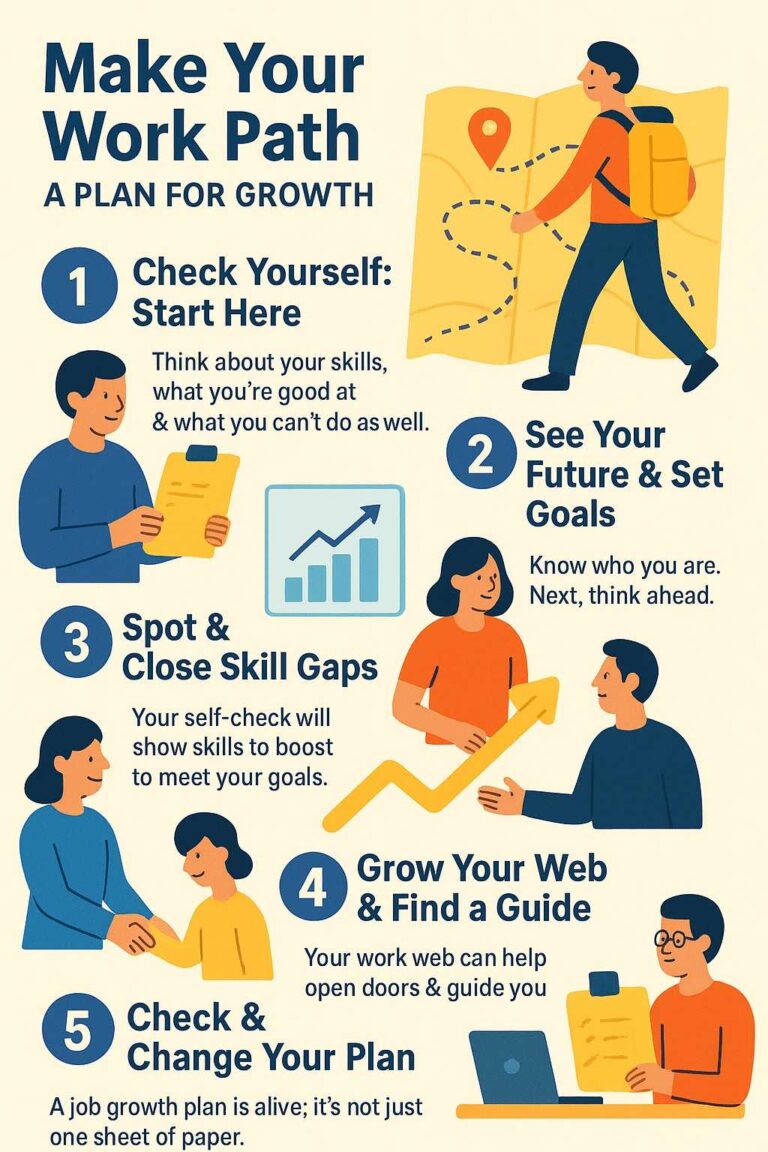
- Check Yourself: Start Here
First, you need to know where you are. So, start with a deep check. Think about your skills, what you’re good at & what you can’t do as well. Ask, “Do I like what I do?” & “Am I good at it?” Be true about where you need to get better. Think of all skills, not just job tasks, but also talking, leading, & fixing problems. This deep look will show you your strong skills & the gaps to work on. You also need to know your values & what you want from a job, not just cash. This know-how is the core of your whole plan.
- See Your Future & Set Goals
Now, know who you are. Next, think ahead. Where will you be in one, five, or ten years? This is your job view. It’s more than a job title. It’s about the mark you want to make & the life you want to live. With a view set, you can make clear & sharp (SMART) goals. Say, don’t just think to get more up the ladder. A SMART goal would be “earn a task boss tag & lead a small team by year’s end, to prepare for a team lead role.” Break big goals into small, doable bits. This makes it less big & brings joy as you reach each mark.
- Spot & Close Skill Gaps
Your self-check will show skills to boost to meet your goals. Now’s the time to make a plan to close those gaps. Your plan might have steps like joining web lessons, going to workshops, or getting new tags. Don’t just stick to school-like ways. Look for ways to learn through work by taking on new tasks or big roles. Watch a work friend or get tips from your boss. By being clear & swift, you learn the skills you need to move ahead.
- Grow Your Web & Find a Guide
You can’t win just by yourself. Your work web can help open doors & guide you. Meet friends at work, leaders & find guides. Go to work talks, join talks online, & use sites like LinkedIn to meet others. A guide can be a huge help. They can share their tales, give tips, & help you see your job from new views. Pick a guide who fits where you want to go & can spend time to help you grow.
- Check & Change Your Plan Often
A job growth plan is alive; it’s not just one sheet of paper. As work goes on, & your goals & needs may change. Set times—every three or six months—to go over your plan. Mark wins & changes bits as you need. Are your aims still fit? Are there new chances or big blocks? Be set to tweak your plan to fit new bits. By always checking & fixing your map, you make sure you stay on the right path to a full & top job.
References
– P. Drucker, The Big Boss
– S. R. Covey, Top Skills to Get
– R. E. Quinn, Big Change: See The Lead In You
✅ FAQs
1. What is career growth planning?
Career growth planning is the process of mapping your long-term professional goals, identifying required skills, and taking steps to move toward better opportunities and advancement in your career.
2. Why is career growth important?
Career growth is important because it helps you stay motivated, build financial stability, improve your skills, and achieve long-term job satisfaction.
3. How do I start a career growth plan?
Begin with self-assessment. Identify your strengths, weaknesses, and interests. Then set specific goals, outline a timeline, and create action steps for skill development and networking.
4. What are SMART goals in career planning?
SMART goals are Specific, Measurable, Achievable, Relevant, and Time-bound. They help you set realistic targets and measure progress effectively in your career growth journey.
5. How often should I review my career growth plan?
It’s best to review your plan every 6–12 months. Regular check-ins allow you to adjust goals and strategies as circumstances and opportunities change.
6. Can career growth happen without higher education?
Yes. Career growth depends on continuous learning, practical experience, networking, and adaptability. Certifications, online courses, and skill development can often substitute for formal higher education.
7. How do I identify skill gaps for career growth?
Compare the skills required in your desired role with your current abilities. Performance reviews, job descriptions, and mentor feedback are great ways to spot gaps.
8. What role does networking play in career growth?
Networking expands your professional circle, opens doors to opportunities, and helps you learn from peers and mentors who have successfully advanced in their fields.
9. How can a mentor support career growth?
A mentor provides guidance, shares industry insights, gives constructive feedback, and helps you avoid mistakes while navigating your career growth path.
10. Is switching jobs necessary for career growth?
Not always. Some people achieve growth by taking on new projects, responsibilities, or promotions within the same company. Others may need to switch roles or industries for better opportunities.
11. What’s the difference between career growth and career development?
Career development is about improving skills and learning, while career growth refers to the tangible outcomes such as promotions, salary increases, and leadership roles.
12. How does self-reflection help in career growth?
Self-reflection helps you understand what motivates you, what values matter most, and whether your current path aligns with your long-term career growth goals.
13. Can career growth be planned at any stage of life?
Yes, career growth planning is possible at every stage—whether you’re a student, mid-level professional, or senior employee looking for leadership opportunities.
14. How does work-life balance affect career growth?
Maintaining work-life balance prevents burnout, boosts productivity, and allows you to sustain long-term career growth without sacrificing personal well-being.
15. What tools can help with career growth planning?
Tools like career journals, online learning platforms, LinkedIn, and career planning apps can help track progress and stay organized in your growth journey.
16. How do I stay motivated during career growth planning?
Break big goals into small milestones, celebrate achievements, and remind yourself of your long-term vision to stay motivated.
17. How important is adaptability in career growth?
Very important. Adapting to industry trends, new technologies, and changing job demands ensures continued relevance and sustained career growth.
18. What are some common mistakes in career growth planning?
Common mistakes include setting vague goals, ignoring feedback, avoiding networking, and failing to update your plan as situations change.
19. Can career growth happen in non-traditional fields?
Absolutely. Whether in freelancing, creative industries, or entrepreneurship, career growth depends on skill mastery, branding, and building strong professional relationships.
20. How do I measure success in career growth?
Success can be measured through promotions, salary increases, new skills acquired, expanded networks, and overall satisfaction with your professional journey.
Penned by Mohammad Saqib
Edited by Priyanshi Garg, Research Analyst
For any feedback mail us at [email protected]
Streamline Your Hiring with Eve Placement’s Custom Assessments
Eve Placement helps you engage, assess, and recruit top talent through tailored hiring challenges that go beyond resumes. From technical quizzes and real-world case studies to psychometric evaluations and audio/video submissions, our platform enables smarter, data-driven hiring decisions. Advanced security features ensure authenticity and eliminate fraud, giving you reliable results. Ready to hire better? Know More.
Mail us at [email protected]