
Why Communication Matters in Professional Growth
Communication is not limited to just expressing ideas but rather includes their realization. Whether it is through feedback sharing, facilitating meetings, or collaborating on ideas, communicating effectively determines how well someone is perceived as an expert, according to Pemble’s 2025. A significant 86% of employees and executives in the Workplace Communication Report indicate that poor communication leads to workplace malfunctions, with productivity being boosted by teams that improve communication skills by almost 25%.
Yet just 13% of workers think their workplace has good communication.’ Communication workshops come into play in that aspect. As per Gitnux, 70% of participants observed a marked improvement in their soft skills during the trial period, while 85% reported an increase in confidence. Practicing interpersonal skills can be achieved through workshops.
What Communication Workshops Typically Offer
Communication workshops are hands-on learning experiences that aid in improving your ability to communicate, listen, and connect with others. They emphasize the development of interpersonal skills, which are typically not taught to professionals.
Common focus areas include:
- Effective communication and empathic reactions
Develop an understanding of people’s feelings, responding with consideration and thoughtfulness. - Confidence and power
Learn to acquire the ability to handle conflicts positively and express your individual preferences without hesitation. - Body language
Take advantage of body language, hand signals, and facial expressions to communicate your message. - Enhance your ability to offer constructive feedback and use persuasive language to move others.
- Develop better skills at giving useful feedback and practicing the art of persuasion more in your life for the betterment of yourself and others.
Workshop Delivery Styles
- Virtual sessions
These sessions are similar to traditional ones but in an online/web format where you get to interact directly with the expert mentors as well as learn from the fellow participants through the collaborative environment we provide. - In-person workshops
These sessions offer practical, hands-on learning and give direct engagement with real-life workings and a collaborative interaction among fellow participants. - Online modules
It offers quite flexibility for learning, which allows for self-paced learning from anywhere in the world and also being flexible with time. - Mixed programs
Blending in-person and online modules, these courses combine both qualities to offer a complete and varied education. - Special corporate training programs
These are tailored to your organization, address your company’s unique needs and improve team dynamics and skill sets.
Real-Life Skills You Gain
Attending this workshop is an absolute transformation. You begin to speak with clarity; your emails hit peers and managers just right, and stiff exchanges lose their terrain as minefields. What you learn includes:
- Communication Excellence
You can achieve verbal and written communication skills so that your message is always received and impactful. - Feedback & Conflict Resolution
Make it a point to always give negative feedback with compassion – conflicts can vanish magically & you start viewing arguments as an opportunity to make progress. - Collaboration Among Teams
In today’s dynamic with the fast-paced, globally connected nature of the workplace, having a teamwork and supportive culture is critical to success. Do teams share, put your brains together. - Strategic Narrative
Mastering the art of storytelling not only helps with mere communication but also establishes connections, connecting to emotions and ultimately drives to meaningful action. - Listening & Comprehension
By learning the art of truly hearing and comprehending other individuals, this will lead to richer interactions and better decision-making.
According to ElectroIQ’s 2025 Talent Survey, 55% of recruiters worldwide regard verbal communication skills as of paramount consideration when hiring or promoting professionals, and rightly so, for how we communicate–the words, voice levels, or a listening ear–builds upon trust that leads to results.
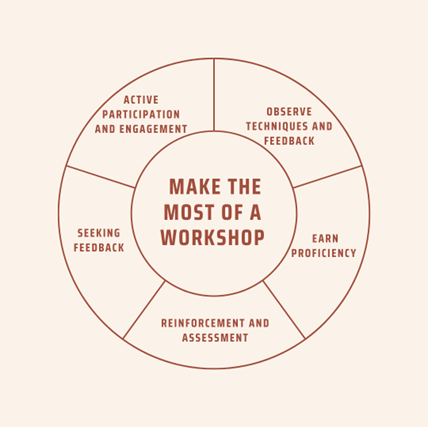
Tips to Make the Most of a Workshop
You can only achieve what you put into practice. If you want to truly benefit from a communication course, be active in the classroom. Here’s what helps.
- Active Participation and Engagement
- One must have a positive attitude towards its surroundings and should participate fully and be prepared to learn, engage, and contribute.
- Observe techniques and feedback
- Document new forms, ideas, strategies, and any advice on what to teach you will use to improve.
- Earn proficiency by learning a new skill weekly. Getting better requires dedication and effort. This takes practice and getting better.
- Seeking and Utilizing Feedback
- Talk openly to colleagues about the work: Ask others for feedback so you can cover any holes and improve.
- Reinforcement and Assessment
- Continue with the workshop materials and self-evaluation: Review the material and evaluate progress to consolidate learning and improve retention.
Conclusion
The effectiveness of workshops aimed at improving communication extends beyond just classroom instruction to professional development. Your interpersonal skills are reinforced, confidence is boosted, and your communication skills become enhanced. It is a fact that communication classes can result in genuine professional and personal development. It’s crucial to have a powerful communication tool that is essential for demonstrating your best qualities in the workshop.
Frequently Asked Questions About Interpersonal Skills
1. What are interpersonal skills and why are they important?
Interpersonal skills refer to the abilities that help individuals interact effectively with others. These skills are crucial for building relationships, resolving conflicts, and succeeding in both personal and professional environments.
2. How can I improve my interpersonal skills at work?
You can improve interpersonal skills by actively listening, showing empathy, practicing clear communication, and participating in team-building activities. Attending workshops or seeking mentorship also helps.
3. Which interpersonal skills are most valued by employers?
Employers highly value interpersonal skills such as communication, teamwork, emotional intelligence, adaptability, and conflict resolution. These skills foster collaboration and productivity.
4. Can interpersonal skills be learned or are they innate?
While some people may naturally possess strong interpersonal skills, they can absolutely be learned and refined through practice, feedback, and training programs.
5. How do interpersonal skills affect leadership?
Strong interpersonal skills enable leaders to inspire trust, communicate vision, manage teams effectively, and resolve issues diplomatically. They are essential for motivating and guiding others.
6. What role do interpersonal skills play in customer service?
In customer service, interpersonal skills help professionals understand customer needs, respond empathetically, and build lasting relationships. They directly impact customer satisfaction and loyalty.
7. Are interpersonal skills different from communication skills?
Communication is a key component of interpersonal skills, but the term also includes emotional intelligence, teamwork, and the ability to navigate social situations effectively.
8. How can students develop interpersonal skills for future careers?
Students can develop interpersonal skills by engaging in group projects, participating in extracurricular activities, volunteering, and practicing active listening and empathy in daily interactions.
9. What are some common barriers to developing interpersonal skills?
Barriers include poor self-awareness, lack of confidence, ineffective communication habits, and limited exposure to diverse social settings. Overcoming these requires intentional effort and feedback.
10. How do interpersonal skills contribute to career growth?
Interpersonal skills enhance collaboration, leadership potential, and workplace harmony. Professionals with strong interpersonal skills are more likely to be promoted and trusted with key responsibilities.
REFERENCES
- Future Education Magazine. https://futureeducationmagazine.com/communication-skills-workshops/
- Resume Kraft. https://resumekraft.com/effective-communication-skills-catalysts-for-professional-growth/
- Library & Information Science Education Network https://www.lisedunetwork.com/role-of-communication-in-professional-development/
- Protocol https://protocol.org.in/business-communication-importance-for-professional-growth/
- Growett https://growett.com/blogs/How-communication-workshops-improve-interpersonal-skills.html
- InDepth Research https://indepthresearch.org/blog/15-proven-strategies-for-effective-communication-skills-training/
- DigiSnare https://www.digisnare.com/blog/from-theory-to-practice-how-workshops-build-real-world-skills.htm