

Introduction: An Attempt to See History from a New Perspective
The campus of any university is not limited to classrooms and libraries. Every brick, every corridor, and every field holds within itself some story or the other. Somewhere, the laughter and jokes of student life echo, one finds evidence of old meetings and movements. But with time, these memories often become blurred and remain buried between the walls.
Today, technology is changing this situation. Augmented Reality (AR) has now become a means of reviving these buried stories. With the help of smartphones or AR glasses, as soon as we look at a building or monument, its old form, events, and memories related to it come alive in front of our eyes.
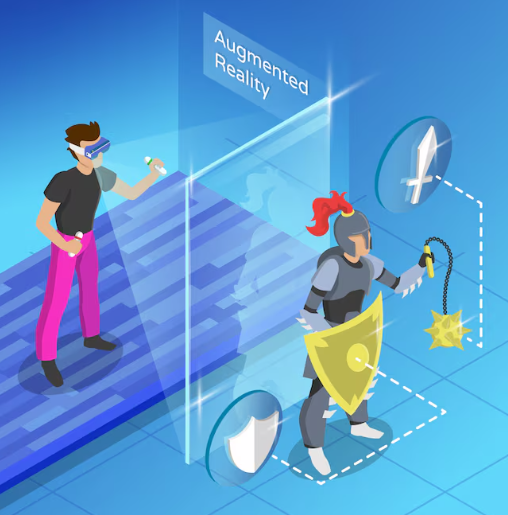
Why is AR important in preserving campus history?
In traditional campus tours, one often must listen to the guide or read the plaques on the walls. This information is useful, but it seems boring and limited somewhere. AR gives a completely new form to this experience.
- Bringing History Alive: Standing in an old auditorium and watching the convocation ceremony of that time on a mobile screen is a unique experience.
- Attractive to the New Generation: Today’s students are accustomed to the digital world. AR presents history to them in the language they understand best—interactive screens and media.
- New Way of Learning: Instead of reading from books, if a student sees a virtual reconstruction of a 100-year-old library, the impact of learning is much deeper.
How AR Campus Tours Come to Life
- Interactive Storytelling Style: Now there is no need to just listen to the guide. By scanning the QR code or through the app, you can see the stories related to a place directly on your mobile.
- 3D Reconstructions: It was difficult to know how buildings changed over the decades. Through AR, visitors can easily see what the place looked like 50 or 100 years ago.
- Game and Quiz-Based Experiences: AR playfully teaches history. Games like treasure hunts or quizzes make the tour even more exciting for students and children.
- Inclusivity and Accessibility: Audio guides, subtitles, and multi-language options give everyone the same experience—whether it is an international student or a visitor with a disability.
- SEO Benefits for Universities: Today, along with education, digital presence is also very important. Adopting AR tours also gives universities a huge advantage in SEO.
- Keyword Visibility: Terms like “AR campus tour” or “interactive university history” help the institution rise to the top in online searches.
- Content Sharing: Students and visitors share their AR experience on social media in the form of videos or images. This gives the university organic reach and backlinks.
- Improving Brand Image: When an institution uses modern technology while preserving history, it strengthens its identity as innovative and visionary.
- Real Examples: Some institutions are already taking advantage of this technology:
Yale University – Using AR to showcase historical changes in campus buildings.
University of Maryland – Combines history and admissions strategy in a virtual campus walk.
University of Oxford – Blends archival images with modern landscapes to enrich tours.
These examples show that AR is not just an experiment, but has become an important part of both education and heritage.
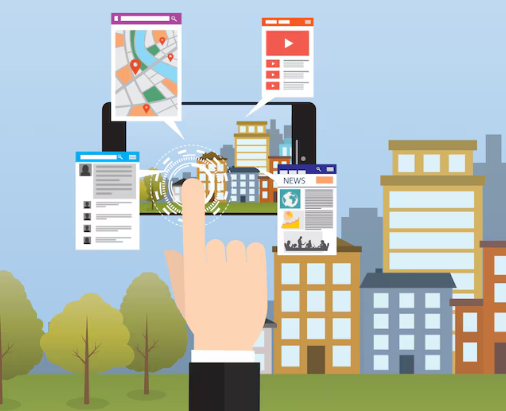
Challenges are Also Not Less.
While the benefits are many, there are some difficulties that come in the way.
Investing in Technology: Creating AR apps is not easy; it requires funding and expert support.
Accuracy of History: Providing incorrect information can harm the credibility of the university.
Device Availability: Not every student will have a device that supports AR.
It is therefore important that universities plan with these aspects in mind.
Conclusion:
Augmented reality campus history tours are not just a use of technology. They are a bridge that connects the past and the present. Through the power of interactivity and storytelling, they bring to future generations a history that would otherwise be confined to books and museums.
AR is not only an educational responsibility for universities, but also a great way to make their branding future-ready.
Commonly Asked FAQs:
1. What is an Augmented Reality Campus History Tour?
It is a digitally enhanced tour where historical images, videos, and stories appear over real campus locations when viewed through AR devices.
2. How does Augmented Reality Tours make campus history more engaging?
AR adds interactive 3D models, audio guides, and immersive experiences that bring historical events to life for students and visitors.
3. Why are Augmented Reality Tours important for universities?
They preserve cultural heritage, attract prospective students, and enhance institutional branding as tech-forward and innovative.
4. Can Augmented Reality Tours be used for self-guided tours?
Yes, visitors can scan QR codes or use an app to explore the campus history without a physical guide.
5. What devices are required for Augmented Reality tours?
Most tours work on smartphones, tablets, or AR glasses, making them accessible and convenient for anyone.
6. How do Augmented Reality Tours improve learning?
By turning history into an interactive, visual experience, students retain more information compared to passive reading.
7. Can Augmented Reality Tours include multimedia content?
Yes, universities can embed videos, audio narrations, archival photos, and holograms into AR experiences.
8. Are Augmented Reality Tours good for international students?
Absolutely—they can include language options, subtitles, and localized content for global visitors.
9. How do Augmented Reality Tours help with inclusivity?
They offer features like screen-reader compatibility, sign language videos, and audio guides for differently-abled users.
10. Do Augmented Reality Tours require internet access?
Some AR apps work offline after initial download, while others require internet for streaming content.
11. Can Augmented Reality Tours improve university SEO?
Yes, using keywords like “interactive campus history” helps the institution rank higher and attract more online traffic.
12. How do Augmented Reality Tours attract prospective students?
They showcase the campus as modern and innovative, which resonates with tech-savvy Gen Z learners.
13. Can AR tours be gamified?
Yes, treasure hunts, trivia games, and interactive quizzes make the experience exciting and educational.
14. How are 3D reconstructions created for AR tours?
Developers use old photographs, architectural drawings, and 3D modeling to accurately recreate historic spaces.
15. What kind of content can be shown through AR?
Everything from student protests, famous lectures, alumni interviews, and campus events can be visualized.
16. Are AR tours cost-effective for universities?
Though initial investment can be high, AR tours are reusable, scalable, and require minimal additional manpower.
17. How do AR tours benefit alumni engagement?
They let alumni revisit their memories and strengthen emotional ties with the institution.
18. Can AR tours be updated regularly?
Yes, new stories, events, and even updated building information can be added to keep the experience relevant.
19. Are AR tours useful for open days and admissions events?
Definitely—they create memorable first impressions for parents and prospective students.
20. Do AR tours require copyright permissions?
Yes, universities should ensure that archival materials used in AR experiences are properly licensed.
21. How do AR tours promote social sharing?
Visitors love posting their AR moments on Instagram or TikTok, giving universities organic marketing exposure.
22. What challenges do AR campus tours face?
Funding, historical accuracy, device availability, and software maintenance can be major hurdles.
23. Can AR tours work with VR headsets?
Yes, many universities blend AR and VR to create a fully immersive heritage experience.
24. How can universities ensure historical accuracy?
By collaborating with historians, archivists, and alumni to fact-check every story used in the tour.
25. What security measures should be taken for AR apps?
Apps must comply with data privacy laws and protect personal user information.
26. Can AR campus tours be monetized?
Yes, universities can sell premium access or use them as part of fundraising campaigns.
27. How do AR tours strengthen brand image?
They signal that the institution values both innovation and heritage preservation.
28. Are AR campus tours suitable for school field trips?
Yes, they can be tailored for young students with kid-friendly storytelling and simplified language.
29. How do AR tours bring historical events to life?
Visitors can stand at a spot and see re-creations of past convocation ceremonies, protests, or cultural events.
30. What is the future of Augmented Reality in campus history tours?
The future includes AI-driven personalization, metaverse integration, and holographic guides for deeper immersion.
31. How long does it take to develop an Augmented Reality campus tour?
Timelines vary, but on average, a full tour takes 3–6 months of planning, development, and testing.
32. Do Augmented Reality tours work in both iOS and Android?
Yes, most apps are designed to be cross-platform to reach the widest audience possible.
33. Can Augmented Reality tours collect visitor data?
Yes, but universities must disclose data collection and use it in compliance with GDPR or other privacy regulations.
34. How do Augmented Reality campus tours support heritage preservation?
They digitally archive stories, photos, and history that might otherwise be lost over time.
35. Are Augmented Reality tours expensive to maintain?
Not necessarily—most costs are upfront; updates and new content can be added at relatively low expense.
36. Can Augmented Reality tours integrate with admissions marketing?
Yes, they can include calls-to-action like “Apply Now” links or scholarship information in-app.
37. How do Augmented Reality tours impact student engagement?
They spark curiosity, increase campus pride, and encourage students to explore areas they might otherwise ignore.
38. Do Augmented Reality campus tours work at night?
Yes, as long as locations are accessible; AR works with GPS and can be enhanced with lighting effects.
39. Can Augmented Reality tours be multilingual?
Yes, universities can add translations, voiceovers, and subtitles for international audiences.
40. Why should universities invest in Augmented Reality campus history tours now?
Because digital-first students expect innovative experiences, and AR tours create a competitive edge for admissions and branding.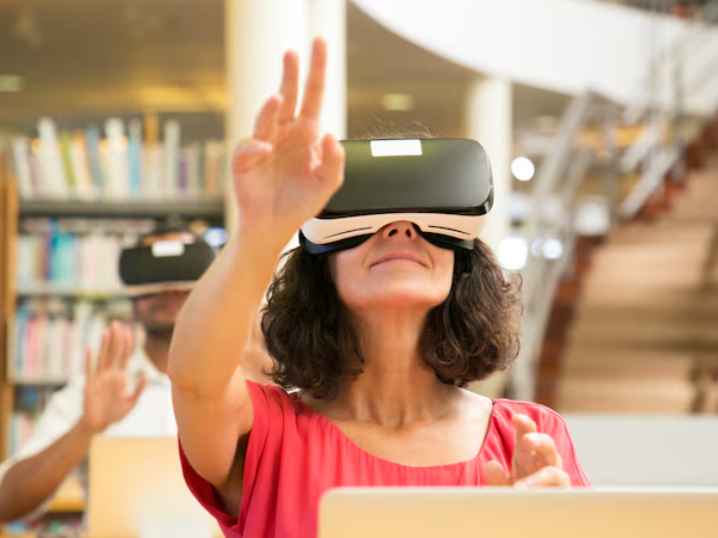
References
- Azuma, R. T. (1997). A Survey of Augmented Reality. Presence: Teleoperators & Virtual Environments, 6(4), 355–385. MIT Press.
 Read Online
- Johnson, L., Becker, S. A., & Cummins, M. (2014). NMC Horizon Report: 2014 Higher Education Edition. The New Media Consortium. Download Report (PDF)
- Yale University. Yale Augmented Reality Campus Tour. Yale Visitor Centre – Campus Tours
- University of Maryland. AR/VR “Digital Twin Campus” Initiative. GUtech News on UMD AR/VR