
7 Transformative Ways Augmented Reality Empowers Architecture Students
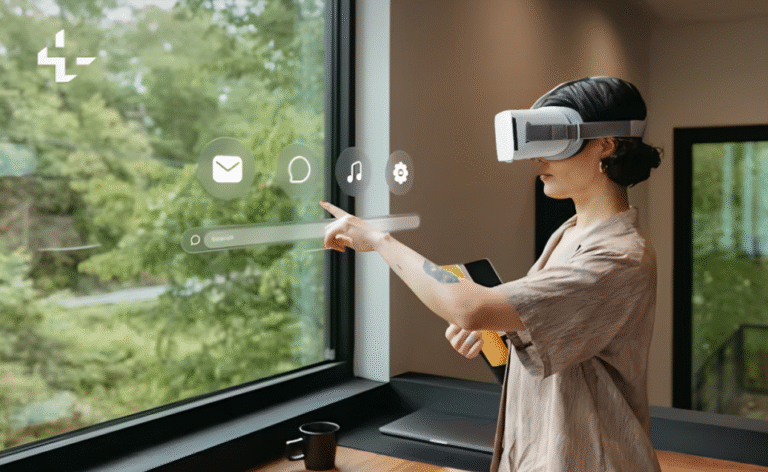
Topics: AR Architecture Students, Advanced Visualization
Introduction
In today’s fast-moving design world, new technologies are changing the way students learn, sketch ideas on tracing paper, and share their architectural visions. Of all these technologies, Augmented Reality—AR—has really taken off, drawing crowds eager to see digital images layered over the real world. For AR architecture students, being able to picture a building, shape its design, and explore it on the spot changes everything—like walking through a glass-walled model before it’s even built.
Beyond the lecture hall, AR turns design ideas into something you can almost touch, making it an essential tool for tomorrow’s architects. At its heart, AR uses advanced visualization tools to place digital models directly over real-world spaces—a desk, a street corner—changing the way students tackle design challenges.
In this article, you’ll discover seven dynamic ways AR is reshaping architectural education, giving future architects hands-on tools that spark creativity, foster teamwork, and sharpen real-world problem‑solving—like sketching a building’s frame in mid‑air.
Immersive 3D Visualization
One of augmented reality’s most compelling superpowers is its gift for breathing life into flat, two-dimensional designs, as if a sketch summoned itself into three natural dimensions. For architecture students, paper elevations and digital CAD drawings no longer flatten into another image behind a screen; instead, they rise into the room. Using AR, students summon full-scale holographic models before them, tilted and inspected like tactile prototypes, revealing every nuance as if they were cradled in the hands of reality.
Such immediacy in seeing proposals in full substance allows for frictionless assessment of scale, line weight, and context; the blend guards against the ambiguity inherent in a screen and invites the mind to accept that designs—once wavering between paper and proposal—are imminent, right in space.
Enhanced Conceptual Understanding
Architectural learning hinges on an acute awareness of spatial relationships—almost a sixth sense for where evening sunlight will touch a floor. Classic methods, such as blueprints, can overwhelm newcomers; a single forgotten note on wall thickness can distort a whole wall. Reality offered through augmented overlays invites students to lean in, to thump a virtual beam and judge its offset, to spiral a shadow as daylight changes, to glide fingertips across textures that words alone cannot convey.
Illumination follows fingertips, letting forms breathe and shimmer, and suddenly ordered plans of brick or concrete appear fluid, like shifting shells on damp sand. Ideas that once seemed tentative now take contour; the learning sticks, and the mind, delighted, tilts to new beginnings.
Real-Time Partnership and Response
In design, solitude weakens more than it strengthens—great concepts bloom in communal breath. Thanks to AR software, students and faculty alike can slip into conversation the instant inspiration strikes. Imagine a studio where a grad, AR specs on, releases a luminous three-dimensional form that hovers over the studio table. Peers and mentors lean in, adding glowing sketches or miniature annotations mid-air, adjusting the canopy, murmuring scale ratios, rewriting dials.
The cycle repeats—watch, revise, praise. Information travels faster than printing, the digital noise replicates Pressure Dressing over lunch. They learn to argue, agree, and shift strategies like they will in the wild—louder, no PowerPoint, Renault dashboard racing timestamps and white-board whosecorner skidding containment.
Combination with Smart Campaigns
AR apps run on a phone that slips into your pocket, a tablet you can balance on one hand, or sleek glasses that could pass for everyday shades. For students, that easy, walk-across-campus access means when an idea pops—on a packed bus, over greasy fries at midnight, or in the quiet corner of a dorm—they can make it real without a hitch.
They slip on whatever device they’ve got and drop a 3D building model onto a real street corner, letting it hover against blinking streetlamps, the shuffle of late-night pedestrians, and the dark outline of the café roof as the barista locks the door. They can tilt, scale, and stroll around the model wall-by-wall, watching it hug street angles and skirt lamp posts; that hands-on dance teaches them to fold in systems and site.
Sticking one foot up onto a crossing storm drain, they glance at the forecast and note the row of cookies in the forecast color gradient; they suddenly see how a late-afternoon downpour might soak the vaulted patio, and they redraw the overhang on the fly. Solutions that once lived only in the classroom now thrum in the dark and rain, and the gaps they once cruised over in pencil feel real.
Simulation of Construction Processes
Architectural education reaches well beyond aesthetics; it hinges on knowing how a structure stands up to gravity and weather, from the unseen steel skeleton to the façade of handmade brick. Using augmented reality, learners can step into a simulated site and string together the workflow, witnessing every girder and partition materialize in real time.
When a learner watches a steel lattice slip into alignment or observes a tangle of plumbing slip past the wall cavity the way wires disappear into an outlet, the chronology of assembly clicks into an intuitive timeline. These walk-throughs bridge theory and practice, turning the drawing on the board or the model on the tablet into a tangible prototype just a few touches away.
Cost and Time Efficiency in Design Education
It usually takes an entire Saturday to perfect one balsa-skinned roof or convincing gable in the model shop. Meanwhile, offcuts pile up, the table gets sawdust-slick, and the glue fumes coat everything in an acrid haze. Augmented reality swaps those physical iterations for agile digital prototypes. A tilt of the tablet or a tap on the surface of the foam model ghost the roof taller, recenter the skylights, then pack those adjustments into an export.
Students boost prototypes right in the studio, skipping the pain of foam cuts and lost house-keys with a single edit. Double tap, swap a texture, double-tap again, and one whole city block gets a new color scheme under a digital sky. Ideas multiply, files orbit each other, and the previous particulate mess stays a pocket of yesterday’s filters. Five quick sketches, not a single sheet of chipboard harmed, yet the intellectual jump feels a refresh at the same desk, and creativity roosts without the smell of fresh wood or melting plastic in the air.
Preparing Students for Industry 4.0
Designers these days are picking up augmented reality along with their pencils, tracing digital beams only seconds after the idea clicks. Practice has shifted; firms now unfold immersive walkthroughs for project sign-off, letting investors and planners roam a fully textured 3D space long before concrete firms up. Study these crossover technologies, and it’s like carrying a missing piece of the puzzle—suddenly, you’re the student who breathes a design into three dimensions and clicks “start” before the rest have loaded. Early command of these platforms doesn’t just sharpen your portfolio; it aligns your toolkit with tomorrow’s market, slipping you into a job-ready state. It’s the moment the future slides on like a well-tailored glove.
Conclusion
Today, Augmented Reality feels less like a trendy accessory in architecture school and more like a foundational tool, that first straight edge a designer craves with the first sketch. With AR, students step inside the future every day: they can spin virtual models in front of actual tabletops, link up with mentors across the ocean in real-time, and practice prototyping without step one costing a fortune. Digital overlays, holographic measurements, and interactive light patterns empower them to prototype, revise, and rehearse, all while building savvy that the job market craves.
Market trends continue their wild re-draw, and graduates fluent in AR don’t merely adapt—they supply the draft that the city evolves from, rethinking movement paths in glass-pivoted lobbies or reshaping the bustle of a public plaza, one layer at a time. Creativity and code are cement and rebar now, and AR hands them the blueprint and the first virtual pen.
References
- Azuma, R. T. (2017). “A Survey of Augmented Reality” Presence: Teleoperators and Virtual Environments, MIT Press.
- Kensek, K. (2022). Building Information Modeling and Augmented Reality in Architectural Education. Elsevier.
- Autodesk. (2023). “How AR Is Transforming Architecture and Design.” Autodesk Official Blog
- ArchDaily. (2024). “The Role of AR and VR in Architecture Education.” ArchDaily. …
Frequently Asked Questions (FAQs)
1. How does augmented reality benefit AR architecture students?
Augmented reality allows AR architecture students to see digital models placed in real-world contexts. This helps them better understand scale, materials, and proportions before committing to physical prototypes, reducing both cost and time.
2. What role does advanced visualization play in architectural education?
Advanced visualization transforms flat drawings into immersive 3D experiences. For architecture students, this means they can test spatial layouts, lighting, and textures in real-time, sharpening their design intuition.
3. Can AR help AR architecture students collaborate more effectively?
Yes. AR platforms enable students to share holographic models during studio sessions or remote meetings. Peers and professors can annotate, adjust, and discuss models in real-time, creating a stronger collaborative workflow.
4. How does AR prepare students for professional practice?
The industry increasingly relies on immersive technology. AR architecture students who master advanced visualization tools gain a competitive edge, since firms now expect designers to present interactive 3D walkthroughs to clients and stakeholders.
5. Are there cost advantages for students using augmented reality?
Absolutely. Traditional scale models can be expensive and time-consuming to produce. AR allows students to quickly prototype, revise, and present multiple design ideas digitally, saving resources while still gaining hands-on experience.
6. How does AR improve conceptual understanding for beginners?
Early learners often struggle with spatial awareness. By projecting advanced visualization models directly into a room, AR architecture students can literally walk around their concepts, making abstract ideas more tangible and easier to grasp.
7. Can AR simulate real-world construction processes?
Yes. AR can replicate the sequence of construction steps, from foundation to façade. This helps AR architecture students understand structural systems, workflows, and how different building components interact in practice.
8. Do AR architecture students still need physical models?
While AR reduces reliance on physical models, many schools still encourage hybrid methods. Combining physical models with advanced visualization ensures students build both tactile and digital design skills.
9. How does AR support site analysis for architecture projects?
Students can overlay virtual structures onto real sites using AR apps. This allows AR architecture students to test design fit, orientation, and environmental factors like sunlight and wind flow with more precision.
10. What devices are commonly used for AR in architectural education?
Smartphones, tablets, and AR glasses are the most common. These devices allow AR architecture students to access advanced visualization tools anywhere, from the classroom to on-site fieldwork.
11. Can AR enhance creativity for architecture students?
Yes. With advanced visualization, students can experiment more freely. They can scale, rotate, and modify digital models instantly, encouraging innovative design without the limitations of physical material costs.
12. How does AR contribute to teamwork among students?
When AR architecture students project models into shared spaces, multiple users can view and edit designs together. This mirrors professional design team workflows, teaching students collaboration and communication skills.
13. Does AR help students understand environmental design factors?
Definitely. AR can simulate how light, shadow, and climate interact with a building. This advanced visualization helps AR architecture students design more sustainable and context-sensitive structures.
14. Is AR only useful for advanced students, or can beginners use it too?
Beginners benefit greatly. AR provides a low-barrier entry into 3D thinking. Even first-year AR architecture students can explore massing, form, and spatial relationships before mastering more complex CAD tools.
15. What role does AR play in Industry 4.0 for architecture?
In Industry 4.0, digital transformation is key. AR architecture students who practice advanced visualization are preparing for a future where digital twin technology, smart buildings, and AR-based presentations are industry standards.
16. How does AR change architectural presentations?
Instead of static drawings, students can now offer immersive walk-throughs. Clients, professors, or peers can virtually explore a building, improving understanding and engagement with the project.
17. Can AR be integrated with Building Information Modeling (BIM)?
Yes. Many advanced visualization tools integrate AR with BIM platforms, allowing AR architecture students to see structural data, material specifications, and building systems directly within a holographic model.
18. Are there limitations to AR in architecture education?
Yes, there are challenges such as hardware costs, software learning curves, and occasional rendering inaccuracies. However, the benefits of enhanced visualization outweigh these limitations for most AR architecture students.
19. How do AR internships and projects prepare students for careers?
Freelance projects, AR internships, and student competitions give AR architecture students practical exposure to advanced visualization in real-world contexts, building both portfolios and employability.
20. What future trends should AR architecture students watch for?
Future trends include AR integrated with AI design assistants, real-time material testing, and city-scale augmented environments. These advances will push advanced visualization even further, reshaping architectural education.
Penned by Umesh
Edited by Hamid Ali, Research Analyst
For any feedback mail us at [email protected]
Streamline Your Hiring with Eve Placement’s Custom Assessments
Eve Placement helps you engage, assess, and recruit top talent through tailored hiring challenges that go beyond resumes. From technical quizzes and real-world case studies to psychometric evaluations and audio/video submissions, our platform enables smarter, data-driven hiring decisions. Advanced security features ensure authenticity and eliminate fraud, giving you reliable results. Ready to hire better? Know More.
Mail us at [email protected]