
The Rise of AI-Powered Candidate Assessments in Modern Hiring
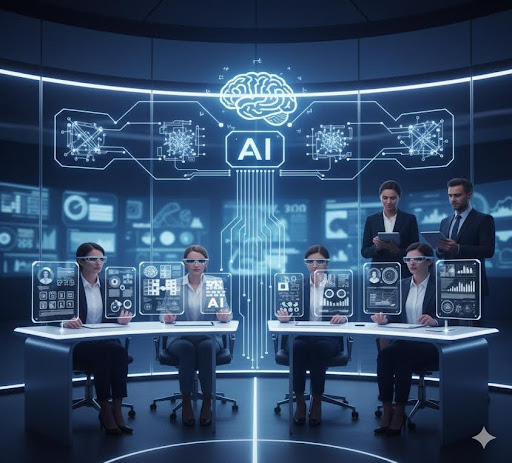
Topics: AI Recruitment, Candidate Evaluation
Introduction
While reading hiring reports and talking to a few people who recently applied for jobs, I realised how quietly AI recruitment has slipped into hiring. It’s not something companies announce loudly, but it’s there — especially in the first few steps. And this shift is changing how early candidate evaluation works. In a way, it feels like a natural response to the huge number of applications companies get today.
Reasons for the Increase in AI Recruitment
The majority of recruiters I encountered said that there were too many resumes and insufficient time. Thus, AI techniques assist with simple sorting. Before a human intervenes, they arrange candidates, examine profiles, and identify talents. To be honest, it makes logic. No one is being replaced by it. It handles repetitious activities more like a support system.
Faster Resume Screening
One of the biggest reasons AI recruitment is becoming common is speed. AI goes through resumes in seconds. It spots skills, tools, and small details that may get missed during manual screening. Because of that, the early part of candidate evaluation becomes cleaner and less chaotic. Recruiters get a shortlist that’s easier to work with.
More Steady Evaluation
Humans can have off days. They get tired or distracted. AI doesn’t.
That’s why early candidate evaluation often feels more even when AI is involved. It checks everyone on the same parameters — clarity, skill match, and basic role alignment. It doesn’t solve every problem, but it removes some of the inconsistency that naturally happens in manual reviews. This steady flow is one reason AI recruitment keeps growing in bigger companies.
Practical Skill Tests Through AI
Another interesting thing I found is how AI tools now use small, practical tests instead of long, generic ones.
These may include:
- brief coding problems
- short case prompts
- quick logic checks
- communication tasks
These tasks make candidate evaluation feel more realistic. They show how someone actually works, not just what they wrote on their resume. It’s a simple change, but it improves the quality of early screening.
Video Interviews and AI
Some companies now start with short recorded interviews. AI reviews these first, looking at how clearly someone speaks and how they explain a point. It’s not the final judgement — more like a preview before the real interview begins. For recruiters handling large volumes, this part of AI recruitment saves a lot of time.
And yes, some candidates feel awkward recording themselves, which is understandable. But it helps companies stay organised.
The Challenges
Even with all these benefits, AI isn’t perfect.
A few issues keep appearing:
- AI may carry bias from the data it was trained on.
- Strong candidates sometimes perform poorly in automated setups.
- Keyword-heavy resumes get more attention than they should.
- Not everyone is comfortable with video or automated assessments.
So human judgement still needs to stay in the loop. AI is good for the start, not the final call.
What’s Ahead
From what I’ve seen, AI recruitment will most likely grow further. Future tools might personalise tests, match candidates to multiple roles, or read work samples more intelligently. That means candidate evaluation could become more accurate and less confusing.
But even then, companies will still need real people to make the final decisions. AI will continue to handle the heavy, repetitive parts in the background.
Conclusion
Assessments driven by AI are increasingly being used in AI hiring. They aid in the management of big applicant pools and expedite and streamline the early candidate screening process. The hiring process is made easier for both parties when recruiters use human judgement in addition to this.
FAQs
1. What is meant by AI recruitment in hiring processes?
AI recruitment refers to using automated tools to support early hiring tasks such as sorting applications and managing initial assessments before human review.
2. How does technology support early candidate evaluation?
Technology helps by applying consistent criteria, reducing manual workload, and organising applicant data so recruiters can focus on qualified profiles.
3. Why are companies moving toward automated hiring tools?
Companies face large volumes of applications. Automated systems help manage time better and bring structure to the first stages of review.
4. Does automation replace human judgement in hiring?
No. Human involvement remains essential, especially for interviews and final decisions. Automation mainly supports the early screening phase.
5. How does resume screening benefit from automation?
Automated tools scan resumes quickly for relevant skills and experience, making the initial review process faster and more organised.
6. What role do practical tests play in early screening?
Short, task-based tests show how applicants think and solve problems, offering better insight than resumes alone.
7. Are video interviews reviewed only by software?
No. Recorded interviews may be reviewed initially by software, but recruiters still assess responses before moving candidates forward.
8. What are common concerns with automated assessments?
Concerns include bias from training data, overemphasis on keywords, and discomfort among candidates unfamiliar with automated systems.
9. Can automated tools improve fairness in hiring?
They can improve consistency, but fairness depends on careful design, monitoring, and continued human oversight.
10. What is the future of technology in candidate evaluation?
Future systems may offer more personalised assessments and better role matching, while recruiters remain responsible for final judgement.
References:
[1] LinkedIn Talent Solutions, “AI in Recruiting: Trends and Impact on Hiring,” 2024. [Online].
Available: https://www.linkedin.com/talent/
[2] SHRM, “How Artificial Intelligence Is Transforming Talent Acquisition,” 2023. [Online].
Available: https://www.shrm.org/
[3] Deloitte, “AI-Powered Assessment Tools: The Future of Candidate Evaluation,” 2024. [Online].
Available: https://www2.deloitte.com/
Penned by Pranjal Sharma
Edited by Sunil Kumar Prajapati, Research Analyst
For any feedback mail us at [email protected]
Streamline Your Hiring with Eve Placement’s Custom Assessments
Eve Placement helps you engage, assess, and recruit top talent through tailored hiring challenges that go beyond resumes. From technical quizzes and real-world case studies to psychometric evaluations and audio/video submissions, our platform enables smarter, data-driven hiring decisions. Advanced security features ensure authenticity and eliminate fraud, giving you reliable results. Ready to hire better? Know More.
Mail us at [email protected]