
6 Ways the AI Based Platforms are Changing Freelancing
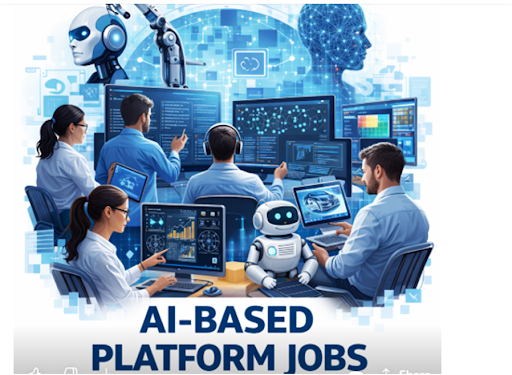
Topics: AI Platforms Analysis, Reshaping Freelance Impact
Introduction
Firstly, for our uninitiated audience, it is important to explain what platform-based job or work is. A platform refers to a particular digital interface that is responsible for taking small, flexible, and temporary tasks from customers and then outsourcing the work to small gig-workers.
The term gig-worker may refer to a person who is involved in freelance, temporary work: ride-hailing, food delivery, etc.
How AI platforms are Helping Freelancers:
Task Automation:
AI handles data entry, transcription, coding snippets, and report generation, freeing up time for complex work.
Smarter Matching:
Algorithms connect freelancers with ideal projects, reducing bidding fatigue and increasing success rates.
Productivity Boost:
Tools help with brainstorming, drafting content (writing, design), summarizing, and organizing projects (e.g., Notion AI, ClickUp AI).
Marketing & Communication:
AI assists in creating marketing strategies, scheduling posts, analyzing engagement, and crafting client messages.
Financial Management:
AI-powered accounting tools streamline invoicing, expense tracking, and cash flow.
How AI is Changing the Job Landscape:
New Opportunities:
Rise in demand for AI specialists, prompt engineers, chatbot creators, and those who can integrate AI tools.
Shifting Skill Demand:
Tasks easily replicated by AI (e.g., basic writing, translation) see reduced demand, while unique human skills (creativity, complex problem-solving) become more valuable.
Job Displacement (Mid-Skill):
Mid-skill roles with repetitive tasks face displacement or downward wage pressure as AI takes over, says Brookings.
Democratization:
AI can lower barriers, making services more accessible and potentially increasing competition in some areas.
How Platform Work Drives Inequality
Platform work may not directly impact socio-economic inequality, but it may have indirect effects because of how it is structured. Let’s see some of these impacts:
Income Instability and Low Pay:
Workers earn according to how many tasks have been completed. This leads to unsteady income and instability.Lack of Social Protection:
Platform workers are supposed to be independent contractors, not employees working under the digital platform. Thus, they don’t get the benefits that most employees get, such as health insurance, paid leave, etc.Algorithmic Control:
The platform that the workers work for keeps strict control over their performance. If there are any bad reviews or a drop in ratings, it leads to them being assigned to worse tasks or even having their contract breached.Reinforcement of Existing Social Inequalities:
It may lead to gender, racial, and caste related pay gaps as a result of bias from the customer.Limited Career Progression:
People in these career paths may not get the chance for a better job position because these jobs don’t demand very high skills or an educational background.Shifting Risk to Workers:
A business involves significant risks of investments in the form of equipment, fuel, or hazards to manpower. All of this becomes the sole problem for the workers since they are using their own money and don’t have any financial buffer.
How to Deal with this
Strengthening Labor Regulations:
There is a need for regulating how a platform works. We can bring in fair legislation and laws to protect the workers.Expanding Social Protection:
Health insurance, pensions, accident coverage, and paid leave should be accessible regardless of employment status, with contributions shared between platforms, workers, and the state.Ensuring Fair Pay and Transparency:
Platforms should disclose how wages are distributed and how the algorithm assigns work.Regulating Algorithmic Management:
The algorithm should be checked for bias, and if any bias is found, it should be addressed as soon as possibleSupporting Skill Development and Mobility:
Public and private investment in training can help platform workers upgrade skills and move into more secure, higher-paying roles. Platforms can also create pathways for career progression.Addressing Bias and Discrimination:
Any kind of bias or discrimination may seep into the decision-making of the algorithm set by the platform. Anti-discrimination safeguards should apply equally to digital labor markets.
Conclusion
Platform work is a very important part of our economy, since it is a major contributor to the tertiary sector. It makes our daily lives easier from using UBER to go places, BLINKIT for ordering groceries, or ZOMATO to order food. However, we need to remember that this comfort is coming from the exploitation of the workers involved in it.
FAQs
1. What does AI platforms analysis mean in freelancing?
AI platforms analysis refers to studying how AI-driven freelance platforms use algorithms for task matching, pricing, visibility, and performance tracking, and how this reshapes freelance impact on workers.
2. How is AI reshaping freelance impact globally?
AI is reshaping freelance impact by changing how work is allocated, increasing automation, and shifting competition toward speed, ratings, and algorithmic performance rather than long-term relationships.
3. Why is AI platforms analysis important for freelancers?
AI platforms analysis helps freelancers understand ranking systems, pricing logic, and visibility factors, allowing them to adapt strategies and reduce negative reshaping freelance impact on income.
4. Do AI platforms benefit freelancers or platforms more?
While AI platforms improve efficiency, ai platforms analysis shows that reshaping freelance impact often favors platforms through cost reduction and control, sometimes increasing worker insecurity.
5. How do AI algorithms affect freelance income stability?
AI platforms analysis reveals that algorithm-based task allocation can cause income volatility, which is a key reshaping freelance impact seen across platform-based work.
6. Is reshaping freelance impact different for beginners and experienced freelancers?
Yes, ai platforms analysis indicates reshaping freelance impact is harsher for beginners due to limited ratings, while experienced freelancers benefit more from algorithmic trust.
7. Can freelancers adapt to AI-driven platforms successfully?
According to ai platforms analysis, freelancers who optimize profiles, pricing, and responsiveness can reduce negative reshaping freelance impact and improve long-term sustainability.
8. How do AI platforms influence skill demand?
AI platforms analysis shows reshaping freelance impact by increasing demand for digital, AI-assisted, and communication skills while reducing demand for repetitive tasks.
9. Do AI platforms increase inequality in freelancing?
Yes, reshaping freelance impact includes widened income gaps, as ai platforms analysis shows algorithms often favor already high-performing freelancers.
10. What is the future of freelancing based on AI platforms analysis?
AI platforms analysis suggests reshaping freelance impact will continue, making adaptability, continuous learning, and algorithm awareness essential for freelance career survival.
References
[1] Inequality.org, “The Platform Economy Runs on Inequality – and Sidesteps Labour Rights,” 2021. [Online].
Available: https://inequality.org/article/the-platform-economy-runs-on-inequality/
[2] V. V. Giri National Labour Institute (VVGNLI), “Gig and platform workers: Vision 2047,” 2025. [Online].
Available: https://www.vvgnli.gov.in/sites/default/files/173-2025
[3] Consultative Group to Assist the Poor (CGAP), “Financial inclusion for digital platform workers,” 2023. [Online].
Available: https://www.cgap.org/story/digital-platform-workers
[4] NITI Aayog, “India’s booming gig and platform economy,” 2022. [Online].
Available: https://www.niti.gov.in/sites/default/files/2022-06/25th_June_Final_Report_27062022.pdf
Penned by Tejas Bhat
Edited by Komal Rohilla, Research Analyst
For any feedback mail us at [email protected]
Streamline Your Hiring with Eve Placement’s Custom Assessments
Eve Placement helps you engage, assess, and recruit top talent through tailored hiring challenges that go beyond resumes. From technical quizzes and real-world case studies to psychometric evaluations and audio/video submissions, our platform enables smarter, data-driven hiring decisions. Advanced security features ensure authenticity and eliminate fraud, giving you reliable results. Ready to hire better? Know More.
Mail us at [email protected]