
Augmented Reality for Job Role Simulation
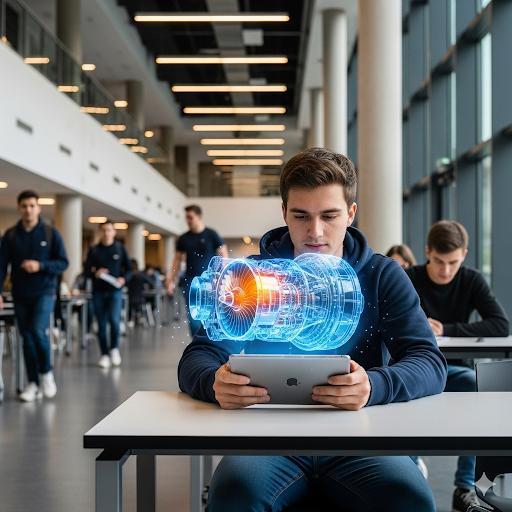
Table of Contents
Introduction: The Rise of Augmented Reality in Career Prep
The Evolution of Career Exploration Technology
Technical Infrastructure and Implementation
Industry-Specific Simulation Programs
Engineering and Manufacturing
Business and Finance
Student Engagement and Learning Outcomes
Building Partnerships with Industry Leaders
Assessing Success and Program Effectiveness
Future Developments and Emerging Trends
Conclusive Thoughts
- FAQs
References
7 Breakthrough AR Job Simulation Campus Programs Revolutionizing Career Preparation in 2025
The age of career preparation has arrived with innovative AR job simulation campus projects transforming career preparation in 2025. Colleges and universities across the nation are introducing revolutionary immersive career test runs that enable students to walk into life-like professional settings using augmented reality technology. Such cutting-edge AR campus work simulation applications are filling the critical gap between theoretical learnings in classrooms and real-world work exposure, giving students unprecedented career trial experiences that enable them to make well-informed career decisions about their futures.
As per latest industry reports, nearly 14 million US employees will use smart AR glasses for professional needs and training by the year 2025, which is the expanding career growth role of AR technology. Advanced AR job simulation campus programs are positioning students at the forefront of this tech revolution, equipping them for the professional requirements of a rapid digital work culture.
The Evolution of Career Exploration Technology
Earlier forms of career exploration, such as job shadowing, internships, and career fairs, though useful, are limited by the problems of access, scalability, and full exposure to a broad array of careers. Augmented reality technology eliminates such problems by providing scalable, replicable, and risk-free settings through which students may be immersed in actual workplace experience without the logistical burdens of conventional programs.
The state of the art technology of AR renders impossible only yesterday possible simulation of advanced professional settings, operating rooms and courtrooms; engineering laboratories and boardrooms. Students can safely interact in simulated workplaces mimicking interaction with virtual co-workers; professionally engage with specialist equipment and tools, handling workplace conundrums that are difficult in entirely safe, controlled settings.
Technical Infrastructure and Implementation
Existing AR job simulation technologies demand sophisticated technological infrastructure made up of high-performance computing, sophisticated graphics processing, and user-friendly interfaces. Universities also spend capital on dedicated AR laboratories with enterprise-level headsets, motion tracking subsystems, and haptic feedback systems that provide fully immersive professional experiences.
Cloud-based systems facilitate scalable deployment of simulation scenarios to assist numerous students in simultaneous involvement with access to vast reservoirs of career-specific content. These systems seamlessly incorporate with existing learning management systems for unqualified compatibility with educational curricula and exam models. The most advanced applications incorporate artificial intelligence that automatically reshapes scenarios based on student performance, providing personalized learning experiences to address specific strengths and weaknesses.
Industry-Specific Simulation Programs
Engineering and manufacturing simulations enable students to practice with costly equipment and toxic chemicals in a safe environment, gaining a hands-on knowledge of industrial processes, quality control procedures, and safety procedures. Students can model and test intricate systems with immediate feedback on performance and decision-making.
Business and finance simulations provide a realistic marketplace setting where the student can apply their trading, client dealing, presentation, and strategic decision-making competencies. Real-time market data and collaboration features are usually part of such programs that simulate workplace interactions and communications issues.
Student Engagement and Learning Outcomes
The interactivity of AR simulations enhances learners’ engagement much more than other career exploration methods. Experiments have shown that experiential learning based on simulation technology enhances decision confidence in a career, skills acquired, and retention of skills among students participating in it.
Integrated evaluation dimensions of AR platforms offer holistic analytics for student performance, such as decision-making behaviors, problem-solving strategies, and team efficiency. Career counselors can offer more specialized counsel with the advantage of such information, and students can determine areas of concentrated improvement.
AR job simulation programs offer much greater access to career exploration experiences for disabled students than traditional experiential education. Physical disabilities in students allow them to participate in problematic or even impossible in real situations simulations, and economic disabilities provide them with access to costly or specialized professional environments virtually.
The geographical obstacles are circumvented and can make it possible for students from distant colleges, without regard to collegiate opportunities they will receive because of inadequate funding, have similar high-end career exploration activities compared to their counterparts in the well-funded city college. Democratization of career preparation options can assist in resolving issues of educational equity and offer access to secondary career options for students.
Building of Partnership with Industry Leaders
Effective AR simulation programs have to be realized through intensive collaboration among universities and industry players who bring in expertise, content verification, and real-life scenario creation. Technology companies, healthcare organizations, financial institutions, and manufacturing companies are working closely with universities to develop real-life simulation scenarios.
These types of partnerships typically entail the mentorship component where industry professionals provide feedback and guidance to students participating in simulation programs. Virtual mentoring sessions through AR settings offer new avenues for professional relationship building and sharing of career guidance.
Assessing Success and Program Effectiveness
Highly systemic evaluation models quantify the efficacy of AR job simulation courses with respect to many metrics such as students’ satisfaction, attainment of learning outcomes, career decision self-confidence, and graduate placements. Colleges monitor longitudinal measures to know the long-term effect of simulation activity on career achievement.
Employer feedback is a valid measure of the quality of student preparation after having gone through AR simulation programs. The majority of employers report that simulation-trained graduates are better workplace-ready, professionally confident, and technically proficient than graduates of conventional programs.
ROI calculations include program expenses, student success, and institutional returns such as enhanced graduation rates, enhanced reputation, and additional industry partnerships. Positive ROI is typically realized by most institutions in three to five years after the launch of their programs.
Future Developments and Emerging Trends
The future of AR job simulation technology is in higher and more personalized levels of complexity that take into account an individual’s learning method, career goals, and skill requirements. Integration with artificial intelligence will enable more advanced and adaptive simulation environments to provide customized challenges and learning pathways.
Integration with the blockchain for credential authentication and portfolio purposes is beginning to occur, allowing students to create authenticated digital certificates of their demonstration of competency and simulation success and exchange them with potential employers.
Conclusive Thoughts
AR-based job simulation campus programs of career readiness is a revolution in the manner in which institutions of higher learning prepare students for professional success. These revolutionary virtual tryout career experiences are more than sophisticated high-tech gimmicks but essential training tools for getting the next generation of skilled professionals ready to thrive in sophisticated and technology-based work settings.
In the years ahead, application of AR job simulation campus technology in universities and colleges will grow based on proven outcomes and continuing student demand for active, participative career development experiences. Successful implementation of such programs to produce effective, career-ready professionals attests to simulated career tryout experiences becoming increasingly a component of integrated career development programs bridging the gap between classroom learning and professional success.
FAQs
What is Augmented Reality (AR)?
AR overlays digital information onto the real world through devices like headsets or smartphones.How is AR used in job simulations?
It creates immersive, interactive environments where students can practice real-world tasks safely.Which industries benefit most from AR job simulation?
Engineering, healthcare, manufacturing, finance, and business sectors are key beneficiaries.Can students try risky tasks with AR safely?
Yes, AR allows simulation of dangerous or expensive processes without real-world risks.Do AR programs replace internships?
Not fully, but they complement traditional internships by providing scalable, repeatable experiences.Is AR accessible to students with disabilities?
Yes, it enables equal participation in simulations that might be physically or financially inaccessible.What equipment is needed for AR job simulations?
High-performance computers, AR headsets, motion tracking, and haptic feedback systems.Can multiple students participate simultaneously?
Yes, cloud-based systems allow scalable and collaborative AR experiences.How do AR simulations improve learning outcomes?
They increase engagement, decision-making confidence, skill retention, and problem-solving ability.Do AR programs integrate with university curricula?
Yes, many AR systems integrate with learning management systems for seamless adoption.Are there mentorship opportunities in AR simulations?
Yes, industry professionals provide guidance and virtual mentoring within AR environments.How do universities measure AR program success?
Through student satisfaction, learning outcomes, career confidence, and employer feedback.Can AR simulations track individual student performance?
Yes, AI-driven analytics monitor decision-making, problem-solving, and teamwork.Do AR programs require large budgets?
Initial investment is significant, but ROI is typically seen within 3–5 years through improved outcomes.Is AR technology evolving?
Yes, AI integration and blockchain credentialing are shaping the next generation of AR programs.Can AR help students explore multiple careers?
Absolutely, students can virtually experience a variety of professions without geographic or financial barriers.Does AR improve workplace readiness?
Yes, graduates from AR programs are often more confident, skilled, and technically proficient.- What makes Augmented Reality effective for career simulations?
Augmented Reality creates immersive, interactive environments that help students experience real-world job scenarios safely. - How is Augmented Reality transforming workplace training?
It allows employees and students to practice complex tasks in realistic simulations without risk or cost. - Can Augmented Reality be integrated with AI for personalized learning?
Yes, Augmented Reality platforms increasingly use AI to tailor scenarios based on individual learning patterns and skill levels. - Which industries are adopting Augmented Reality most rapidly?
Engineering, healthcare, finance, manufacturing, and education are leading sectors implementing Augmented Reality training programs. - Does Augmented Reality improve student engagement?
Yes, Augmented Reality enhances engagement, decision-making confidence, and skill retention in career simulations. - Can Augmented Reality help students explore multiple career paths?
Absolutely, Augmented Reality allows students to virtually experience diverse professions, overcoming geographic and financial constraints. - Is Augmented Reality accessible to students with disabilities?
Yes, Augmented Reality provides inclusive learning environments, enabling participation in simulations that might be otherwise difficult or impossible.
References:
[1] Why Companies Are Making VR/AR Job Training Central to 2025 Strategy, WorkplaceTech Pulse, SHRM Labs, presented by SHRM.
[2] “Augmented Reality Training for Business: A Revolution in Workplace Learning,” YORD Studio.
Penned by Manobal Gupta
Edited by Disha Thakral, Research Analyst
For any feedback mail us at [email protected]
Streamline Your Hiring with Eve Placement’s Custom Assessments
Eve Placement helps you engage, assess, and recruit top talent through tailored hiring challenges that go beyond resumes. From technical quizzes and real-world case studies to psychometric evaluations and audio/video submissions, our platform enables smarter, data-driven hiring decisions. Advanced security features ensure authenticity and eliminate fraud, giving you reliable results. Ready to hire better? Know More.
Mail us at [email protected]