
Trends in Remote Work Interviews for Graduates
Topics: Remote Interview Trends, Virtual Interview Trends
Remote Interview Trends: Let’s Start with the 7 Basic Points
Remote interview trends are now shaping the entry of new graduates into the labor market. Previously, students visited office buildings, were exposed to a panel, and were asked questions face-to-face. But after the pandemic, the majority of organizations went digital for recruitment. Zoom, Google Meet, and Microsoft Teams occupied interview rooms. So far, remote interview trends are trendy because they are convenient and allow companies to communicate with students wherever they are.
What It Means
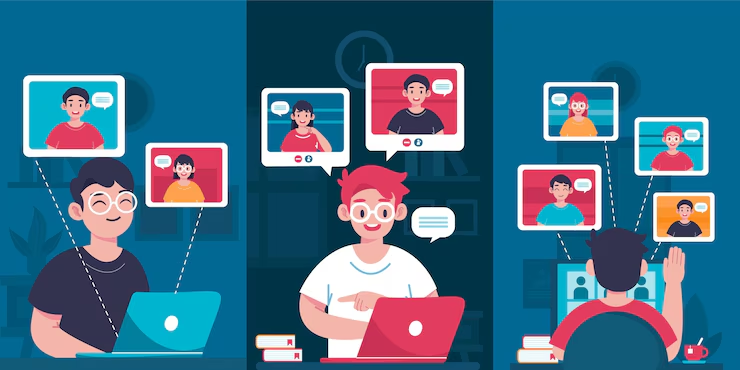
A remote interview is simply an interview that happens on the phone or computer. It may be a live video call, a recorded one in which you answer questions, or an activity on the internet. Others have tests or group discussions done on the internet, too. The purpose is the same as in the normal face-to-face interview, but the equipment is all on the internet.
Why Businesses Use It
Companies employ online interviews because they are easy.
- They save time by interviewing more students within fewer hours.
- They minimize travel and other costs.
- They enable recruiters to contact applicants from different cities or nations.
- This method has proved to work, which is why companies continue to use it even after offices have reopened.
What Occurs in Remote Interviews
Students can anticipate several standard procedures:
- Create an ID before starting.
- Join Meet live calls or Zoom.
- Take online quizzes or coding challenges.
- Have students provide answers on tape, at times with time constraints.
- In some cases, eye movement or background noise is monitored by AI applications.
- At first, one has to get used to it, but it becomes comfortable upon practice.
Benefits to Students
Remote interviews, besides being time-saving for businesses, are time-saving for students as well.
- No travel or other expenses
- Timing flexibility
- Equal opportunity for everyone
- Access to work in most areas
- It is more relaxed for most graduates than traveling to big cities for interviews.
Issues Confronted by Students
There are, nonetheless, a few problems. Internet or power failures delay the process. Some individuals are not prepared to be on camera. AI monitoring sometimes raises issues of equity. Privacy is also of concern as most interviews are recorded and stored.
Getting Ready for It
They will perform better if they are properly prepared in advance:
- Test the laptop, microphone, and internet a day in advance.
- Select a quiet room with ample lighting.
- Dress to meet in person.
- Gaze directly into the camera.
- Practice interviewing with a friend.
They make one more confident and decrease errors.
The Road Ahead
Remote interviews will still be included in the recruitment process, too. All companies are adopting hybrid working, so hiring online is also rising. AI use in the future could be even smarter, and even virtual reality would be utilized in that. Students familiar with such systems now will be prepared for the recruitment process of the next generation.
Conclusion
Virtual interviews are now the norm that graduates anticipate. They are cost-effective, time-saving, and provide access to students across the globe. Provided they are well prepared and confident, job seekers can excel. With adequate practical training in virtual hiring, graduates excel with this new way of job hunting.
References
[1] A. Rock, “A Guide to Remote Interviews,” Harvard Business Review, Jun. 2020. [Online]. Available: https://hbr.org/2020/06/a-guide-to-remote-interviews
[2] World Economic Forum, “Future of work: Digital recruitment,” WEF Agenda, Mar. 2021. [Online]. Available: https://www.weforum.org/agenda/2021/03/future-of-work-digital-recruitment
[3] McKinsey & Company, “The future of remote work,” McKinsey Insights, 2021. [Online]. Available: https://www.mckinsey.com/capabilities/peAople-and-organizational-performance/our-insights/the-future-of-remote-work
[4] Brookings Institution, “AI recruitment tools and bias,” Brookings, 2021. [Online]. Available: https://www.brookings.edu/articles/ai-recruitment-tools-and-bias
[5] TopInterview, “How to prepare for a virtual interview,” TopInterview Blog, 2020. [Online]. Available: https://www.topinterview.com/interview-advice/how-to-prepare-for-a-virtual-interview
Frequently Asked Questions (FAQs) on Remote and Virtual Interview Trends for Graduates
1. What are remote interview trends, and why do they matter for graduates?
Remote interview trends refer to the increasing use of digital platforms such as Zoom, Microsoft Teams, and Google Meet for recruitment instead of traditional face-to-face formats. For graduates entering the workforce, these trends matter because they shape the first impression with potential employers. Understanding virtual interview trends helps students adapt to changing hiring practices, prepare better, and compete on equal ground with candidates from across the globe.
2. How are virtual interview trends different from traditional interviews?
Traditional interviews required candidates to travel to the company’s office, meet recruiters in person, and sometimes go through multiple physical rounds. In contrast, virtual interview trends involve digital formats like live video calls, pre-recorded question-and-answer sessions, online group discussions, and even AI-driven assessments. While the goal—evaluating skills and personality—remains the same, the tools and environment have changed, giving graduates more flexibility but also demanding technical readiness.
3. Why have companies adopted remote interview trends even after the pandemic?
During the pandemic, companies had no choice but to switch to digital hiring. However, even after offices reopened, organizations discovered that virtual interviews save time, cut down on travel costs, and enable access to a wider talent pool. Recruiters can interview more candidates in a single day, compare recordings, and reach applicants from different locations. This efficiency is why remote interview trends have become permanent in modern recruitment strategies.
4. What formats do virtual interviews usually follow?
Virtual interview trends have introduced several popular formats:
Live video calls – One-on-one or panel interviews conducted in real time.
Pre-recorded responses – Candidates record answers to preset questions within a time limit.
Online tests or coding challenges – Especially for technical or analytical roles.
Group discussions – Conducted online with several participants in the same virtual space.
AI-monitored assessments – Some platforms track eye movement, tone of voice, or background noise.
Graduates need to practice each format to build comfort and confidence.
5. What benefits do remote interview trends bring to students?
Graduates experience multiple advantages from virtual interview trends, including:
Time savings – No travel required.
Reduced costs – No need for transport or accommodation in big cities.
Equal opportunity – Location does not limit access to top companies.
Greater flexibility – Students can attend interviews from home or campus.
Lower stress – Many candidates feel more relaxed interviewing virtually than in a corporate office.
6. What challenges do graduates face in virtual interviews?
Despite their advantages, remote interview trends also present challenges:
Technical issues like unstable internet connections or power failures.
Camera anxiety, as not all students feel comfortable being recorded.
AI fairness concerns, since automated systems may misinterpret behavior.
Privacy issues, with interviews being recorded and stored by companies.
To overcome these challenges, students must prepare in advance and develop digital confidence.
7. How can students best prepare for remote interviews?
Preparation for virtual interview trends requires both technical and personal readiness:
Test laptop, internet speed, camera, and microphone at least a day before.
Choose a quiet, well-lit room without distractions.
Dress professionally, as if attending a face-to-face interview.
Look directly into the camera to maintain eye contact.
Conduct practice interviews with a peer or mentor.
Proper preparation not only reduces errors but also boosts confidence.
8. Do virtual interview trends provide equal opportunities to all graduates?
Yes, one of the strongest advantages of remote interview trends is equal opportunity. Students from rural or small-town backgrounds, who might previously have faced barriers to traveling for interviews, can now access opportunities in major companies without relocation costs. However, the digital divide—lack of high-speed internet or suitable devices—can still create inequalities, which governments and institutions must work to bridge.
9. How do recruiters use AI in virtual interviews?
Artificial intelligence plays a growing role in remote interview trends. Companies use AI tools to:
Monitor eye movement to check attentiveness.
Assess tone of voice and confidence.
Track background noise for professionalism.
Rank candidate responses for consistency.
While AI enhances efficiency, it also raises questions about fairness, transparency, and bias. Graduates should be aware of these systems and focus on presenting natural, clear, and confident answers.
10. What role does body language play in virtual interview trends?
Even though interviews are digital, body language remains vital. Sitting upright, maintaining eye contact with the camera, and using subtle hand gestures can convey confidence. Smiling naturally helps create a positive impression. Poor posture, avoiding the camera, or excessive fidgeting can negatively affect how recruiters perceive candidates. Thus, practicing digital body language is an essential skill for graduates navigating remote interview trends.
11. Are virtual interviews less stressful than traditional interviews?
Many students find virtual interview trends less stressful since they occur in familiar surroundings. Being at home or on campus reduces travel fatigue and anxiety. However, others feel more pressure knowing they are being recorded or monitored by AI. Stress levels vary, but with proper practice and setup, graduates often find digital interviews more manageable.
12. How do group discussions work in virtual interview formats?
Group discussions in virtual interview trends take place on platforms like Zoom or Teams. Candidates log in at the same time and are given a topic to discuss. Recruiters observe communication skills, teamwork, leadership, and clarity of thought. Graduates must be careful to speak clearly, avoid interrupting others, and maintain digital etiquette, such as muting when not speaking.
13. How should students dress for remote interviews?
Even though the interview is online, formal attire is essential. Recruiters notice whether candidates dress professionally, as it shows seriousness and respect for the process. Neutral colors, clean grooming, and minimal distractions are recommended. Dressing formally also boosts self-confidence and helps students mentally shift into “interview mode.”
14. Can poor internet connection ruin a virtual interview?
Yes, unstable internet is one of the biggest concerns in remote interview trends. A lagging video or dropped call can disrupt communication and leave a poor impression. Graduates should:
Use wired internet where possible.
Have backup mobile data ready.
Inform the interviewer in advance if technical issues arise.
Employers usually understand such problems, but preparedness reflects professionalism.
15. How are virtual interview trends shaping the global job market?
Remote interview trends allow companies to hire across borders, creating a global talent pool. Graduates in smaller economies can apply to firms in bigger markets without relocation. Similarly, multinational corporations can access diverse talent more easily. This shift is transforming recruitment into a borderless process, expanding career opportunities worldwide.
16. Will remote interview trends continue in the future?
Yes, remote interview trends are here to stay. With workplaces moving toward hybrid and flexible models, digital recruitment will remain central. Future advancements may include more advanced AI screening, virtual reality-based interview simulations, and immersive assessments. Graduates who adapt early will remain competitive in this evolving job market.
17. How do remote interview trends affect career readiness training?
Universities and training institutes are adjusting their career services to reflect virtual interview trends. Mock digital interviews, workshops on camera confidence, and training in online etiquette are now part of placement preparation. This shift ensures students are not only academically skilled but also digitally fluent.
18. What privacy concerns exist in virtual interview trends?
Many companies record interviews for later review. While this helps recruiters compare candidates fairly, it also raises privacy concerns. Graduates should clarify how their data will be stored and whether recordings are shared. Transparency in digital recruitment policies is essential to protect candidates’ rights.
19. Do remote interview trends benefit recruiters as much as graduates?
Absolutely. Remote interview trends allow recruiters to:
Save time by conducting more interviews per day.
Reduce costs on travel and infrastructure.
Access diverse talent pools worldwide.
Revisit recorded interviews for better evaluation.
This efficiency explains why businesses are strongly embracing virtual interview trends in the long run.
20. What final advice would you give to graduates about virtual interview trends?
Graduates should view remote interview trends not as an obstacle but as an opportunity. By learning how to use digital tools effectively, practicing online communication, and staying adaptable, students can present themselves as tech-savvy professionals ready for the modern workplace. The key is preparation, confidence, and openness to new technologies that will continue to shape the future of recruitment.
Penned by Yug Pandey
Edited by Ragi Gilani, Research Analyst
For any feedback mail us at [email protected]
Streamline Your Hiring with Eve Placement’s Custom Assessments
Eve Placement helps you engage, assess, and recruit top talent through tailored hiring challenges that go beyond resumes. From technical quizzes and real-world case studies to psychometric evaluations and audio/video submissions, our platform enables smarter, data-driven hiring decisions. Advanced security features ensure authenticity and eliminate fraud, giving you reliable results. Ready to hire better? Know More.
Mail us at [email protected]