
Why Emotional Intelligence Will Make or Break Your Career
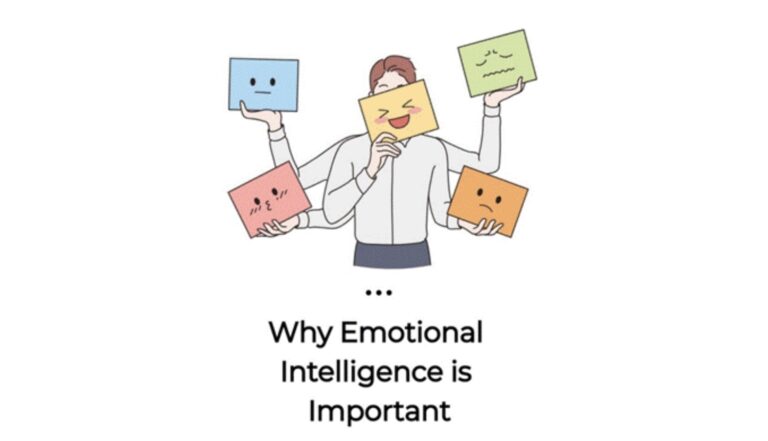
Topics to Be Covered: This guide explores how emotional intelligence career success depends on self-awareness, regulation, empathy, social skills, and motivation.
Table of Contents
Introduction: Why Emotional Intelligence Matters
The Essential Influence of EQ on Career Growth
EQ Development Tips for Professionals
How EQ Strengthens Leadership & Teamwork
Incorporating EQ into Your Daily Career Journey
Career Benefits of Emotional Intelligence
Conclusion: Emotional Intelligence as Career Catalyst
FAQs
References
Introduction
Success today in the workplace is not only about technical expertise anymore, but more about what kind of relationship you have with people and yourself. Developing emotional intelligence job acumen can determine your long-term growth and leadership potential. These EQ development tips assists in developing emotional intelligence, make you stand out in any work context and provide helpful guidance on how to nurture these essential abilities. With these EQ development tips, you may put yourself in a position for growth, improved relationships, and more resilience through incorporating emotional intelligence, job awareness, and EQ development.
The Essential Influence of EQ on Career and Profession
Understanding the essence of EQ. The initial step of understanding EQ consists of clarity in regards to its fundamental aspects:
- Self-awareness has to do with being mindful of one’s emotions and how they influence one’s response.
- Self-regulation refers to the capacity to manage personal feelings and impulses when in pressure.
- Definition of empathy is to be able to identify and act accordingly to the feelings of another.
- Social skills are the ability of communicating and collaborating effectively.
- Motivation is about maintaining the spirit and effectiveness in the conditions, even if the job is unglamorous.
A combination of these contents enhances commitment, job satisfaction, and flexibility of a career. Meta-analysis proves the favourable correlation between EQ and career-related success, such as remuneration, job satisfaction, and entrepreneurial disposition.
EQ Development Tips for Professionals
Under are some important empirical tips which can be used to increase emotional intelligence:
- Reflect daily through journaling or mindfulness to increase self-awareness and emotional understanding.
- Practising the skill of Active listening goes a long way.
- Ask for 360° feedback from peers and mentors to identify blind spots and growth areas.
- Learn how to regulate oneself, you may use stress-reduction strategies to de-stress, such as deep breathing and relaxation practice or even take just a short break to energise oneself.
- Use coaching or online courses that deal with emotional intelligence, i.e., courses at Coursera, LinkedIn Learning, or Harvard Business School Online.
How EQ Strengthens Career Development and Leadership
Emotional intelligence cups one to be a good leader. Individuals with a strong EQ tend to win the trust of other people, foster cooperation in the team, and manage conflict. They change rapidly and help others go through transitions. Emotionally intelligent managers make their companies more engaging, have a better organisational value and have greater retention. Sometimes, even those who have no official power find themselves being informal leaders thanks to the ability to empathize, accountability and self-regulation.
Incorporating EQ In Your Day-to-Day Career Trajectory
Emotionally intelligent professionals have several benefits:
- Enhanced performance: People with high EQ achieve higher individual performances, who work more together, make wise choices and remain productive when stressed.
- Professional advantage: Employees with a high EQ have always been correlated to elevated salaries, faster promotions and commercial achievements.
- Career and money: High EQ is connected to higher paychecks, quicker promotions and more successful business.
- Well-being: Individuals possessing high EQ are less stressed and have greater mental fortitude towards misfortunes.
Practising these EQ development tips daily; reflecting, seeking feedback, practising active listening, and managing stress, will help you internalise emotionally intelligent behaviour.
Conclusion
Your ability to manage yourself and others is a key component of your career path, much more than what you may know. Cultivating emotional intelligence job competencies and applying EQ development tips from the start can pave the way to leadership, satisfaction, and success. Through such an approach and new strategies as self-awareness and empathy, feedback and stress-resilience, you acquire soft skills to make you a top performer.
Use this knowledge as your foundational roadmap: adopting emotional intelligence job awareness early on and applying practical EQ development tips consistently will help you navigate challenges, build trust, and accelerate your growth. EI is not only a kind of soft skill to master; it may most likely become the secret of your triumph or failure in your career.
FAQs
Q1. How does emotional intelligence affect career success?
Emotional intelligence impacts career success by enhancing self-awareness, communication, leadership, and stress management, which improve overall performance.
Q2. Why is emotional intelligence more important than technical skills for career success?
While technical skills open doors, emotional intelligence drives career success by building relationships, fostering teamwork, and helping professionals adapt.
Q3. What EQ development tips improve emotional intelligence for career success?
Practising self-reflection, active listening, stress regulation, and seeking feedback are proven EQ development tips for emotional intelligence career success.
Q4. Can emotional intelligence help with promotions and salary growth?
Yes, research shows that high EQ is strongly linked to faster promotions, higher salaries, and greater long-term career success.
Q5. How can leaders use emotional intelligence for career success?
Leaders with strong emotional intelligence foster trust, resolve conflicts, and motivate teams, all of which accelerate career success.
Q6. How does emotional intelligence career success impact promotions?
Emotional intelligence career success helps professionals stand out for promotions by showcasing leadership, adaptability, and strong relationship skills.
Q7. Is emotional intelligence career success measurable?
Yes, emotional intelligence career success can be measured through assessments of self-awareness, empathy, and performance in workplace interactions.
Q8. Does emotional intelligence career success differ across industries?
While technical skills vary by field, emotional intelligence career success applies universally because EQ drives communication and teamwork in all industries.
Q9. What role does conflict resolution play in emotional intelligence career success?
Conflict resolution is central to emotional intelligence career success, as managing disputes constructively strengthens trust and workplace harmony.
Q10. How can students prepare for emotional intelligence career success?
Students can prepare for emotional intelligence career success by practicing active listening, teamwork, and emotional regulation early in their careers.
References
- Career Development, Yale School of Management. (2025, April 18). What is emotional intelligence? Here’s why it matters at work. Yale School of Management, Career Development.
- HBS Online. (2019, April 3). Emotional intelligence in leadership: Why it’s important. Harvard Business School Online.
- O’Boyle Jr., E. H., Humphrey, R. H., Pollack, J. M., Hawver, T. H., & Story, P. A. (2023). Emotional intelligence and career-related outcomes: A meta-analysis. Human Resource Management Review, 33(3), Article 100967. https://doi.org/10.1016/j.hrmr.2023.100967
- TalentSmartEQ. (n.d.). Emotional intelligence: ROI and salary impact. Referenced in World Economic Forum insights on career impact.
- Wilson College Online. (2024, May 21). Why emotional intelligence is important in the workplace. Wilson College Online Careers Blog.
Penned by Mehak
Edited by Sneha Seth, Research Analyst
For any feedback mail us at [email protected]
Streamline Your Hiring with Eve Placement’s Custom Assessments
Eve Placement helps you engage, assess, and recruit top talent through tailored hiring challenges that go beyond resumes. From technical quizzes and real-world case studies to psychometric evaluations and audio/video submissions, our platform enables smarter, data-driven hiring decisions. Advanced security features ensure authenticity and eliminate fraud, giving you reliable results. Ready to hire better? Know More.
Mail us at [email protected]