

Introduction
Students today face hardships in schools and colleges, unlike the previous times; these hardships have huge effects on their mental health. The academic work hit hard due to the responsibility of project’s, tests, pear and social anxiety have overburdened them with responsibilities, fortunately mental health is not on the back seat just like before, the advancements in wellness technology has evolved to offer accessible solutions to the learners in form of mobile application, designed specifically for mental health support and become valuable tools in helping students navigate these challenges this article dwells into the importance for mental health, top mental health apps for students and finally by concluding the future of mental wellness.
Why these Apps Matter for Students
The transition to college life represents a significant period of adjustment Student of often experiencing High stress to balance academic duties, social integration and newfound independence According to the researches Being published It is found that the Mental health apps have proven significantly beneficial for the students suffering from high stress And various stress induced disorders As they can provide meaningful ways for the students to Navigate their life without harming their Well being.
These offer immediate support as traditional counselling might be unavailable or inaccessible at times. Four students are hesitant to speak in person due to stigma or scheduling constraints. These apps can be proven beneficial, as they provide a Digital tool with private and on-demand resources without judgment. Additionally, these are very cost-friendly
Alternatives for traditional therapy: By offering free or more affordable treatment for students with budget constraints
Types of Apps
These are popular among students for relaxation and stress reduction.. Apps like Headspace provide guided meditation and breathing exercises, making it easier for students to integrate mindfulness into their daily routines. These Apps Help students manage anxiety, improve sleep quality, enhance their overall well, foster glamour, and have a more focused mind amidst academic demands
- Headspace- Provide comprehensive tools to cultivate calm and clarity. Its student -friendly interface makes establishing a constant meditation practice accessible even during busy Situations
- Calm- Have an extensive library of sleep stories , mooning music ,and guided meditation sessions .It is particularly helpful For students suffering from sleep disturbances and disorders
- Inside- Timer Stands out as an extensive free library for guided meditation sessions dedicated to particular instances like Academic stress, test anxiety, and concentration issues. With the community options, students can communicate with others practicing mindfulness and create a sense of shared experience.
Online therapy and consulting platforms
Mobile applications facilitate access to online therapy and counselling services for students in professional guidance Platforms such as Talkspace and Betterhelp. Connecting students with a therapist for confidential sessions via text chat, phone, and video calls. Overcome barriers of time, location, transportation, making therapy more accessible, and offering students a place to discuss concerns like Hungry Depression, personal challenges.
- BetterHelp- Help students connect with licensed mental health practitioners for online therapy sessions . The app offers flexible communication option, suggests message video calls and video sessions, making professional guidance accessible even with unprecedented schedules
- Talkspace- Talkspace is more or less the same as BetterHelp, but with the interactive feature of individual and group session options, Students can be motivated by the help of Pierce and the practitioner themselves.
CBT and Scale -Building apps
Several mobile applications use the principle of cognitive behavioral therapy (CBT) to provide students with practical skills for managing negative thought patterns and behaviors. Apps like Sanvello, Mindshift, and Moodfit have proven successful by offering a structural approach to emotional regulation. These apps empower students to actively participate in mental well-being and build lasting endurance.
- Sanvello- Combining cognitive -behavioral therapy techniques with mood tracking and peer support, Sanvello offers a one-stop solution for all anxiety and depression issues effectively by the first week
- MindShift- Specially designed for young adults, this app includes tools for tracking and addressing perfectionism and social issues, particularly relevant to academic settings. Its Chill zone feature helps in easing the pressure of presentations and tests.
- Moodfit- With customizable Wellness tools, which allow children to track their moods and identify triggers affecting their mental state, Moodfit helps to identify patterns of emotional response to academic stresses, social interaction, and lifestyle factors.
Integrated Wellness Apps
Some mobile applications offer a comprehensive approach to student wellness by combining various features like mindful exercise therapy sessions and education resources within a single platform, like Mantra Health and will partner with educational institutions to provide integrated mental health services, ensuring students have access to a wide range of support oriented to their specific needs, including crisis intervention and peer support communities.
Putting Apps into Students’ Lives
When mental health apps are used regularly, they work better. Many students report benefits from morning mindfulness sessions before classes; short meditation breaks between classes, and evening mood tracking features are particularly beneficial in reducing stress. The National Institute of Mental Health divides these apps into four groups:
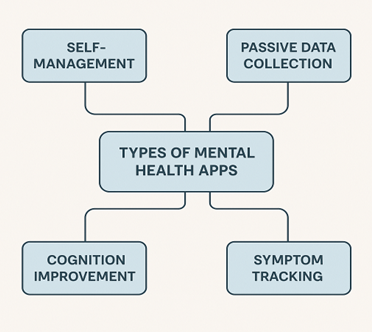
These technologies are helpful, but they work best as complementary resources rather than professional care when needed. So, they should be seen as Complementary to the professional care rather than sole caretakers.
The Future of Digital Mental Wellness
As the emerging trends are continuously researched by these applications, the effectiveness and relevance continue to grow. Current studies demonstrate that well-designed apps based on established approaches show promising results in reducing signs of stress, depression, and anxiety apps such as Uwell and Talk space have emerged as top mental health apps for students and the New wellness technology is being incorporated, such as CBT and VR therapy sessions, have greatly helped students to include digital tools in their routines to cultivate healthy coping strategies for a positive state of mind in the long run.
References
- Mental Health app for student’s ( July 2025) By Andres Zehetner future-mbbs.com/mental-health-apps-for-students/
- 15 mental wellness apps that can help every day https://onlinedegrees.bradley.edu/blog/mental-wellness-apps
- Top 7 mental health apps for college students ( may, 2023) https://www.walturn.com/insights/top-7-mental-health-apps-for-college-students
- the Best Meditation Apps (July 2025) https://www.nytimes.com/wirecutter/reviews/best-meditation-apps/
- The effectiveness of mobile app- based psychological interventions for college students ( may 2021) https://www.frontiersin.org/journals/psychology/articles/10.3389/fpsyg.2021.647606/full
Keywords used- mental health apps students, wellness technology
FAQs on Mental Health Apps for Students & Wellness Technology
1. What are mental health apps students can use for stress relief?
Mental health apps students use often include Headspace, Calm, and Sanvello, which provide guided meditation, CBT tools, and relaxation support.
2. How do wellness technology apps benefit students?
Wellness technology apps help students by offering affordable, private, and on-demand tools to reduce stress, improve focus, and maintain balance.
3. Why are mental health apps students rely on becoming so popular?
They are popular because they provide immediate emotional support, flexible scheduling, and affordable options compared to in-person therapy.
4. Can wellness technology replace traditional counseling for students?
No, wellness technology should be seen as complementary to counseling, but it can fill gaps when access to therapy is limited or unavailable.
5. Which mental health apps students prefer for sleep improvement?
Calm and Headspace are highly rated, offering sleep stories, guided relaxation, and music that help students with insomnia and restlessness.
6. How do online therapy apps like Talkspace support students?
Talkspace connects students with licensed therapists through chat, phone, and video, making professional guidance accessible anywhere.
7. What makes wellness technology essential for college students?
Wellness technology provides proactive ways to manage academic stress, peer pressure, and anxiety, ensuring students maintain well-being.
8. Are mental health apps students use backed by research?
Yes, many apps like Sanvello and Moodfit are based on cognitive behavioral therapy principles, which are clinically proven methods.
9. How often should students use wellness technology apps?
Consistency matters—daily use of meditation, CBT tools, or mood trackers maximizes the long-term benefits of wellness technology.
10. Can mental health apps students rely on improve focus?
Yes, apps like MindShift and Insight Timer help manage anxiety and build concentration, which enhances academic performance.
11. What are the best free mental health apps students can access?
Insight Timer and Moodfit offer free features like guided meditations, mood tracking, and wellness exercises for students.
12. How does wellness technology support career development?
By reducing stress and improving coping skills, wellness technology helps students maintain mental resilience crucial for career growth.
13. Do mental health apps students use work better with peer support?
Yes, some apps like Sanvello include community forums where students can share experiences and feel less isolated.
14. What features should students look for in wellness technology apps?
Students should look for tools like guided meditation, CBT programs, sleep aids, and real-time therapy access.
15. Are mental health apps students download secure?
Most leading platforms like BetterHelp and Headspace use data encryption, ensuring students’ privacy and confidentiality.
16. How do wellness technology apps help with test anxiety?
Apps such as MindShift provide breathing tools, relaxation exercises, and cognitive strategies to manage exam-related stress.
17. Can mental health apps students use prevent burnout?
Yes, with regular mood tracking, therapy chats, and mindfulness sessions, these apps help prevent academic and emotional burnout.
18. What role does wellness technology play in long-term well-being?
It builds sustainable coping strategies, teaches emotional regulation, and empowers students to manage stress throughout their lives.
19. Which mental health apps students use integrate CBT methods?
Sanvello, Moodfit, and MindShift directly incorporate cognitive behavioral therapy to change negative thought patterns.
20. Is wellness technology the future of student mental health support?
Yes, with advancements like VR therapy and AI-driven apps, wellness technology will continue shaping student well-being.