
7 Easy Steps to Make a Work-Study Plan That Really Works
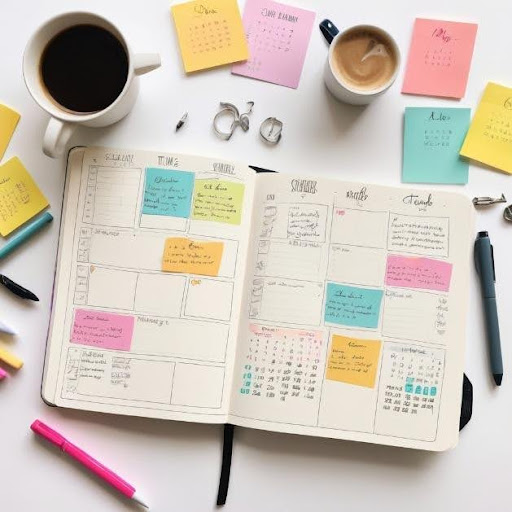
Balancing work and studies can be tricky. You also have games, hobbies, and personal stuff to do. So, without a plan, you can fall behind or feel tired. A proper study and work timetable helps. It keeps you organized and keeps you on track with school and other responsibilities. It also makes sure that you don’t miss anything. So, let’s look at some simple steps to make a plan that fits your life.
How to Design an Effective Study Timetable & its Benefits
The steps to make a study timetable are mentioned below:
1) To assess your current schedule:
This is the first step where you need to figure out the available time you have after your school or college.
2) To set clear goals:
The second step is about making sure that you have set clear goals based on your academic requirements.
3) To prioritize subjects:
Thirdly, you should keep the subjects short, meaning they should be within 30 to 45 minutes, to freshen up and then restart the next session.
4) To allocate time slots:
The fourth step is to allocate the time slots. Some of them love to study in the early morning; others do night study. But one should always remember to allocate time slots for each subject and chapter according to the class curriculum.
5) To include breaks and recreation:
Moving on to the fifth point, which is including the breaks at every interval. Students can use this “Pomodoro technique,” in which they can engage in 25 minutes of learning and a 5-minute break and repeat.
6) Make a to-do list:
Before you start, always write down what you are going to study. This way, you don’t waste time thinking, “What should I do now?”
7) Avoid distractions:
Lastly, to avoid distractions, you should put your phone on silent or keep it away. Remember, even one notification can break your focus and waste a lot of time.
Now moving to the “Benefits of Setting a Student Study Timetable”:
- Increased academic evaluation: Regular and well-structured learning calendars enhance your ability to maintain & deepen understanding and maintain general performance.
- Best time management: It helps students determine their prioritized responsibilities for regulating time at work, where they can define the time for each material or activity, leaving them time to prepare and not be rushed at the last minute or under pressure.
- Excellent organization: The research calendar provides the students with structure according to all materials, tasks, and terminology, ensuring that they are missing nothing with balanced coverage for all subjects.
- By reducing procrastination and creating a clear objective, the calendar divides major section projects and reduces the tendency to delay.
- Life balance: Creating a training calendar ensures that students spend time on other social or sporting events, leisure, or family time for a healthy balance between work and personal life.
Effective Time Management Tips for Students
“Effective time management” is all about achieving the right balance between your college, homework, and your free time.
These are the steps in order to maintain effective time management:
1. Make Use of a Daily Schedule Template to Plan Your Day—You should always schedule a template or notes that help you manage and control your time each day.
2. Understand How You Are Currently Spending Your Time (And Where You Are Losing It)—You need to analyze how you spend your time to develop better time management habits.
3. Break Large Projects Into Smaller, Actionable Tasks—You should always break your complex tasks into pieces to reduce your workload, and also it helps you to accomplish your task in an easy way.
4. Set Proper Goals to Measure Your Progress—If you need to write a 5,000-word essay in a month, set a daily goal of writing 500 words. If you continue doing this, you can complete your essay in a week.
Importance of Work-Study Balance for Students
The idea of finding the ideal balance between work and research can be complex and stressful. Most students believe they don’t have enough time to do their jobs, make money, or live in college. Below are some strategic principles to maintain the work-study balance:
- Determine your priorities.
Realistically, you are not a superhero who has time to do everything in your program. Determine priorities and plan activities according to the conditions of the exam. Work effectively, but remember—you only have to sleep because you only have 24 hours a day!
- Learn to say “no.”
You must learn to talk about “no,” events, and people who don’t feel important, useful, and important to you.
- Taking care of yourself.
Sleep well, train well, eat well, and be happy. Stress is the fact that you are a working student. Lower stress levels work in all respects. You need to discover what works to reduce stress.
- Be social.
There is enough research to show how communication can improve your mental and physical health. You spend time with people—family, friends, partners, or colleagues near you—during meetings with new people.
- Get help when you need it.
You should always seek help from professional therapists, doctors, and mentors, including university consultants, student advisors, and classmates whenever needed!
Conclusion
In conclusion, balancing work and training can be challenging, but with smart student productivity planning and a well-structured calendar, it becomes manageable. Managing everything isn’t easy, but with a little planning and self-care, you’ve got this! Stay organized, drink water (not just coffee), and don’t be shy about asking for help—because even superheroes need a sidekick. Follow these 12 tips, and soon you’ll be balancing work and study like a pro without turning into a sleep-deprived zombie. Remember, it’s all about making time for the important stuff, like your dreams and your goals.
FAQs
1. What is a study timetable?
A study timetable is a planned schedule that organizes your study hours, subjects, and breaks to help manage time effectively.
2. Why is a study timetable important for students?
A study timetable helps students stay consistent, avoid procrastination, and balance academics with personal activities.
3. How do I create a simple study timetable?
To design a simple study timetable, list your subjects, set clear goals, assign time slots, and include short breaks.
4. Can a study timetable improve exam preparation?
Yes. A well-structured study timetable ensures all subjects are covered systematically, reducing last-minute stress before exams.
5. How many hours should be included in a study timetable?
The ideal study timetable depends on your workload, but 3–5 focused hours daily with breaks is effective for most students.
6. Should a study timetable include breaks?
Yes. Adding short breaks to your study timetable boosts concentration and prevents burnout, making study sessions more productive.
7. What tools can help in making a study timetable?
You can create a study timetable using planners, digital calendars, or apps like Notion, Google Calendar, and Trello.
8. Can a study timetable be flexible?
Absolutely. A good study timetable should be realistic and flexible, allowing adjustments for unexpected tasks or urgent deadlines.
9. How can a study timetable reduce stress?
By organizing tasks and prioritizing subjects, a study timetable reduces uncertainty, giving students more control over their time.
10. Is it better to make a daily or weekly study timetable?
A daily study timetable is useful for short-term focus, while a weekly one provides a broader view of long-term goals.
11. Can a study timetable help with work-study balance?
Yes. Students who juggle part-time jobs benefit from a study timetable as it ensures academic goals are not neglected.
12. What are common mistakes to avoid in a study timetable?
Overloading hours, skipping breaks, or setting unrealistic goals are mistakes. A practical study timetable should balance effort and rest.
References & Sources
[1] Harvard Summer School, “8 Time Management Tips for Students.” [Online]. Available: https://summer.harvard.edu/blog/8-time-management-tips-for-students/. [Accessed: Aug. 14, 2025].
[2] Arca, “How to Make an Effective Study Timetable: Key Tips.” [Online]. Available: https://arca.co.in/blogs/how-to-make-an-effective-study-timetable-key-tips/. [Accessed: Aug. 14, 2025].
[3] wikiHow, “How to Create a Study Schedule.” [Online]. Available: https://www.wikihow.com/Create-a-Study-Schedule. [Accessed: Aug. 14, 2025].
Penned by Chetanya Bakoriya
Edited by Seema Acharya, Research Analyst
For any feedback mail us at [email protected]
Streamline Your Hiring with Eve Placement’s Custom Assessments
Eve Placement helps you engage, assess, and recruit top talent through tailored hiring challenges that go beyond resumes. From technical quizzes and real-world case studies to psychometric evaluations and audio/video submissions, our platform enables smarter, data-driven hiring decisions. Advanced security features ensure authenticity and eliminate fraud, giving you reliable results. Ready to hire better? Know More.
Mail us at [email protected]