
Table of Contents
LeetCode Burnout Is Real: How to Keep Practising Without Losing Your Mind
Preparing for technical interviews can quickly turn into a cycle of solving problems, checking solutions, comparing your progress with others, and feeling guilty whenever you take a break. At first, solving a few LeetCode questions every day can feel productive. But after weeks of doing the same thing, you may find yourself staring at a coding problem without the energy or motivation to start.
This is where LeetCode burnout and coding fatigue can become a real problem. The pressure to solve more problems, prepare for interviews, and improve quickly can also add to tech interview stress. The solution, however, is not always to practise harder. A more sustainable approach can help you stay consistent with algorithm practice without exhausting yourself.

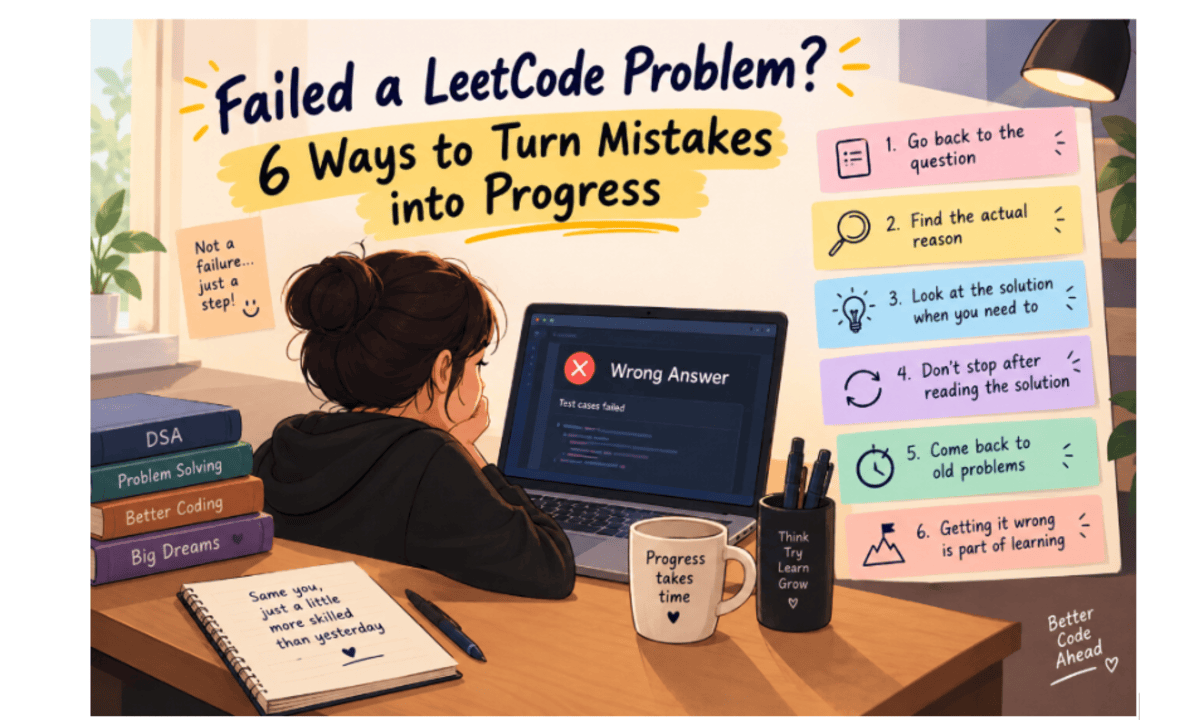
Source: ChatGPT
1. Stop Measuring Progress Only by Problems Solved
One of the easiest ways to burn out is to make the number of solved problems the only measure of progress. Solving 200 problems does not automatically mean you are better prepared than someone who has solved 100. If you rushed through those 200 questions without understanding the underlying concepts, you may still struggle when an unfamiliar problem appears in an interview.
Instead of asking, “How many problems did I solve today?”, ask:
- What concept did I understand?
- Did I learn a new pattern?
- Could I explain my solution?
- Could I solve a similar problem without looking at the answer?
This shifts your focus from quantity to actual quality learning. Spending an hour properly understanding one difficult problem can be more useful than rushing through several questions only to increase your count.
2. Practise Patterns Instead of Random Problems
Opening LeetCode and randomly choosing a problem every day can become exhausting. You constantly have to decide what to practise, and you may jump between completely different concepts without building a strong understanding of any of them. A better approach is to practise by patterns.
For example, you could spend a few days focusing on:
- Arrays and hashing
- Two pointers
- Sliding window
- Binary search
- Trees
- Graphs
- Dynamic programming
Once you understand a particular pattern, solve several problems based on it. This helps you recognise the underlying structure when you encounter a new question rather than simply memorising solutions to problems you have already seen.
3. Allow Yourself to Take Breaks
Taking a break from LeetCode does not mean you are falling behind. In fact, constantly pushing yourself when you are mentally exhausted can make practice less effective. If you keep reading the same problem repeatedly, making mistakes you normally wouldn’t, or feeling irritated every time you open your laptop, it may be a sign you need recovery time. Build breaks into your preparation instead of waiting until you are completely exhausted.
4. Make Your Practice Schedule Realistic
A study plan that looks impressive on paper may not be realistic in everyday life. If you have college, assignments, an internship, or other responsibilities, expecting yourself to solve five problems every single day can quickly become overwhelming. Missing one day may then make you feel like you have failed, which can make it
even harder to restart. Instead, set a minimum target that you can realistically maintain.
For example, you might decide to solve three to five quality problems a week and review older problems alongside them. On days when you have more energy, you can practise for longer. On difficult days, even reviewing a previously solved problem can keep the habit going.
5. Review Problems You Have Already Solved
When you are experiencing coding fatigue, constantly attempting new problems may not be the best use of your energy. Go back to questions you previously struggled with. Hide the solution and try solving them again. Ask yourself whether you still remember the approach and, more importantly, whether you understand why that approach works. This can also be motivating because you get to see your own improvement. A problem that once took an hour might eventually take you fifteen minutes.
6. Practise Explaining, Not Just Coding
Technical interviews are not silent LeetCode contests. You usually have to explain how you are approaching the problem while solving it. Once you are comfortable with a problem, practise explaining it. Doing this occasionally can make your preparation feel more connected to the actual interview instead of feeling like an endless list of coding exercises. It can also help reduce tech interview stress by making the interview format feel more familiar.
7. Don’t Let One Impossible Problem Ruin Your Day
Sometimes you will spend an hour on a problem and still have no idea what you are doing. That does not mean you are bad at coding. Give yourself a reasonable amount of time to think independently. If you are completely stuck, look at a hint or solution, understand the approach, close it, and then try implementing it yourself.
And remember: getting stuck is part of algorithm practice.
LeetCode can be an important part of technical interview preparation, but preparation does not have to mean endlessly grinding problems. LeetCode burnout often comes from turning interview preparation into a numbers game and expecting yourself to maintain an unrealistic pace.
Consistent algorithm practice is much more useful when you can sustain it for months rather than pushing yourself so hard that you eventually stop altogether. The goal isn’t to become the person who solved the most LeetCode problems. It’s to
become confident enough to solve the right problems when the interview actually comes.
References
[1] Ntro.io, “LeetCode Burnout: A Smarter Way to Prepare,” Ntro.io, Jul. 2026. [Online]. Available: https://www.ntro.io/leetcode-burnout-patterns-coding-interview-prep
[2] A. Hunter, “When LeetCode Burnout Hits: A Realistic Guide to Getting Unstuck,” DEV Community, Sep. 29, 2025. [Online]. Available: https://dev.to/alex_hunter_44f4c9ed6671e/when-leetcode-burnout-hits-a-realistic-guide-to-getting-unstuck-2bej
[3] Hack2Hire, “How to Practice for Technical Interviews Without Burning Out,” Oct. 9, 2025. [Online]. Available: https://www.hack2hire.com/blog/how-to-practice-for-technical-interviews-without-burning-out
FAQs
1. What is LeetCode burnout?
LeetCode burnout is mental exhaustion caused by solving too many coding problems without breaks, constantly comparing your progress with others, and focusing only on the number of problems solved instead of understanding patterns.
2. Why do I feel coding fatigue even after solving easy problems?
Coding fatigue happens when you practice randomly, skip breaks, and set unrealistic daily targets. Your brain needs time to absorb patterns. Solving 5 random problems daily without review is more tiring than solving 3 quality pattern-based problems a week.
3. How many LeetCode problems should I solve per day to avoid burnout?
Don’t aim for 5 problems daily. A realistic target is 3-5 quality problems per week with proper review. On high-energy days you can do more, and on low-energy days just revise an old problem. Consistency is more important than intensity.
4. How to stay consistent without getting stressed for tech interviews?
Practice by patterns (arrays, two pointers, sliding window), review old problems instead of always trying new ones, practice explaining your solution out loud, and schedule fixed breaks. Interview prep is a marathon, not a sprint.
5. Is it okay to take a break from LeetCode?
Yes, absolutely. Taking a break when you are mentally exhausted makes your next session more effective. If you are rereading the same question repeatedly or making silly mistakes, it’s a sign you need a break.
6. What should I do when I am stuck on one problem for hours?
Give yourself 30-45 minutes. If still stuck, see a hint or solution, understand the approach, close it, and implement it yourself. Don’t let one impossible problem ruin your whole day. Getting stuck is part of algorithm practice.
7. How is practicing patterns better than random practice?
Random practice forces you to learn a new concept every day. Pattern-based practice helps you master one concept (like two pointers) by solving 5-6 similar problems, so you recognize the structure in interviews instantly.