How to Turn Workplace Failures Into Career-Building Lessons
Published: Oct 5, 2026
Key Points
- Cross-training helps professionals develop skills beyond their primary area of expertise.
- Learning adjacent skills can make professionals more versatile without requiring a complete career change.
- Cross-training can improve employability and adaptability as job roles and industry demands change.
- Combining core expertise with complementary skills can create valuable hybrid skill sets.
- A T-shaped skill profile helps professionals develop deep expertise while understanding related areas.
- Cross-training can strengthen collaboration by helping employees understand the work of other teams and departments.
- Developing new skills can help professionals adapt to AI, automation, and technological changes.
- Continuous cross-training can support career resilience, progression, and long-term professional growth.
Introduction
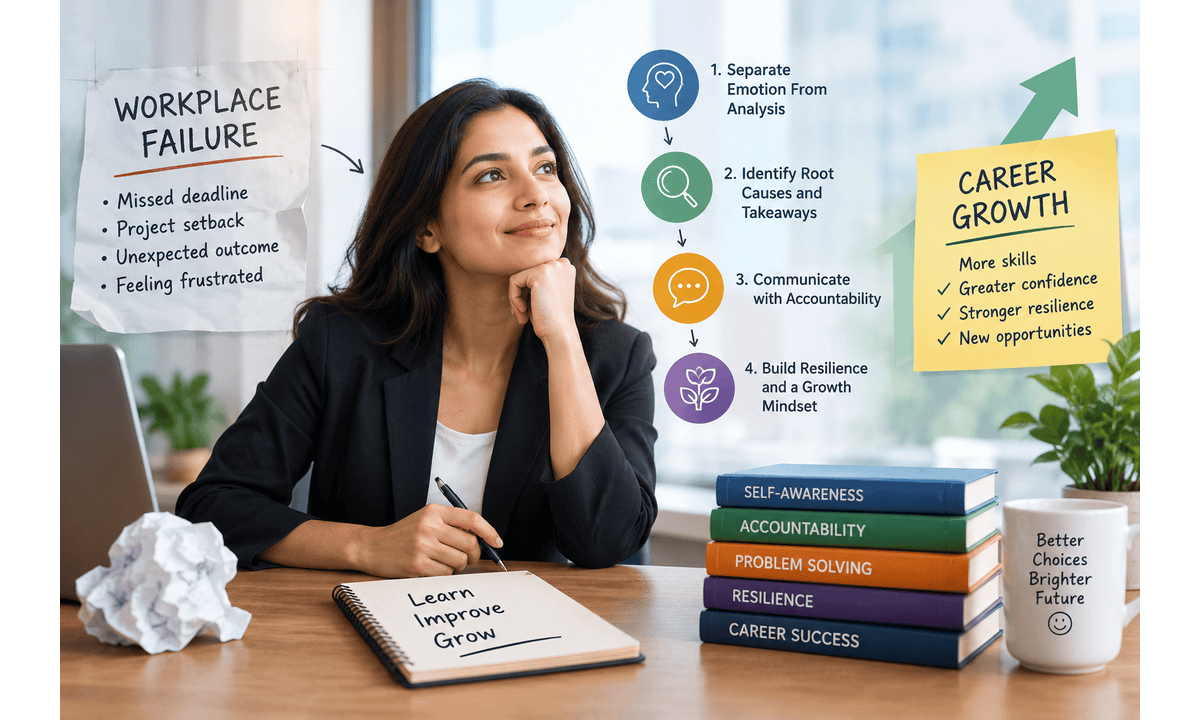
Workplace setbacks, missed deadlines, and project failures are inevitable in any career path. However, the critical differentiator between a stalled career and continuous professional trajectory lies in how an individual responds to adversity. Instead of viewing failure as a personal defeat or a mark of incompetence, successful professionals treat it as an invaluable learning tool and a catalyst for refinement.
Section 2: Key Steps to Turn Failure Into Growth
Transforming a negative outcome into a strategic advantage requires a structured approach to self-reflection and professional conduct.
1. Separate Emotion From Analysis
The immediate aftermath of a failure often brings feelings of frustration or embarrassment. To move forward, one must:
- Acknowledge feelings without letting self-doubt paralyze future performance.
- Conduct an objective post-mortem: Focus strictly on the sequence of events and technical gaps rather than assigning personal blame.
2. Identify Root Causes and Actionable Takeaways
True growth comes from understanding the “why” behind the “what.”
- Look beyond surface-level mistakes to identify systemic or communication gaps that may have contributed to the issue.
- Document key takeaways and create a checklist or protocol adjustment to ensure the same error is not repeated in the future.
3. Reframe Failure in Professional Communication
How you talk about failure defines your leadership potential.
- Own up to mistakes early and maintain transparency with managers and team members to preserve trust.
- Always present solutions alongside the problem to showcase accountability and proactive problem-solving skills.
4. Build Resilience and a Growth Mindset
Resilience is a muscle built through repeated exposure to challenges.
- Treat setbacks as temporary data points and essential feedback rather than permanent flaws in your professional identity.
- Proactively seek constructive feedback from mentors and peers to continuously improve your core competencies.
Section 3: Summary of Professional Insights
| Strategic Component | Core Objective |
|---|---|
| Mindset Shift | View failure as a stepping stone, not a dead-end. |
| Accountability | Take ownership and present data-backed solutions. |
| Systemic Change | Fix the process, not just the symptom. |
Key Insight: Workplace failures are not career dead-ends; they are stepping stones to executive maturity, strategic problem-solving, and professional resilience.
Section 4: Conclusion
Turning workplace failures into lessons requires a high degree of self-awareness, accountability, and deliberate action. By mastering this shift in perspective, professionals can convert temporary setbacks into long-term career accelerators that build character and technical expertise. Embracing failure as a teacher is the ultimate hallmark of a growth-oriented professional.
REFREENCE
Primary Reference: https://hbr.org/2011/04/strategies-for-learning-from-failure
Management Framework: https://www.uschamber.com/co/start/strategy/how-to-learn-from-failure
Frequently Asked Questions
1. What is cross-training in the workplace?
Cross-training is the process of learning skills, tasks, or knowledge outside your primary area of expertise to become more versatile and adaptable.
2. Why is cross-training important for career growth?
Cross-training helps professionals develop additional capabilities, understand related functions, and prepare for changing responsibilities and career opportunities.
3. How does cross-training protect your career?
Cross-training reduces dependence on a single skill set by helping professionals develop complementary abilities that can remain useful as technology and job requirements change.
4. What are adjacent skills?
Adjacent skills are abilities closely related to your existing expertise. They allow you to expand your capabilities without making a complete career change.
5. What is the difference between cross-training and reskilling?
Cross-training generally expands your existing skill set into related areas, while reskilling usually involves learning a new set of skills to move into a different role or career.
6. Can cross-training improve employability?
Yes. Developing complementary skills can make professionals more versatile and help them meet a broader range of employer requirements.
7. How can cross-training help professionals adapt to AI?
Cross-training can help professionals combine their existing expertise with AI, data, technology, or strategic skills, allowing them to adapt as automation changes routine tasks.
8. What are examples of cross-training skills?
Examples include a content writer learning SEO analytics, a software developer learning cloud computing, or a marketing professional developing data visualization skills.
9. What is a T-shaped professional?
A T-shaped professional has deep expertise in one core field while also having broader knowledge of related areas. Cross-training can help build this type of professional profile.
10. How should I choose skills for cross-training?
Choose skills that complement your existing expertise, are relevant to your industry, support your career goals, and are likely to remain valuable as your field changes.
11. Can cross-training help young professionals?
Yes. Young professionals can use cross-training to explore related career areas, build broader capabilities, and become more adaptable early in their careers.
12. Can cross-training help experienced professionals?
Yes. Experienced professionals can use cross-training to expand their expertise, prepare for leadership roles, and adapt to new technologies and business requirements.
13. Does cross-training require changing careers?
No. Cross-training is usually designed to expand your current capabilities rather than require a complete career change.
14. How does cross-training improve workplace collaboration?
Learning about related functions helps employees understand other teams’ responsibilities, communicate more effectively, and contribute to cross-functional projects.
15. Can cross-training help with career advancement?
Yes. A broader skill set can prepare professionals for greater responsibilities, leadership opportunities, and roles that require knowledge across multiple functions.
16. How can professionals build career resilience?
Professionals can build career resilience by continuously developing relevant skills, staying adaptable, learning from workplace changes, and keeping their knowledge aligned with industry needs.
17. How much time should professionals spend learning new skills?
Even 2–5 hours per week can make a difference when learning is consistent. The key is to focus on practical skills that support your current role or future career goals.
18. Should I learn one new skill at a time?
Yes. Focusing on one complementary skill at a time makes learning more manageable and allows professionals to develop practical competence before moving to another area.
19. How can I show additional skills on my resume?
Add relevant skills to your Skills, Projects, Certifications, or Experience sections. Whenever possible, show how you actually used the skill through a project or workplace achievement.
20. Can learning complementary skills improve long-term career growth?
Yes. Developing complementary skills can increase flexibility, improve employability, support career advancement, and help professionals respond more effectively to changes in technology and industry demands.
Citations & References
Primary Reference: https://hbr.org/2011/04/strategies-for-learning-from-failure
Management Framework: https://www.uschamber.com/co/start/strategy/how-to-learn-from-failure
Streamline Your Hiring with Eve Placement
Engage, assess, and recruit top talent through tailored AI hiring challenges that go beyond resumes. Ready to hire better? Contact our research team for a custom consultation.