
AI in Precision Agriculture Optimizing Crop Yields and Resources
Published: Jun 27, 2026
Key Points
- Modern farms are adopting precision agriculture to replace guesswork with real-time, data-driven decisions that boost crop yields.
- Artificial intelligence analyzes data from sensors, drones, and satellites to help farmers manage resources smarter and cut unnecessary expenses.
- Smart irrigation systems track soil moisture and weather patterns to deliver the exact amount of water each plant needs, reducing waste.
- AI-powered predictive analytics forecast weather changes and estimate crop performance so growers can adjust their seasonal strategies.
- Drones equipped with special software scan fields from above to spot early signs of plant disease and water system malfunctions.
- The integration of learning algorithms helps global agriculture stay resilient against unpredictable weather patterns and rising resource costs.
Introduction
Fields now respond to signals from machines that learn patterns, while eyes in the sky scan crops daily. Instead of guessing when to plant or water, growers watch real-time alerts shape choices moment by moment. Implementing precision agriculture turns raw environmental data into actionable field choices. Decisions once made by habit shift under streams of numbers flowing from soil probes and weather stations. What used to take weeks now happens in minutes thanks to hidden calculations behind screens. Farming has become less about routine, more about reaction – guided by pulses rather than instincts.
Out in the fields, sensors track plant health, earth quality, and shifting skies with sharp detail. Machines that learn from data help growers cut losses while boosting output and handling supplies wisely. Right alongside these tools, smart setups adjust how much water reaches plants, when nutrients go down, and even how pests get managed. With warmer seasons pushing boundaries and more mouths to feed worldwide, farms leaning on learning algorithms find a stronger footing each season.
AI in Precision Agriculture
Out in the fields, artificial intelligence helps farmers work smarter. Information flows in through sensors, drones, weather gear, and satellites – then gets studied on the spot. Because of that, choices about watering crops, adding nutrients, or handling pests become clearer. What shows up on screens guides what happens in the soil.
Spotting issues fast matters a lot in farming done right. Before trouble moves through fields, smart tech spots signs of sick plants, missing nutrients, or bugs on the rise. Where help is actually required, actions get focused – fewer chemicals go out, expenses drop too.
AI also helps farmers predict weather changes and crop performance. By analyzing historical and real-time data, machine learning models can estimate crop yields and recommend better farming practices. These insights improve productivity while reducing risks caused by uncertain weather conditions.
Smart Irrigation and Resource Management
Farms face tough problems when handling water supplies. Because of smart tech, watering plants now wastes less. Devices buried in dirt track dampness levels and sky patterns nonstop. Using that data, programs calculate precisely how much liquid each crop needs.
Water waste drops when machines handle watering just right. Fields get what they need, nothing more. Places running low on water find this helpful. Power and effort go further, too. Crops grow better because smart tools guide feeding choices for crop optimization. Pesticides spread where trouble shows up.
Whole fields do not get sprayed without reason. Attention lands exactly where it belongs.
Pollution drops when farming focuses exactly where needed, yet soil grows stronger at the same time. Because of how fields are managed with care through precision agriculture, harvests stay full even as the earth regains balance.
Drones and Predictive Analytics
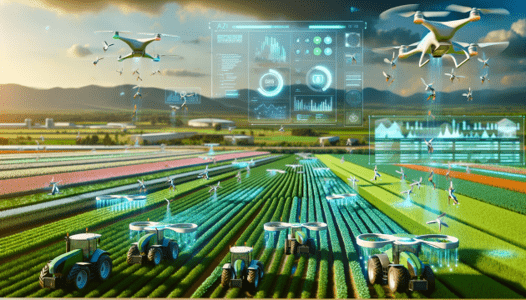
Up above, drones plus satellites now help farms run better. Images taken by smart flying machines show how plants are doing. These pictures get studied fast with special software that sees trouble spots. When something goes wrong with crops, folks find out sooner. Sickness in plants gets spotted early because of this tech. Water systems acting up? That shows up clearly, too.
Forecasting comes built into AI tools used on farms. When machines study rainfall patterns, ground nutrients, plus past harvest records, they spot trends ahead of time. Because of that insight, growers adjust when to sow seeds, water fields, or gather produce. Decisions shift based on what the models suggest might happen next season.
Picking up pace where old methods lag, smarter oversight, powered by machines, sharpens how crops are managed for crop optimization. Less waste shows up in fields when decisions shift on data instead of guesses. Outcomes grow more reliable, even as resource use drops below earlier marks.
Conclusion
Farming gets sharper now because machines learn patterns. When soil sensors report data, decisions grow clearer without delay. Drones scan fields so problems show up early. Predictions guide planting instead of guessing seasons. Less gets wasted once insight replaces routine.
Farmers now tweak their harvests using smart tools that learn from field patterns for crop optimization, shaping choices with live feedback instead of guesswork. Even when prices stay steep or skills run thin, these systems slowly take root across farmlands everywhere.
Precision agriculture might stick around longer, helping us grow food without wasting resources – this matters for keeping bellies full worldwide. A shift toward smarter fields could quietly support meals across continents, especially when supplies get tight.
Frequently Asked Questions
1: What technology drives modern precision agriculture?
AI, drones, soil sensors, and satellite imaging drive it.
2: How do sensors help save water?
They track dirt moisture to calculate exact watering needs.
3: Can AI predict future crop yields?
Yes, machine learning models estimate performance using historical data.
4: Why are drones valuable to modern farmers?
They scan fields from above to spot sick plants early.
5: Does smart farming reduce chemical use?
Yes, treatments are focused only where trouble actively shows up.
6: What is the main goal of crop optimization?
To maximize food output while lowering resource waste.
7: How does AI handle unpredictable weather?
It analyzes rainfall and ground trends to suggest ideal planting times.
8: Are these tools useful in drought areas?
Yes, smart watering setups drastically eliminate water waste.
9: Does data replace traditional farming routines?
Yes, daily operations shift from habit to live data reactions.
10: Why does this technological shift matter globally?
It secures the food supply when resources get tight.
Citations & References
[1] Springer Nature, “Applications of AI in Precision Agriculture.” [Online].
Available:
https://link.springer.com/article/10.1007/s44279-025-00220-9
[2] Frontiers in Plant Science, “Next-gen Agriculture: Integrating AI and XAI for Precision Crop Yield Predictions.” [Online].
Available:
https://www.frontiersin.org/journals/plant-science/articles/10.3389/fpls.2024.1451607/full
[3] Springer Nature, “An IoT-driven Machine Learning System for Real-time Smart Crop Recommendation and Optimization in Precision Agriculture.” [Online].
Available:
https://link.springer.com/article/10.1007/s44163-026-00896-y
[4] Food and Agriculture Organization (FAO), “Digital Agriculture and Smart Farming.” [Online].
Available:
https://www.fao.org/digital-agriculture/en/
[5] EvePlacement. [Online].
Available:
https://eveplacement.com/
Streamline Your Hiring with Eve Placement
Engage, assess, and recruit top talent through tailored AI hiring challenges that go beyond resumes. Ready to hire better? Contact our research team for a custom consultation.