
Can India Achieve Fertiliser Diversification Fast Enough to Avoid a Crop Season Crisis?
Published: Jun 23, 2026
Key Points
- Fertiliser Diversification is becoming increasingly important for protecting India's agricultural supply chain from global disruptions.
- Heavy reliance on imported fertilizer materials exposes farmers to price increases and supply delays.
- India is exploring partnerships with more countries while strengthening domestic production capacity.
- Modern farming technologies can help improve nutrient efficiency and reduce unnecessary usage.
- Farmer education and better access to agricultural support services remain critical for long-term stability.
- Strategic planning can help safeguard future harvests from supply-related disruptions.
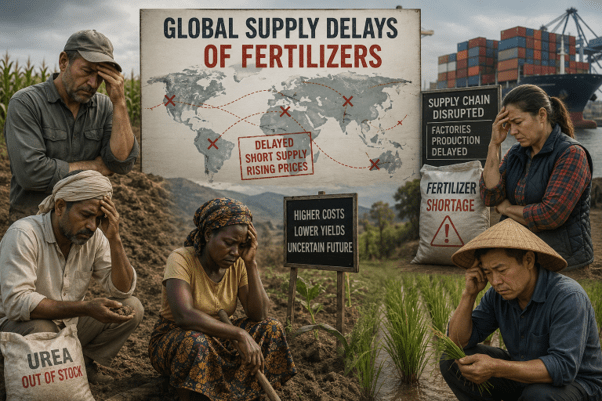
Introduction to Fertiliser Diversification
India is one of the world’s largest agricultural countries, and millions of farmers depend on fertilizers for better crop production every season. Fertilizers help crops to grow better and keep the soil fertile. In today’s times, rising global prices, import dependency, and international disputes have created panic about fertilizer supply in many countries, including India.
Recently, country like Nepal is also facing fertilizer supply shortages because of global supply delays and increase in prices. Nepal requested fertilizer support from India before its important paddy plantation season since shortages could directly affect farming and crop production. This situation shows how important fertilizer supply still is for farming in South Asian countries.
They also raise an important question: “Can India Achieve Fertiliser Diversification Fast Enough to Avoid a Crop Season Crisis?”
Fertilisers play an important role in Indian farming. Without proper fertiliser supply during sowing seasons, crop production can fall heavily. The problem is that India still depends on imports for many fertilizer materials. When global supply chains are affected due to wars, restrictions, or high prices, Indian farmers can face supply delays and costly fertilizer.
Depending too much on a few countries for fertilizer can cause problems. India has now started exploring fertilizer deals with different countries instead of depending on only a few suppliers. The government is also encouraging domestic fertilizer production to reduce import pressure in the future. Technology is also helping farmers use fertilizers more properly.
Shifting completely towards other fertilizers will take time. Small farmers keep using chemical fertilizers because they are cheaper, easily available, and give faster results in the harvesting season.
Lack of awareness is also an issue as many small farmers are still not aware of different methods and modern farming technologies, and Government facilities, affordable fertilizer access, and farmer training will be important to avoid crop crises in the future.
Situations like Nepal requesting fertilizer support from India also show how sensitive agricultural systems can become during supply shortages. This is why finding more fertilizer options is slowly becoming important for future farming security.
India is working on new fertilizer options. Although the problems are still there, better planning and good fertilizer use can help Indian agriculture become more secure in the coming years.
Frequently Asked Questions
1. What is Fertiliser Diversification?
It refers to expanding fertilizer sourcing options and reducing dependence on a limited number of suppliers.
2. Why is Fertiliser Diversification important for India?
It helps reduce dependence on a limited number of suppliers and improves supply security during global disruptions.
3. How can fertilizer source diversification support farmers?
Expanding sourcing options can improve fertilizer availability and reduce the risk of seasonal shortages.
4. What challenges affect diversification efforts?
Import dependence, infrastructure limitations, and global price fluctuations can slow the adoption of broader sourcing strategies.
5. Can diversified sourcing reduce agricultural risks?
Yes, wider supplier networks can help protect farming activities from supply chain disruptions and market uncertainties.
6. What role does domestic production play in fertilizer security?
Increasing local manufacturing capacity can reduce reliance on imported materials and strengthen supply stability.
7. How does technology contribute to better fertilizer management?
Modern tools help farmers apply nutrients efficiently, reducing waste and improving productivity.
8. Can farmer education improve the success of alternative fertilizer strategies?
Yes, training programs can help farmers understand sustainable nutrient management and alternative farming practices.
9. How is fertilizer supply security connected to food security?
A stable nutrient supply supports crop production and contributes to long-term agricultural resilience.
10. Can Fertiliser Diversification help prevent a Crop Crisis?
While it is not the only solution, Fertiliser Diversification can strengthen agricultural resilience and lower the chances of a future Crop Crisis caused by supply shortages.
Citations & References
[1] Reuters, “India tapping alternative sources to boost fertilizer stocks, official says,” Reuters, Mar. 30, 2026. [Online]. Available:
https://www.reuters.com/world/india/india-tapping-alternative-sources-boost-fertilizer-stocks-official-says-2026-03-30/.
[2] Department of Fertilizers, Government of India, “Department of Fertilizers.”
[3] Indian Council of Agricultural Research (ICAR), “Biofertilizers as Low External Input for Sustainable Agriculture.” [Online]. Available:
https://epubs.icar.org.in/index.php/IndFarm/article/view/55391.
[4] Down To Earth, “Agriculture.” [Online]. Available:
https://www.downtoearth.org.in/agriculture.
[5] EvePlacement. [Online]. Available:
https://eveplacement.com/
Streamline Your Hiring with Eve Placement
Engage, assess, and recruit top talent through tailored AI hiring challenges that go beyond resumes. Ready to hire better? Contact our research team for a custom consultation.