
The Growing Role of Skill Tests and Coding Contests in Today’s Recruitment Process
Introduction
While going through different hiring reports and watching how students prepare for tech roles, I realised something that’s becoming impossible to ignore: companies are no longer interested in only polished resumes.
Skills matter more than ever, and the hiring process has shifted in a way that puts skill test performance and coding contest experience right at the front. It’s not surprising when you think about how much competition there is. Recruiters just want to know who can actually solve problems, not who can write the best summary on their CV.
Skills-Based Hiring is transforming the way companies recruit talent. By prioritizing real skills over resumes, Skills-Based Hiring ensures candidates are evaluated on what they can actually do.
The Rise of Skill-Based Hiring
Most hiring managers now openly say that someone’s performance in a skill test tells them far more than their education or previous job titles. And honestly, this approach feels fairer. Instead of depending on brand names or long lists of projects, a company gets to see real ability. A well-designed skill test can reveal thinking patterns, logic, and whether a candidate can handle real work pressure.
During my research, I found multiple instances where employers chose candidates with strong practical performance over applicants with impressive resumes but weaker analytical skills. It highlights just how seriously organisations are approaching skill-based hiring now.
During my research, I found multiple examples where employers chose candidates with strong practical performance over applicants with impressive resumes but weaker analytical skills. This trend highlights just how seriously organizations are adopting Skills-Based Hiring, emphasizing that real-world capability often outweighs traditional credentials.
Coding Contests as Modern Talent Filters
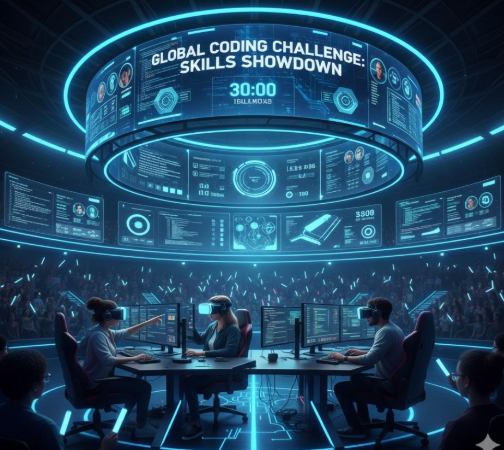
Online coding contest platforms have changed the way tech talent is identified. Many students solve problems for fun or practice, but companies genuinely track these contests. A coding contest acts like a pressure test. It shows how someone thinks when the clock is ticking. It also reveals how quickly a person can adapt when they get stuck, which is something no resume can show.
I noticed that candidates who regularly participate in contests often approach interviews differently, they break down questions faster and don’t panic when something unexpected comes up. The training they get from competitive programming carries over into real job tasks.
Candidates who regularly participate in contests tend to perform better in interviews, as they are trained to break down complex problems efficiently and stay calm when faced with unexpected questions. This is why competitive programming experience aligns perfectly with Skills-Based Hiring practices.
What Skill Tests Really Measure
A skill test is never just about coding or theory. It measures the way a person approaches a challenge. Common things employers analyse include:
- how candidates draw conclusions
- how clean or readable their code is
- whether they think logically
- how they troubleshoot errors
- their ability to apply concepts to a new scenario
Even for non-coding roles, companies use skill tests for communication, analytical thinking, and basic reasoning. It reduces guesswork for recruiters and gives candidates a practical way to stand out.
Why Companies Prefer this Method
One thing that kept appearing in reports is that companies save time and avoid bias through skill-based assessments. When someone performs well in a coding contest or skill test, the hiring team knows the candidate didn’t just memorise answers. They actually understand the concepts.
Many companies said candidates who excel in these tests:
- learn faster on the job
- handle ambiguity well
- Don’t freeze when problems get tough.
- need less hand-holding
Skill tests reveal grit, not just technical knowledge and that’s exactly what teams want.
Limitations that Still Exist
Even though skill-based hiring is becoming the norm, there are real challenges. Not everyone performs well in timed tests, even if they’re talented. Some people freeze under pressure. Others may struggle with poor internet or slow hardware during an online coding contest. I also noticed that some assessments feel too generic, making it hard to judge real-world ability.
This is why companies rarely rely on tests alone. They use them as a starting point, then combine them with interviews or tasks that are closer to actual job work.
This is why companies rarely rely solely on tests in Skills-Based Hiring. Instead, they use assessments as a starting point and combine them with interviews, project-based tasks, or role-specific challenges that better reflect actual job responsibilities. By doing so, Skills-Based Hiring balances measurable skill evaluation with practical insights, ensuring that candidates who excel in real work scenarios are recognized.
Looking Ahead
From what I’ve seen, the future of hiring will be built on skill-first assessments. Companies want proof, not promises. We might see more personalised skill test formats that adjust to a candidate’s level or company-specific coding contest events built directly into the hiring pipeline.
Candidates who consistently practise and take part in contests will naturally have an advantage, not because they know everything, but because they’re used to solving problems under real pressure.
With Skills-Based Hiring becoming more widespread, candidates who focus on developing practical skills, adaptability, and analytical thinking will stand out, and organizations will increasingly value hands-on capability over traditional indicators like resumes or degrees.
Conclusion
Skills-based tests and coding contests have changed the way companies judge talent. The hiring process is shifting toward practical ability instead of just credentials. And honestly, the people who keep developing real, hands-on skills will stand out much more than those who rely only on certificates.
As the job market becomes increasingly competitive, Skills-Based Hiring will continue to rise, rewarding those who consistently develop practical skills, adapt under pressure, and demonstrate problem-solving abilities. In essence, Skills-Based Hiring is not just a trend—it’s the future of recruitment.
References
[1] HackerRank Research, “2024 Developer Skills Report,” 2024. [Online].
Available: https://www.hackerrank.com/research/developer-skills/2024
[2] CodeChef, “Competitive Programming and Hiring Trends,” 2023. [Online].
Available: https://www.codechef.com/
[3] Coursera, “Skills-First Hiring: Trends and Insights,” 2024. [Online].
Available: https://www.coursera.org/skills-reports/job-skills
FAQs :-
1. What is Skills-Based Hiring?
Skills-Based Hiring is a recruitment approach that focuses on evaluating a candidate’s practical abilities rather than solely relying on resumes or academic credentials. In Skills-Based Hiring, companies design assessments, coding tests, or problem-solving tasks to measure a person’s real-world capability. By prioritizing actual skills, Skills-Based Hiring ensures candidates are matched to roles they can perform effectively.
2. Why are companies adopting Skills-Based Hiring?
Companies adopt Skills-Based Hiring because it reduces bias and highlights true talent. Traditional hiring often favors credentials or prestigious universities, but Skills-Based Hiring evaluates what candidates can actually do. Reports show that organizations using Skills-Based Hiring identify faster learners, adaptable employees, and individuals who perform well under real job pressure.
3. How does Skills-Based Hiring differ from traditional hiring?
Unlike traditional hiring, which often emphasizes resumes, degrees, and previous job titles, Skills-Based Hiring prioritizes practical assessments. In Skills-Based Hiring, candidates undergo tasks or tests that simulate actual job challenges. This ensures the recruitment process in Skills-Based Hiring is meritocratic and identifies individuals who can deliver results rather than just impress on paper.
4. What types of assessments are used in Skills-Based Hiring?
Skills-Based Hiring uses coding tests, case studies, problem-solving exercises, and simulations relevant to the role. Even non-technical roles benefit from Skills-Based Hiring by using analytical, communication, and reasoning assessments. These evaluations in Skills-Based Hiring allow recruiters to gauge critical thinking, adaptability, and logical reasoning effectively.
5. Can Skills-Based Hiring help reduce hiring bias?
Yes, Skills-Based Hiring reduces bias by focusing on measurable ability rather than background or demographics. With Skills-Based Hiring, recruiters assess performance through standardized tests or contests, minimizing subjectivity. Studies indicate that Skills-Based Hiring leads to more diverse and capable teams because it rewards real talent over surface credentials.
6. Does participating in coding contests improve chances in Skills-Based Hiring?
Absolutely. Many coding contests mirror the type of practical problems assessed in Skills-Based Hiring. Candidates who regularly participate in contests perform better because Skills-Based Hiring values problem-solving speed, logic, and adaptability under pressure. Hence, competitive programming experience aligns perfectly with the goals of Skills-Based Hiring.
7. Are there challenges in implementing Skills-Based Hiring?
While Skills-Based Hiring is effective, it faces challenges like test anxiety or technical limitations. Not all talented candidates perform well under timed conditions, which can affect their results in Skills-Based Hiring. Organizations using Skills-Based Hiring often combine skill assessments with interviews or real-world tasks to get a holistic view of a candidate’s potential.
8. How does Skills-Based Hiring benefit employees?
Employees benefit from Skills-Based Hiring because it emphasizes what they can do, not just their resume. Candidates selected through Skills-Based Hiring often find roles that match their strengths, leading to better performance, growth opportunities, and job satisfaction. Skills-Based Hiring also encourages continuous skill development to stay competitive.
9. Can Skills-Based Hiring be applied outside the tech industry?
Yes, Skills-Based Hiring is not limited to technology roles. Many companies in marketing, finance, and operations use Skills-Based Hiring to assess problem-solving, communication, and analytical skills. The principles of Skills-Based Hiring—measuring practical ability over credentials—apply to almost any field where performance matters.
10. What is the future of Skills-Based Hiring?
The future of Skills-Based Hiring looks promising, with more personalized assessments and adaptive skill tests. Companies will likely integrate Skills-Based Hiring into recruitment pipelines, emphasizing real-world competence. Candidates who practice and enhance their skills will thrive because Skills-Based Hiring rewards genuine ability, creativity, and problem-solving above all.
Penned by Pranjal Sharma
Edited by Sunil Kumar Prajapati, Research Analyst
For any feedback mail us at [email protected]
Streamline Your Hiring with Eve Placement’s Custom Assessments
Eve Placement helps you engage, assess, and recruit top talent through tailored hiring challenges that go beyond resumes. From technical quizzes and real-world case studies to psychometric evaluations and audio/video submissions, our platform enables smarter, data-driven hiring decisions. Advanced security features ensure authenticity and eliminate fraud, giving you reliable results. Ready to hire better? Know More.
Mail us at [email protected]