
Cloud Computing Skills for Campus Recruitment
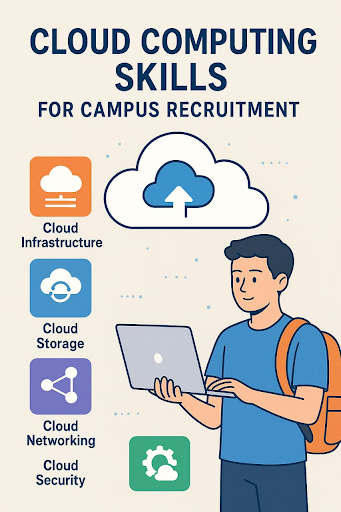
Introduction
Cloud computing is happening right now. From online banking to shopping websites, almost every business depends on the cloud to keep information, run apps, and give services. This fast use has created a high need for skilled people who can handle and protect cloud systems. For students getting ready for campus jobs, learning the right cloud tech skills can help them start a good cloud computing career.
In this article, we’ll look at nine important skills that employers want, along with job options and ways to get ready.
The worldwide move to online work means small and big companies—from new companies to large ones in many countries—need cloud specialists. Studies show that the cloud industry will be valued at a huge amount of money in the coming years, creating many new jobs.
Cloud computing is a good job choice because there is a big need and many types of jobs, from technical work to planning solutions and keeping systems safe. For students, this is a great chance to join one of the quickly growing fields.
9 Must-Have Cloud Tech Skills to Build a Strong Cloud Computing
Understanding Cloud Fundamentals
Before learning in detail, students should first know the basics of cloud service types:
IaaS (Infrastructure as a Service) gives computers, storage, and networks from the cloud.
PaaS (Platform as a Service) gives tools to build and run apps.
SaaS (Software as a Service) gives ready-made apps to use online. A strong foundation is the starting point of a cloud career.
Mastery of Cloud Platforms
Recruiters expect knowledge of leading platforms like AWS, Microsoft Azure, and Google Cloud. Even learning one of these platforms in depth can make you highly employable.
Virtualization and Networking
Sharing one computer through virtualization lets many systems work on the same machine, and networking helps computers talk to each other smoothly. Knowing how to divide work equally, use secure internet connections (VPNs), and manage private cloud spaces (VPCs) is very important.
Programming and Scripting
Simple programming knowledge in Python, Java, or PowerShell is very important for making cloud tasks run automatically. Small programs help control computer services, check systems, and reduce manual labour.
Database Management
Nearly every company depends on information. Learning to use databases like MySQL, MongoDB, and Cassandra will give you an advantage.
Cloud Security
Security is one of the biggest concerns in cloud adoption. Recruiters want professionals skilled in firewalls, data encryption, identity access management, and compliance standards.
DevOps and Automation
Knowing about CI/CD pipelines (automatic steps for software), Docker (packs and runs apps), Kubernetes (manages many apps), and Jenkins (an automation tool) is very important. DevOps helps companies give software to users faster, which is their main focus.
Data Analytics and AI Integration
Cloud platforms are not just about storage—they also power analytics and AI. Understanding how to use cloud tools for big data analysis and machine learning integration makes you stand out.
Communication and Problem-Solving
Apart from technical knowledge, companies also look for students who can explain cloud ideas clearly, work well with others, and think in new ways to fix issues. With cloud skills, students can go for different jobs like Cloud Engineer who sets up and takes care of cloud services, Cloud Security Analyst who keeps important data safe and stops leaks, DevOps Engineer who makes development tasks automatic and better, Solutions Architect who creates full cloud solutions for companies, and Data Engineer who works with data study, AI, and databases. These jobs are not only in IT companies—fields like healthcare, shops, factories, and finance are also spending more on cloud technology.
To prepare for campus recruitment, students can start with basic certificates like AWS Cloud Practitioner or Azure Basics, do practical projects such as making a website on the cloud or setting up a chatbot, and try internships that give real work experience. They should also practice on free trial accounts of AWS, Azure, or GCP to get real learning. Finally, they must focus on communication skills by learning how to explain cloud ideas in easy words during interviews.
Conclusion
A cloud-computing career is one of the best job choices for students starting to look for jobs. With the correct combination of cloud tech skills—from basics and safety to DevOps and data analysis—you can be noticed during college job placement and get good jobs in top companies. The need for cloud workers will keep growing. If you spend your time learning these skills today, you will be ready for a career that gives you progress, steady work, and new ideas.
FAQs
Q1. What are cloud computing skills?
Cloud computing skills are technical and soft abilities needed to design, manage, and secure cloud systems.
Q2. Why are cloud computing skills important for students?
Students with cloud computing skills are in high demand as companies rapidly adopt cloud solutions.
Q3. Which cloud computing skills should beginners start with?
Beginners should learn cloud fundamentals, networking basics, and at least one major cloud platform.
Q4. What platforms are most valued in cloud computing skills?
The most valued platforms include AWS, Microsoft Azure, and Google Cloud.
Q5. How do programming languages improve cloud computing skills?
Languages like Python, Java, and PowerShell help automate tasks and improve efficiency in cloud management.
Q6. Why is security a key part of cloud computing skills?
Cloud security ensures data protection, identity access control, and compliance with regulations.
Q7. How does DevOps fit into cloud computing skills?
DevOps knowledge enhances automation, CI/CD pipelines, and faster software delivery.
Q8. Can database knowledge boost cloud computing skills?
Yes, managing databases like MySQL, MongoDB, and Cassandra is vital for cloud careers.
Q9. Are soft skills part of cloud computing skills?
Yes, communication and problem-solving are equally important alongside technical expertise.
Q10. What career paths use cloud computing skills?
Careers include Cloud Engineer, Solutions Architect, DevOps Engineer, Data Engineer, and Security Analyst.
Q11. How can students practice cloud computing skills?
Students can use free trial accounts, do projects, and earn cloud certifications.
Q12. What certifications validate cloud computing skills?
Popular certifications include AWS Cloud Practitioner, Microsoft Azure Fundamentals, and Google Cloud Associate.
References
[1] “Top 10 Time Management Tips,” TimeManagement.com. [Online]. Available: https://www.timemanagement.com/top-10-tips
[2] J. Smith, “The Psychology of Habits,” Mind Journal, 2023. [Online]. Available: https://www.mindjournal.com/psychology-of-habits
[3] J. Smith, “Cloud Career Guide: Skills and Jobs,” Tech Journal, 2024. [Online]. Available: https://www.techjournal.com/cloud-career-guide
Penned by Anjum Mulani
Edited by Shashank Khandelwal, Research Analyst
For any feedback mail us at [email protected]
Streamline Your Hiring with Eve Placement’s Custom Assessments
Eve Placement helps you engage, assess, and recruit top talent through tailored hiring challenges that go beyond resumes. From technical quizzes and real-world case studies to psychometric evaluations and audio/video submissions, our platform enables smarter, data-driven hiring decisions. Advanced security features ensure authenticity and eliminate fraud, giving you reliable results. Ready to hire better? Know More.
Mail us at [email protected]