
Preparing for a Successful Campus Placement Season
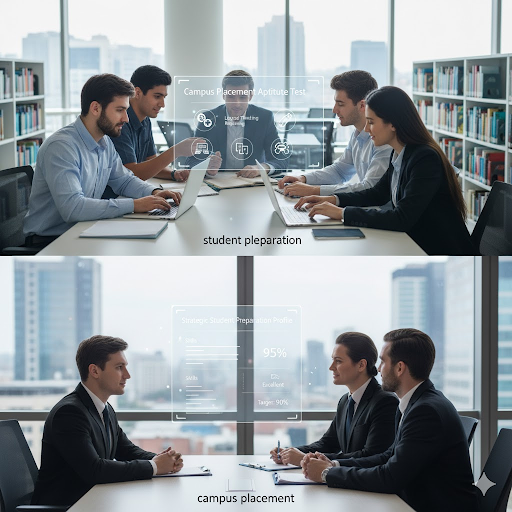
Topics: campus placement, student preparation
8 Essential Campus Placement Strategies: Mastering Student Preparation Success
The campus placement competition calls for thorough, strategic planning that goes far beyond academic achievements to include technical competencies, soft skills, and professional presentation skills. The challenges for today’s students are unprecedented with employers expecting more and recruitment processes growing ever more sophisticated and selective. Student preparation needs to be systematic approach including skill building, resume structuring, interviewing practice, and strategic firm analysis that puts candidates in a favorable position within highly competitive applicant pools. Contemporary campus placement success does not depend on eleventh-hour cramming but on consistent, intentional preparation on the part of the students months in advance of actual recruitment season, developing competencies and confidence that lead to job offers from leading recruiters.
Recent analysis of the industry indicates that remote and hybrid recruitment models use digital platforms and AI in 2025 placement drives, which necessitate that students learn to excel at virtual interview skills as well as classic ones. The 2024 batch saw slowdowns during placements across all campus levels, and careful preparation is more important than ever before for 2025 passes-outs to contend with ongoing competitive intensity.
1. Strategic Timeline and Preparation Roadmap
Successful placement preparation adheres to systematic timelines beginning ideally 6-12 months prior to recruitment commencement. The longer preparation time allows for detailed skill development, repeated practice iterations, and confidence generation impossible through frantic last-minute attempts.
Early stages of preparation deal with basic skill acquisition such as mastering programming languages, data structures and algorithms, and core subject revising building technical interview foundations. This groundwork necessitates regular daily practice and not intensive short-term cramming.
Mid-preparation stages focus on project work, competitive coding practice, and improvement of soft skills using mock interviews and group discussions. End preparation periods polish company-specific research, resume customization, and interview technique refinement in readiness for opportunities that come.
2. Technical Skill Development and Coding Proficiency
Mastering data structures and algorithms is shown to be necessary in almost every technical position since companies regularly assess applicants’ capacity for creating optimal solutions to computational problems. Practices on LeetCode, HackerRank, and CodeChef platforms develop problem-solving velocity and precision.
Understanding system design becomes more critical for those interviewing for senior development or architecture positions, in which scalability, reliability, and performance optimization concepts distinguish high-quality candidates from just qualified ones.
3. Resume Writing and Professional Documents
Impressive resumes updated regularly reflect every company’s personality, proclaiming headings, career overviews, capabilities, and experiences concisely with emphasis on accomplishments and measurable contributions. One-page limitations require merciless prioritization of most salient, impactful information able to hook recruiter interest instantly.
4. Aptitude Test Preparation and Quantitative Abilities
Quantitative aptitude, logical reasoning, and verbal ability tests filter candidates from different sectors, necessitating practice at the level of question types, time management, and error improvement. These tests are frequently used as initial filters, so having good performance becomes a prerequisite for proceeding through placement procedures.
Pattern recognition ability honed by frequent puzzle working and brain teaser training directly applies to success in logical reasoning tests. Daily practice with various kinds of problems over time improves mental sharpness and confidence with time limits.
Mock test series imitating real company exams familiarize students with test structure, difficulty, and time constraints and also identify weak areas needing more attention.
5. Interview Skills and Communication Techniques
Technical interview practice involves skill to articulate problem-solving strategies clearly while coding efficiently under scrutiny. Verbalizing thought process practice aids candidates in articulating well during live coding sessions where interviewers evaluate both solutions and communication skills.
Attitudes toward body language, eye contact, and confident vocal delivery significantly determine interview success beyond the quality of content. Practicing video recordings of mock sessions exposes unconscious habits and opportunities for development that would otherwise not have been identified.
6. Company Research and Role Familiarity
Focused company research is evidence of sincere interest and offers conversation points and application materials that speak to certain organizational values and cultures. Familiarity with company products, services, recent developments, and industry positioning allows for wise questions and experience relevance.
Role-based studies define requirements of the job, common career paths, and skill sets allowing candidates to highlight most applicable qualifications in interviews and testing. Such preparation avoids surprises regarding job nature or expectation vs. reality mismatches.
Knowledge of industry trends places candidates in a position of being well-informed professionals aware of larger context in which businesses operate, making strong impressions on interviewers looking for members who are strategically thinking about business challenges beyond mere technical execution.
7. Project Development and Portfolio Building
Large academic or personal projects illustrate application of practical skills in addition to theoretical knowledge, furnishing interview conversation topics while displaying problem-solving skills and technical expertise. Documented projects on GitHub or personal websites provide physical proof of ability.
Full-stack projects using multiple technologies reflect flexibility and entire software development lifecycle mastery desired by employers looking for flexible team members. Projects must address actual issues or exhibit creative technical solutions separating candidates from others.
Contributions to open source projects establish reputation within the community while fostering teamwork coding skills necessary within professional settings. Substantial additions to existing projects make more of an impact on employers than multiple insignificant changes valuing quantity over quality.
8. Online Presence and Professional Branding
Optimization of LinkedIn profiles makes professional online presence revealing achievements, expertise, and referrals as well as recruiter discovery and networking easier. Professional photos, full descriptions of experiences, and skill endorsements on full profiles increase visibility and trustworthiness.
Maintenance of GitHub portfolios proves active practice of coding and development of projects through frequent commits, documented repositories, and meaningful contribution patterns. Quality is more important than quantity, with employers prioritizing significant projects over many insignificant repositories.
Dreams Becoming Career Reality Through Strategic Preparation
The wholistic strategy for campus placement success delineated here converts daunting challenges into doable steps by means of strategic student preparation that develops competence and confidence in an orderly way. Students putting effort and time into careful preparation place themselves favorably against less-prepared peers despite placement season competitive demand.
With recruitment processes ongoing adapting to technological intervention and increasing employer expectations, self-disciplined student preparation is ever more important for campus placement success. The strategies outlined here offer blueprint for converting placement worry into confident career launch, securing opportunities matching skills, interests, and aspirations in fulfilling professional careers.
FAQs
- What is campus placement?
Campus placement is the process where companies visit educational institutions to recruit students for full-time or internship roles based on their skills and qualifications. - Why is early student preparation important for campus placements?
Early student preparation helps build technical, communication, and problem-solving skills over time, giving candidates an edge during competitive recruitment drives. - How far in advance should students start preparing for campus placement?
Ideally, student preparation should begin 6–12 months before the placement season to allow ample time for technical learning, mock tests, and interview practice. - What are the key skills required to succeed in campus placement?
Key skills include strong aptitude, coding knowledge, communication skills, and confidence in presenting ideas effectively during interviews. - How do mock interviews help in student preparation for placements?
Mock interviews simulate real company interactions, helping students refine communication, technical responses, and time management skills. - How can students improve their resumes for campus placement?
Students should highlight achievements, measurable results, and relevant project experience concisely in a one-page resume tailored to target companies. - What role do projects and internships play in student preparation?
Practical projects and internships demonstrate real-world application of knowledge, improving credibility during the selection process. - How can students prepare for online or virtual placement rounds?
Students should practice virtual interviews, ensure proper lighting, camera setup, and become comfortable with video communication tools. - What mistakes should students avoid during campus placement interviews?
Common mistakes include lack of company research, unclear answers, poor body language, and failure to showcase enthusiasm for the role. - How can consistent preparation improve campus placement outcomes?
Consistent student preparation builds both technical competence and confidence, resulting in better test scores, interviews, and final job offers.
References
[1] PrepInsta, “How to Prepare for Placements – A Step-by-Step Guide,” *PrepInsta Resources*, May 2, 2025. [Online]. Available: https://prepinsta.com/how-to-prepare-for-campus-placements/
[2] GeeksforGeeks, “How To Ace Campus Placements in 2025,” *GeeksforGeeks Blog*, Jul. 23, 2025. [Online]. Available: https://www.geeksforgeeks.org/blogs/how-to-ace-campus-placements/
[3] Sage University, “Preparing for Campus Placements: Strategies and Success Tips,” *Sage University Blog*, Mar. 20, 2025. [Online]. Available: https://sageuniversity.edu.in/blogs/preparing-for-campus-placements-strategies-and-success-tips
Penned by Manobal
Edited by Disha Thakral, Research Analyst
For any feedback mail us at [email protected]
Streamline Your Hiring with Eve Placement’s Custom Assessments
Eve Placement helps you engage, assess, and recruit top talent through tailored hiring challenges that go beyond resumes. From technical quizzes and real-world case studies to psychometric evaluations and audio/video submissions, our platform enables smarter, data-driven hiring decisions. Advanced security features ensure authenticity and eliminate fraud, giving you reliable results. Ready to hire better? Know More.
Mail us at [email protected]