
5 Benefits of Reverse Mentoring from Juniors
Topics: reverse mentoring, workplace innovation
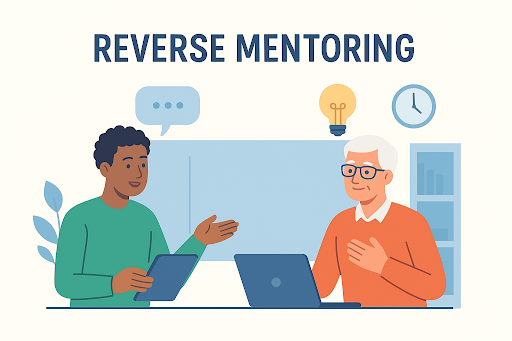
Our customs have taught us to prioritize the utmost respect for our elders and take their word as gospel. However, times are evolving, and so must we. This is especially relevant to keep in mind while pursuing knowledge. Learning is not a one-way street in which senior leaders give directions alone. In fact, as technology rapidly advances and the job market is in dire need of fresh minds and ideas, younger employees need to be given the platform to share their wisdom with their teams and for them to properly leverage these tools. This is the concept of reverse mentoring, where juniors share their expertise with seniors, which has emerged as a tool for understanding generational shifts and driving growth in the corporate space due to its potential to spark workplace innovation.
Bridges Generational Gaps
The modern workplace is an incredibly diverse space due to the recruitment of all kinds of people, each bringing their own specializations and perspectives. In the same department, one will find multiple generations working side by side, with each individual bringing unique insights and experiences. Reverse mentoring allows senior employees to gain insight into the attitudes, expectations, and work styles of younger generations, which is especially crucial in understanding the demands of today’s workforce. For example, younger employees are typically more accustomed to digital tools and social media culture, as they have been exposed to it for practically their entire lives. Senior employees, who have different experiences, may not be as savvy in such important domains and can benefit from understanding how younger workers think. This bridges the generational divide and even encourages a sense of mutual respect among seniors and juniors.
Fosters Workplace Innovation
Reverse mentoring as a concept lends itself to enhanced workplace innovation. Younger employees are not constrained by traditional corporate thinking. Nowadays, these young adults are much bolder and more outspoken than their older counterparts, as they have grown up with liberal ideas and principles. They are comfortable challenging outdated practices that senior employees may have grown accustomed to and no longer question. When senior executives open themselves up to learning from juniors, they are exposed to emerging tools like AI and social media, which are relatively recent areas of interest for corporations. However, the novelty of these very tools makes them increasingly critical to business success, making it imperative to evolve with the times. This exchange of knowledge can lead to innovative ideas. Reverse mentoring ensures that companies stay ahead of the curve.
Empowers Junior Employees
Reverse mentoring gives younger employees a chance to contribute meaningfully to the company. It shows them that their insights are valued, which increases their personal engagement and job satisfaction. When juniors are encouraged to share their perspectives with senior leaders, they gain confidence, communication skills, and leadership experience early in their careers. This sort of validation creates a positive workplace environment and helps these employees stay motivated, contribute creatively, and take initiative, which is in the best interests of the company at large.
Strengthens Senior Leadership
For senior leaders, some important qualities that define leadership include curiosity and adaptability. As mentioned, learning is a two-way street with beneficiaries on both sides. This dual mindset challenges experienced executives to see beyond the viewpoints that have been raised and instead embrace continuous learning. Such leaders feel more connected to younger employees and stay more in tune with changing market trends. They gain a firsthand understanding of new behaviors, technologies, and cultural shifts. This makes them better equipped to lead organizations.
Prepares the Organization for the Future
We are already seeing rapid advancements in the methods used by companies and the inclusion of varying technologies. This pace is only set to increase further in the future. Today, the ability to adapt quickly to this technological landscape is crucial and gives companies that incorporate it a competitive advantage over those that remain rooted in old-fashioned ways. The free flow of knowledge across young and old drives innovation and agility. Juniors bring energy and skills, while seniors provide wisdom and experience. Together, they create an environment ideal for workplace innovation and growth.
Conclusion
In conclusion, reverse mentoring is a necessity for organizations today, as it removes generational barriers and allows transformation while empowering young talent, all of which contributes to the success and growth of the company itself.
FAQs
1. What is reverse mentoring in companies?
It’s a practice where junior employees share knowledge with senior staff to improve collaboration and understanding across teams.
2. How does this mentoring benefit senior leaders?
It helps leaders stay updated with new technologies, digital trends, and employee expectations.
3. Can it foster innovation at work?
Yes. By exposing leaders to fresh perspectives and modern tools, it encourages creative solutions and a culture of continuous improvement.
4. How are junior employees empowered?
They gain confidence, communication skills, and leadership experience by sharing insights and contributing meaningfully.
5. Does it improve intergenerational teamwork?
Absolutely. It bridges age-related gaps, encourages mutual respect, and strengthens collaboration.
6. How does it prepare organizations for future changes?
It supports adaptability to evolving technologies and market trends, giving companies a competitive edge.
7. Are measurable benefits evident?
Yes. Organizations notice higher engagement, faster adoption of new tools, and more creative problem-solving.
8. Can this mentoring be applied in all industries?
Yes. Any organization that values knowledge sharing and adaptability can implement it.
9. How often should mentoring sessions occur?
Regular sessions ensure consistent knowledge sharing and continuous improvement across teams.
10. How is this different from traditional mentoring?
Instead of senior leaders guiding juniors, juniors provide insights that help senior staff adapt and innovate.
References
[1] Jordan, J. & Sorell, M., “Why Reverse Mentoring Works and How to Do It Right,” Harvard Business Review, 3 Oct. 2019. [Online].
Available: https://hbr.org/2019/10/why-reverse-mentoring-works-and-how-to-do-it-right
Penned by Tapasmi
Edited by Anuj Kumar, Research Analyst
For any feedback mail us at [email protected]
Streamline Your Hiring with Eve Placement’s Custom Assessments
Eve Placement helps you engage, assess, and recruit top talent through tailored hiring challenges that go beyond resumes. From technical quizzes and real-world case studies to psychometric evaluations and audio/video submissions, our platform enables smarter, data-driven hiring decisions. Advanced security features ensure authenticity and eliminate fraud, giving you reliable results. Ready to hire better? Know More.
Mail us at [email protected]