
12 Game-Changing Career Trends: Your Ultimate Guide to the 2025 Job Outlook in India
As a newbie graduate in India in 2025, students are stepping into an ever-evolving employment scenario, spearheaded by technology, sustainability, and changing consumer behaviour. This change from university to the workplace is exciting, but also intimidating. Young people can no longer easily choose more traditional career paths that were just perceived to be solid, such as banking or engineering. While these career paths exist, they are replaced by new career paths such as data sciences, green technologies, digital marketing, and health care innovation.
The economic backdrop in India is also being transformed by technology, by automation, A.I., and by digitalisation. These trends are redefining the skills we will require for employability, and the future will require individuals who can keep up with changing circumstances. The implications of changes in the job market are quite significant in India, where the population is over 1.4 billion and the median age is 28 years. The Government of India has also invested in Digital initiatives and supported the growth of hybrid work environments to this end.
Graduates need to understand these trends. In 2025, the job market will be rich with available employment opportunities; however, only those individuals trained in areas relevant to the future will be eligible. The objective of this guide is to identify the key career trends influencing the employment market in India and to provide graduates with some useful strategies for positioning themselves as they enter this new space. Graduates need to be aware of the market and its trends for developing professional goals, not just for finding jobs, but to help them make decisions about their future.
1. The AI and Machine Learning Tsunami
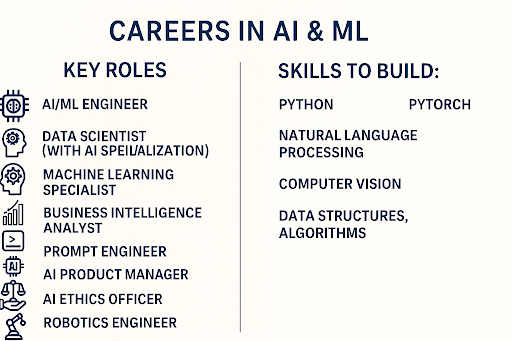
It’s hard to think about future careers without starting with Artificial Intelligence (AI) and Machine Learning (ML). This is not just about incrementally developing complex coded algorithms. AI is codifying into the core structure for all industries, from e-commerce to health care. Graduates commencing work in 2025 will experience a significant need for people to create, manage, and ethically deploy AI systems. In India, for example, NASSCOM estimates AI and analytics will provide around 20 lakh new jobs before 2026. As the change to a digitized operational model continues, companies will be seeking expertise in data analysts, machine learning developers, and automation systems.
2. The Green Revolution: Sustainability and ESG
Climate crisis is a near and imminent problem, and India is on its way for the green transition. This challenge presents a new economic sector referred to as the “Green Economy”. India’s commitment to net-zero carbon emissions by 2070 is now set to change how industry will conduct business. Renewable energy usage, sustainable modes of agriculture, production, and consumption of electric vehicles, among others, are creating a new wave of green jobs.
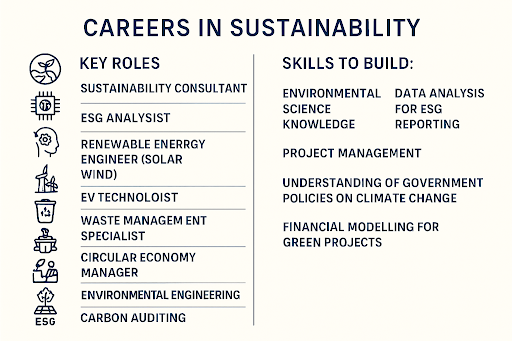
Corporations are now legally and socially obligated to consider their Environmental, Social, and Governance (ESG) performance. This is not simply a “feel-good” movement; this is a multi-billion-dollar industrial transformation. Schools and universities should help prepare graduates who will combine their core skill set (engineering, finance, or management, for example) along with their “passion” for sustainability.
The International Labour Organisation (ILO) states that over 3 million green jobs can be developed through renewable energy projects by 2030 in India, creating a plethora of additional green jobs as other companies adopt global ESG compliance, and the Indian government’s “Green Skill Development Programme”.
3. Data is the New Oil: Data Science & Analytics
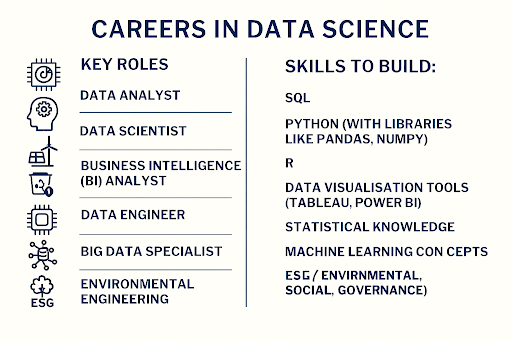
The new age world treats data as fuel, and thus, we have developed an engine called AI to process the data. Every interaction on the internet and with the internet is a data point, and companies are starving for people who can wrangle their ocean of data. Companies keep scrambling to hire Data Scientists and Analysts because those people help organizations make better, smarter decisions, understand customer behaviour, and anticipate market trends. This is one of the most bankable career trends for any graduate whose orientation is quantitative.
4. The Digital Bazaar: E-commerce and Digital Marketing
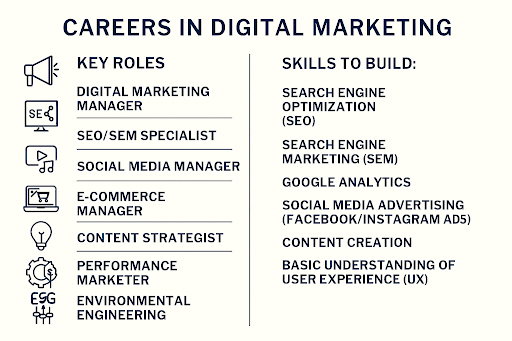
India’s digital economy is growing exponentially- estimated to reach $1 trillion by 2030. Start-ups in the areas of fintech, AdTech, health tech, edtech, and aggrotech are hiring rapidly for jobs that incorporate technology and creativity. The Digital India initiative and the rollout of UPI, ONDC, and 5G networks have opened countless job opportunities. From metro cities to small towns, individuals are buying and selling online. This has created a booming demand for professionals who can engage and navigate the digital marketplace. This is not just about running ads; it is about creating a brand story, engaging with customers online, and driving sales through a dozen different digital channels. As the job market gets further “digital-first,” even graduates from non-technical fields can get jobs by acquiring digital skills in analytics, coding, or content management. In addition, younger professionals tend to gravitate to start-ups because of their flexibility, fast learning curve, and ability to innovate. The job outlook in this space is evergreen and constantly evolving.
5. The Education and EdTech Transformation
For some time, education in India has not been confined to the four walls of the classrooms, and with the announcement of the National Education Policy (NEP) 2020, skill-based learning and a hybrid model of online or offline delivery have taken root. Perhaps platforms like Byju’s, Coursera, or Unacademy are hiring thousands of graduates to assist with operations, content, and online instruction.
Some key career opportunities that have come up include the following:
- Learning Experience Designer,
- Curriculum Developer
- Educational Data Analyst
- Online Tutor or Mentor
In addition, some universities are partnering with tech companies to provide industry-integrated programs to ensure that students leave university with employable skills. With India’s e-learning market projected at approximately $10 billion by 2027, the opportunity for employment will continue for educators, technologists, and innovators.
6. The Digital Fortress: Cybersecurity
As technology takes over our lives, risks are also moving into this domain. Data breaches, scams, and the likelihood of cyber-attacks are reported in headlines daily. Thus, Cybersecurity is no longer an afterthought of an IT department; it is a C-Suite agenda item now. There is a huge talent shortage in this discipline, which means graduates who possess technical and soft skills stand to earn generous salaries at an extremely fast pace of advancement in their careers. If you enjoy problem-solving with a detective disposition, this is the place for you.

7. The Money Revolution: FinTech
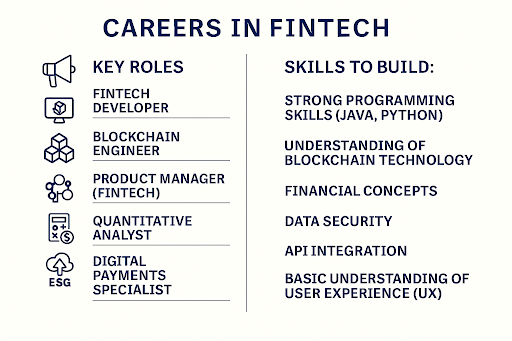
From UPI to online investments, India is a global leader in Financial Technology (FinTech). The sector is redefining banking and finance at an astonishing rate. Companies are looking for tech-savvy graduates with a dual understanding of finance and technology to create the next generation of payment gateways, lending apps, and wealth management tools.
8. The Future of Wellness: Health-Tech and Biotechnology
The COVID-19 pandemic significantly sped up the progress in technology in medicine and healthcare.
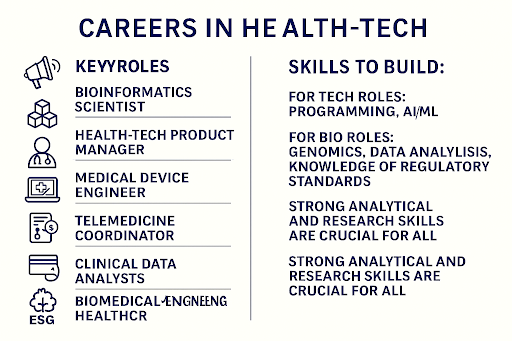
Development of vaccines and telemedicine, AI- diagnostics, wearable health trackers, and personalised medicines and treatments are the future. The Health-Tech sector is a strong combination of biology, medicine, and technology.
This is a great opportunity for graduates in medicine, human science, and engineering to pursue innovations that improve and transform human lives. In addition, digital health startups like Practo, PharmEasy, HealthifyMe, and others are reshaping access to medical care. AI in diagnostics, telemedicine, and remote care guarantees that health technology continues to be one of the strongest career trends for graduates to consider in 2025. Additionally, India’s healthcare sector is expected to touch $638 billion by 2025, which has created extremely high demand for talent to work in biopharma companies, genetic research organizations, and healthcare technology companies.
9. The Mini-CEO: Product Management
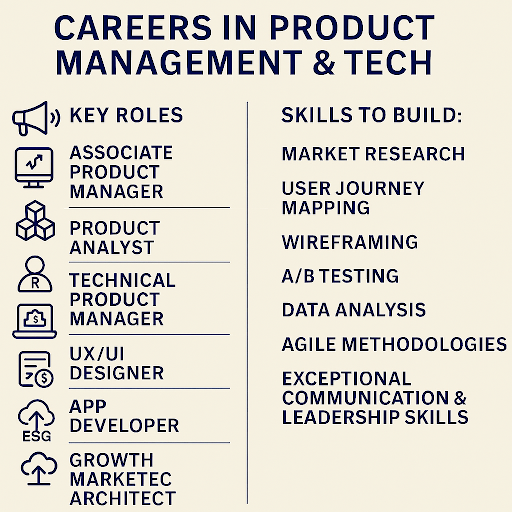
In the industry of technology, the Product Manager is the ship’s captain. They decide what is built, for whom it is built, and why we are being it. It is a highly desirable position as it lies at the intersection of business, technology, and user experience (UX). It is an excellent career choice for college graduates who are effective communicators, think strategically, and have authentic customer empathy. A software engineering degree is not always required, but a sound understanding of the technology is necessary.
10. The Rise of the Solopreneur: Gig Economy & Freelancing
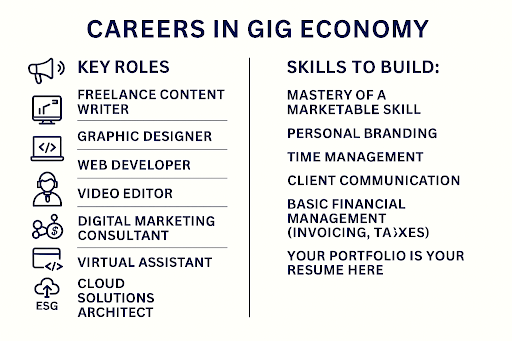
The biggest changes affecting today’s workforce are the relinquishing of traditional 9-to-5 jobs. Not every graduate in 2025 who wants to join the workforce looks forward to a desk job within a corporation. The creator economy, which includes platforms such as YouTube, Instagram, and LinkedIn, is facilitating independent workers who monetise their skills, content, or expertise. The Gig Economy, connecting workers and clients on platforms such as Upwork and Fiverr, along with the growing creator economy, is giving workers the ability to work for themselves. This is not just a side-hustle anymore; this is becoming a real career path for full-time employment. This pathway offers graduates of 2025 tremendous flexibility and the ability to work on various projects from various locations. According to a Payoneer report, India ranks third in the world for the number of freelancers. Freelancers contribute an estimated $20 billion annually to the Indian economy.
The flexibility of remote work and online gig platforms like Fiverr and Upwork allows young Indians to work for both domestic and international clients.
As Gen Z prioritises work-life balance and creative freedom, the freelance model is reshaping India’s job outlook making self-employment a legitimate and respected career path.
11. The Globalisation of Indian Talent
The world is starting to think of India as not merely a hub of labour but a hub of talent. Graduates from India are now in demand in places such as the UAE, Germany, Canada, and Australia, mostly in technology, healthcare, and finance.
Remote work has allowed for greater global participation in the labour force. Professionals from India are now able to work for companies in other countries without relocating and earn a foreign currency while living locally. There are emerging opportunities in Remote Software Developer, International Project Coordinator, Global Supply Chain Analyst, and Cross-Border Finance Specialist, among many.
With the advent of digital collaboration tools, which allow people to work together, the global job market is more accessible than ever. Companies looking to hire beyond borders, graduates in 2025 will be able to begin an international career working for companies based outside of India without leaving home. This rethinks the job opportunities available to India.
12. The Human Touch: UI/UX and People Operations
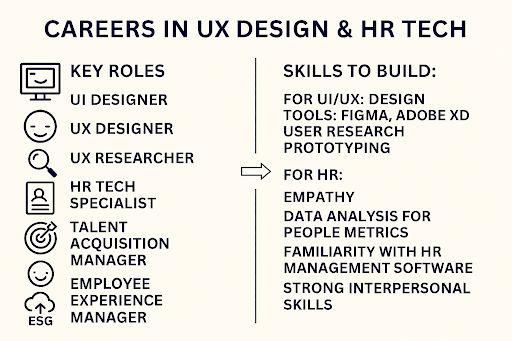
As technology continues to grow more sophisticated, the importance of the human aspect increases. This human aspect is made into a reality by the work of User Interface (UI) and User Experience (UX) design. UI/UX designers strive to produce a technology that is simple, intuitive, and pleasant to interact with. Likewise, as organizations have adapted to remote work and more diverse workforces, Human Resources (or People Operations, as some organizations are referring to this area) has also become more strategic with employee experience and the use of technology to manage talent.
The Future of Work: Skills over Degrees
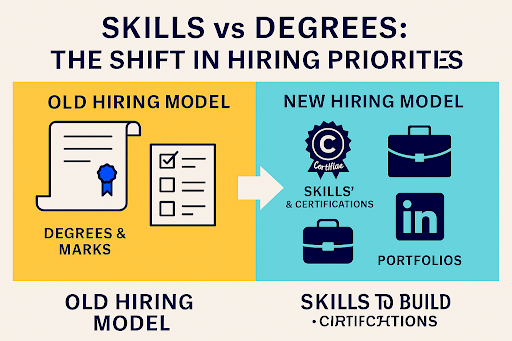
One unifying message across all these trends is that skills now matter more than degrees. Recruiters increasingly prioritise candidates who demonstrate practical skills through certifications, internships, or projects rather than just academic marks.
Top cross-sector skills for 2025 graduates:
- Digital Literacy
- Problem-Solving and Critical Thinking
- Emotional Intelligence
- Communication and Storytelling
- Data Interpretation
Government initiatives like Skill India Mission, Atmanirbhar Bharat, and Digital Skilling Programs are helping bridge the gap between academia and industry needs.
For Indian graduates entering the workforce, continuous learning is no longer optional, it is essential for staying relevant in a rapidly evolving market.
How to Prepare Yourself for These Career Trends
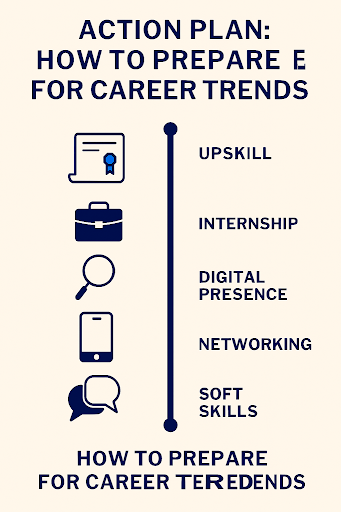
Knowing the trends is half the battle; preparing for them is how you win. Here is a quick action plan:
- Upskill Relentlessly: Your college degree is the starting point, not the finish line. Use platforms like Coursera, edX, upGrad, and NPTEL to gain certifications in these high-demand areas.
- Internships are Non-Negotiable: Theory is good, but practical experience is king. Actively seek internships, even if they are unpaid, in the fields that interest you. This is where you learn how things work.
- Build Your Digital Presence: Create a professional LinkedIn profile. Showcase your projects on GitHub (for tech roles) or Behance (for design roles). A strong online presence is your new-age business card.
- Network, Network, Network: Connect with professionals in your target industry on LinkedIn. Attend webinars and virtual industry events. Your network is your net worth.
Hone Your Soft Skills: Communication, teamwork, critical thinking, and problem-solving are the skills that AI cannot replace. Work on them as diligently as you work on your technical skills.
Challenges for 2025 Graduates
Even with all the optimism, the Indian job market continues to face its share of challenges.
- Skills mismatch between what educational institutions are teaching and what employers want.
- Over-saturation in preferred academic disciplines like computer science and management.
- Economic and volatility because of global inflation or breakdown of trades.
Nevertheless, adapting and being a proactive learner can help recent graduates navigate these challenges. Connecting and interning help as well as personal branding on professional networks (i.e., LinkedIn) are equally, or even more, valuable than the technical skills.
Conclusion: Your Future is Bright and Dynamic
For new and recent graduates entering the labour market in 2025, the career landscape is not simply stepping into a traditionally safe or predictable job for life. It is about being open to welcoming change, adopting a lifelong learner mindset, and creating a sustainable and future-proof career. Whether you are looking for jobs in AI, green jobs, freelancing, or in education technology, opportunities to choose from have never been this diverse.
The secret lies in being agile to recognize the shifting market trends and leaning into lifelong learning, which means exploring multi-disciplinary aspects of a future role, and ensuring your skill set is mapped to industries of the future.
The career trends being discussed today are not simply a buzzword; they are direct communications from the future, which will take the form of growth, opportunity, and money. So please do not view them as challenges to be feared; instead, view them as an invitation to be part of something fun and new. The future belongs to those who are naturally curious, innovative, adaptable, and to everyone who dares to just try. Start today, because not only in 2025 will you find your job, but you will start building an amazing career.
FAQ’s
- What are the top career trends in India for 2025?
The top career trends for 2025 in India include AI and Machine Learning, Data Science, Green Economy, E-commerce, Health-Tech, Cybersecurity, FinTech, Product Management, UI/UX Design, and the Gig Economy. These career trends are shaping a dynamic job outlook for new graduates. - Which industries have the best job outlook in India for 2025?
Industries such as AI, data analytics, renewable energy, digital marketing, Health-Tech, and EdTech offer a promising job outlook. Graduates entering these sectors can benefit from emerging career trends. - Do non-technical graduates fit into these career trends?
Yes, non-technical graduates can enter many of these career trends, especially in digital marketing, EdTech, product management, and UI/UX design. The job outlook favors candidates who acquire practical skills. - What skills should graduates develop to match career trends?
Graduates should focus on digital literacy, problem-solving, critical thinking, emotional intelligence, communication, and data interpretation. Developing these skills improves their employability and enhances the job outlook. - How can I prepare for the job outlook in AI and Machine Learning?
Upskilling through certifications, internships, and hands-on projects is crucial. AI and Machine Learning are top career trends, and preparing with practical experience ensures a strong job outlook. - Is the gig economy a reliable career trend for full-time employment?
Yes, freelancing and solopreneurship are growing career trends. Platforms like Upwork and Fiverr provide a flexible job outlook for graduates looking to work independently. - What role does the Green Economy play in career trends?
The Green Economy is creating a wave of sustainable jobs in renewable energy, ESG compliance, and eco-friendly projects. This sector offers a positive job outlook for graduates passionate about sustainability. - How important is continuous learning for the 2025 job outlook?
Continuous learning is essential. Recruiters now prioritize skills over degrees, making it necessary for graduates to follow emerging career trends and maintain a strong job outlook. - Can digital marketing and E-commerce provide a stable job outlook?
Absolutely. As India’s digital economy grows, these career trends offer evergreen opportunities for graduates skilled in analytics, content creation, and online customer engagement. - Which government initiatives support career trends and the job outlook?
Initiatives like Skill India Mission, Atmanirbhar Bharat, Digital Skilling Programs, and the Green Skill Development Programme help graduates align with career trends and enhance their job outlook.
References
[1] “Future of Jobs Report 2023,” World Economic Forum. [Online]. Available: https://www.weforum.org/reports/the-future-of-jobs-report-2023/
[2] “Future of Work: A look into the emerging job market in India,” NASSCOM Community. [Online]. Available: https://community.nasscom.in/communities/talent-skilling/future-of-work-look-into-the-emerging-job-market-in-india
[3] “India’s Turning Point: An economic observer,” McKinsey & Company. [Online]. Available: https://www.mckinsey.com/featured-insights/india/indias-turning-point-an-economic-observer
[4] NASSCOM, “Future of Technology Jobs in India,” 2024. [Online]. Available: https://nasscom.in
[5] International Labour Organization, “Green Jobs Assessment in India,” 2023. [Online]. Available: https://ilo.org
[6] Ministry of Skill Development and Entrepreneurship, “Skill India Mission Reports,” Government of India, 2024. [Online]. Available: https://msde.gov.in
[7] Payoneer, “Global Freelancer Income Report,” 2024. [Online]. Available: https://www.payoneer.com
[8] Deloitte, “Digital Economy Outlook: India 2030,” 2024. [Online]. Available: https://www.deloitte.com
[9] KPMG, “Healthcare and Life Sciences in India: Growth Forecast 2025,” 2023. [Online]. Available: https://kpmg.com
[10] Ministry of Education, “National Education Policy 2020: Implementation Update,” Government of India, 2024. [Online]. Available: https://education.gov.in
Penned by Pranjali
Edited by Reeya Kumari, Research Analyst
For any feedback mail us at [email protected]
Streamline Your Hiring with Eve Placement’s Custom Assessments
Eve Placement helps you engage, assess, and recruit top talent through tailored hiring challenges that go beyond resumes. From technical quizzes and real-world case studies to psychometric evaluations and audio/video submissions, our platform enables smarter, data-driven hiring decisions. Advanced security features ensure authenticity and eliminate fraud, giving you reliable results. Ready to hire better? Know More.
Mail us at [email protected]